
Catalogue Search | MBRL


Are you sure you want to remove the book from the shelf?

{{itemTitle}}
2,028
result(s) for
"Cambodians"
Sort by:


Cambodian Refugees in Ontario
The communist Khmer Rouge party of Cambodia was officially in power from 1975 to 1979. During that time, the regime killed and displaced large numbers of its citizens and after its overthrow by Vietnamese communists, many survivors fled, to become refugees. Cambodian Refugees in Ontario examines three generations of Cambodian refugees: adult survivors of the Khmer Rouge, the children and older youth who accompanied them, and the children born and raised in Ontario, Canada.
Janet McLellan uses ten years of ethnographic fieldwork, including extensive interviews, to highlight the difficulties Cambodians have faced in Canada. Lack of appropriate resettlement services combined with high levels of illiteracy, post-traumatic stress, single-parent households, and little urban experience or employment skills have made it difficult for Cambodian immigrants to rebuild their lives. Nevertheless, McLellan finds that the Canadian-born children of Cambodian refugees are achieving greater levels of educational and professional mobility while accessing fluid cultural identities reflecting both Canadian and transnational contexts.
eBook

Exiled : from the killing fields of Cambodia to California and back
\"The story of four families confronting deportation forty years after the beginning of large-scale resettlement of Southeast Asian refugees in America\"-- Provided by publisher.
Book
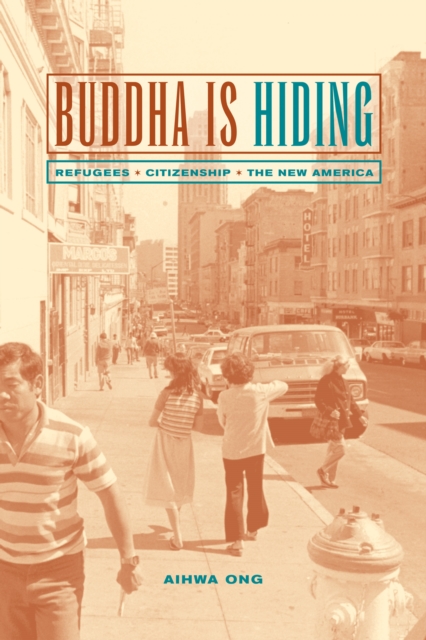
Buddha Is Hiding
Fleeing the murderous Pol Pot regime, Cambodian refugees arrive in America as at once the victims and the heroes of America's misadventures in Southeast Asia; and their encounters with American citizenship are contradictory as well. Service providers, bureaucrats, and employers exhort them to be self-reliant, individualistic, and free, even as the system and the culture constrain them within terms of ethnicity, race, and class. Buddha Is Hiding tells the story of Cambodian Americans experiencing American citizenship from the bottom-up. Based on extensive fieldwork in Oakland and San Francisco, the study puts a human face on how American institutions-of health, welfare, law, police, church, and industry-affect minority citizens as they negotiate American culture and re-interpret the American dream. In her earlier book,Flexible Citizenship,anthropologist Aihwa Ong wrote of elite Asians shuttling across the Pacific. This parallel study tells the very different story of \"the other Asians\" whose route takes them from refugee camps to California's inner-city and high-tech enclaves. InBuddha Is Hidingwe see these refugees becoming new citizen-subjects through a dual process of being-made and self-making, balancing religious salvation and entrepreneurial values as they endure and undermine, absorb and deflect conflicting lessons about welfare, work, medicine, gender, parenting, and mass culture. Trying to hold on to the values of family and home culture, Cambodian Americans nonetheless often feel that \"Buddha is hiding.\" Tracing the entangled paths of poor and rich Asians in the American nation, Ong raises new questions about the form and meaning of citizenship in an era of globalization.
eBook

From the Land of Shadows : War, Revolution, and the Making of the Cambodian Diaspora
\"In a century of mass atrocities, the Khmer Rouge regime marked Cambodia with one of the most extreme genocidal instances in human history. What emerged in the aftermath of the regime's collapse in 1979 was a nation fractured by death and dispersal. It is estimated nearly one-fourth of the country's population perished from hard labor, disease, starvation, and executions. Another half million fled their ancestral homeland, with over one hundred thousand people finding refuge in America. From The Land of Shadows surveys the Cambodian diaspora and the struggle to understand and make meaning of this historical trauma. Drawing on over 250 interviews with survivors across the United States as well as in France and Cambodia, Khatharya Um places these accounts in conversation with studies of comparative revolutions, totalitarianism, transnationalism, and memory works to illuminate the pathology of power as well as the impact of auto-genocide on individual and collective healing. Exploring the interstices of home and exile, forgetting and remembering, From the Land of Shadows follows the ways in which Cambodian individuals and communities seek to rebuild connections frayed by time, distance, and politics in the face of this injurious history\"--From publisher's website.
Book

Voices from S-21
The horrific torture and execution of hundreds of thousands of Cambodians by Pol Pot's Khmer Rouge during the 1970s is one of the century's major human disasters. David Chandler, a world-renowned historian of Cambodia, examines the Khmer Rouge phenomenon by focusing on one of its key institutions, the secret prison outside Phnom Penh known by the code name \"S-21.\" The facility was an interrogation center where more than 14,000 \"enemies\" were questioned, tortured, and made to confess to counterrevolutionary crimes. Fewer than a dozen prisoners left S-21 alive.
During the Democratic Kampuchea (DK) era, the existence of S-21 was known only to those inside it and a few high-ranking Khmer Rouge officials. When invading Vietnamese troops discovered the prison in 1979, murdered bodies lay strewn about and instruments of torture were still in place. An extensive archive containing photographs of victims, cadre notebooks, and DK publications was also found. Chandler utilizes evidence from the S-21 archive as well as materials that have surfaced elsewhere in Phnom Penh. He also interviews survivors of S-21 and former workers from the prison.
Documenting the violence and terror that took place within S-21 is only part of Chandler's story. Equally important is his attempt to understand what happened there in terms that might be useful to survivors, historians, and the rest of us. Chandler discusses the \"culture of obedience\" and its attendant dehumanization, citing parallels between the Khmer Rouge executions and the Moscow Show Trails of the 1930s, Nazi genocide, Indonesian massacres in 1965-66, the Argentine military's use of torture in the 1970s, and the recent mass killings in Bosnia and Rwanda. In each of these instances, Chandler shows how turning victims into \"others\" in a manner that was systematically devaluing and racialist made it easier to mistreat and kill them. More than a chronicle of Khmer Rouge barbarism, Voices from S-21 is also a judicious examination of the psychological dimensions of state-sponsored terrorism that conditions human beings to commit acts of unspeakable brutality.
The horrific torture and execution of hundreds of thousands of Cambodians by Pol Pot's Khmer Rouge during the 1970s is one of the century's major human disasters. David Chandler, a world-renowned historian of Cambodia, examines the Khmer Rouge phenomenon
eBook


Controlling the Opposition Abroad: Cambodia's Extraterritorial Activities in Long Beach, California
This article presents findings from research conducted in Long Beach, California on the history, motives, and functions of the Cambodian People's Party Youth Organization (CPPYO), a network of Cambodians outside the country who support Cambodia's long-time ruling party, the Cambodian
People's Party (CPP). O cially, the CPPYO, headed by Cambodian Prime Minister Hun Sen's son, Hun Manet, was created to promote the current government and to provide political options for Cambodians living abroad. However, many Cambodians in the Long Beach area see the CPP's presence in the
US as invasive and as a threat to their autonomy. To understand how the CPPYO functions in Long Beach, we make use of Gerschewski's three pillars of authoritarian stability and Glasius' framework for identifying extraterritorial authoritarian practices. We conclude that the CPPYO is primarily
a strategy for repressing opposition abroad, but that it also contributes to the ruling party's legitimacy through the participation of Long Beach Cambodian Americans, who accept the CPP's authoritarian control as a condition for participating in Cambodia's socioeconomic system. This study
contributes to a growing body of research interested in identifying and interconnecting the various legitimation processes, strategies, and practices developed by autocracies to stabilize rule at home and abroad.
Journal Article

Healing elements
Tibetan medicine has come to represent multiple and sometimes conflicting agendas. On the one hand it must retain a sense of cultural authenticity and a connection to Tibetan Buddhism; on the other it must prove efficacious and safe according to biomedical standards. Recently, Tibetan medicine has found a place within the multibillion-dollar market for complementary, traditional, and herbal medicines as people around the world seek alternative paths to wellness. Healing Elements explores how Tibetan medicine circulates through diverse settings in Nepal, China, and beyond as commercial goods and gifts, and as target therapies and panacea for biophysical and psychosocial ills. Through an exploration of efficacy – what does it mean to say Tibetan medicine \"works\"? – this book illustrates a bio-politics of traditional medicine and the meaningful, if contested, translations of science and healing that occur across distinct social ecologies.
eBook

Fit to Be Citizens?
Meticulously researched and beautifully written, Fit to Be Citizens? demonstrates how both science and public health shaped the meaning of race in the early twentieth century. Through a careful examination of the experiences of Mexican, Japanese, and Chinese immigrants in Los Angeles, Natalia Molina illustrates the many ways local health officials used complexly constructed concerns about public health to demean, diminish, discipline, and ultimately define racial groups. She shows how the racialization of Mexican Americans was not simply a matter of legal exclusion or labor exploitation, but rather that scientific discourses and public health practices played a key role in assigning negative racial characteristics to the group. The book skillfully moves beyond the binary oppositions that usually structure works in ethnic studies by deploying comparative and relational approaches that reveal the racialization of Mexican Americans as intimately associated with the relative historical and social positions of Asian Americans, African Americans, and whites. Its rich archival grounding provides a valuable history of public health in Los Angeles, living conditions among Mexican immigrants, and the ways in which regional racial categories influence national laws and practices. Molina's compelling study advances our understanding of the complexity of racial politics, attesting that racism is not static and that different groups can occupy different places in the racial order at different times.
eBook