
Catalogue Search | MBRL


Are you sure you want to remove the book from the shelf?

{{itemTitle}}
220
result(s) for
"Cameroon Languages."
Sort by:

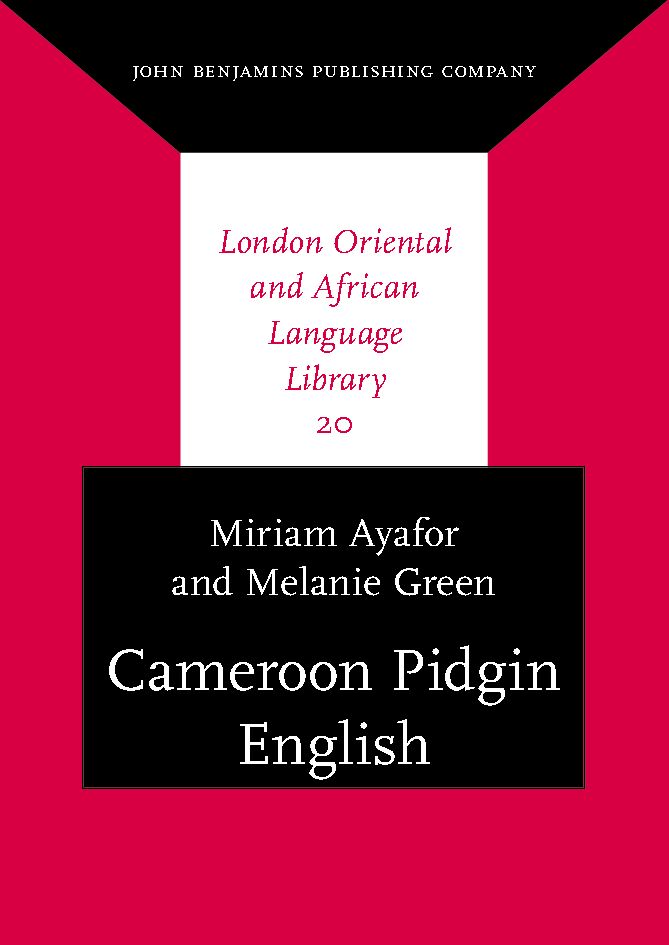
Cameroon Pidgin English
Cameroon Pidgin English (CPE) is an English-lexified Atlantic expanded pidgin/creole spoken in some form by an estimated 50% of Cameroon's population, primarily in the anglophone west regions, but also in urban centres throughout the country. Primarily a spoken language, CPE enjoys a vigorous oral presence in Cameroon, and the linguistic examples illustrating this description are drawn from a spoken corpus consisting of a range of text types, including oral narratives, radio broadcasts and spontaneous conversation. The authors' typologically-framed investigation of the features of the language, from its phonetics, phonology and lexicon to its syntax and discourse structure, allows the reader a clear view of the linguistic character of CPE, offering a comprehensive description of the language that will be of interest to creolists as well as linguists interested in African languages, contact linguistics and comparative linguistics.
eBook
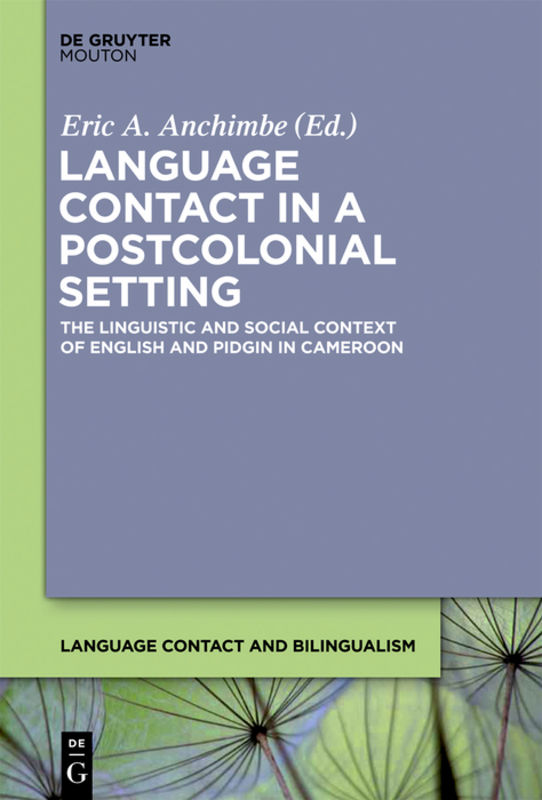
Language Contact in a Postcolonial Setting
This timely book brings together research on the features and evolution of Cameroon English and Cameroon Pidgin English, approached from a variety of innovative multilingual frameworks that focus on the emergence of mother tongue speakers. The authors illustrate how language and population contact, history (colonialism), multilingualism, translation, and indigenization have contributed to shaping the norms of postcolonial Englishes and Pidgins. Employing naturalistic data, the volume provides a new fascinating perspective that better situates and supplements existing research in the fields of African Englishes and Creolistics. It is particularly of key interest to sociolinguists, contact linguists, Africanists, Anglicists, creolists and historical linguists.
eBook
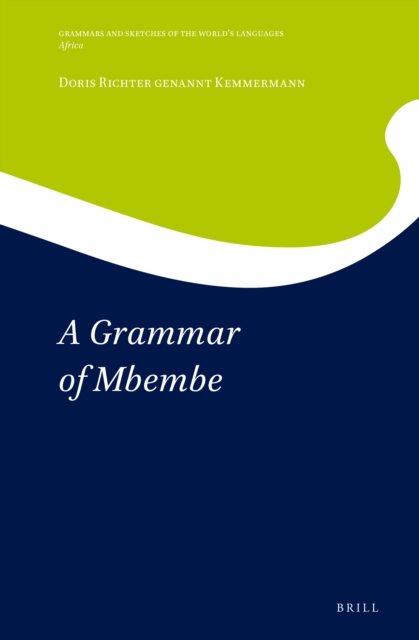
A Grammar of Mbembe
A Grammar of Mbembe is a description of a little studied Jukunoid language which is spoken in the borderland of Nigeria and Cameroon. Present-day structures of different dialects are described and discussed with respect to diachronic developments. It is based on extensive fieldwork, but also takes into consideration previous work on Mbembe and other Jukunoid languages. The main topics in the chapters on the noun phrase and the verb and simple sentence structures are nominal classification and number marking based on Ablaut phenomena and tone, argument structure, and serial verb constructions. The remaining chapters cover phonology, complex structures, information structure and requesting information, and other word classes. This is complemented by example texts and a word list in the appendix.
eBook


Camfranglais : the making of a new language in Cameroonian literature
This study raises awareness to the emergence of a new genre in world literatureóhybridized literature. It rejects the assumption according to which literatures written in less commonly taught languages should be subsumed into one universally accessible global idiom. Instead, Vakunta challenges literary scholars and readers of literature to regard untranslatability as the key to cross-cultural engagement. The bookís multiple approaches and innumerable sources generate complex interdisciplinary connections and provide an excellent introduction to a complex literary phenomenon alien to literati resident outside the officially bilingual multicultural and multilingual Republic of Cameroon.
eBook
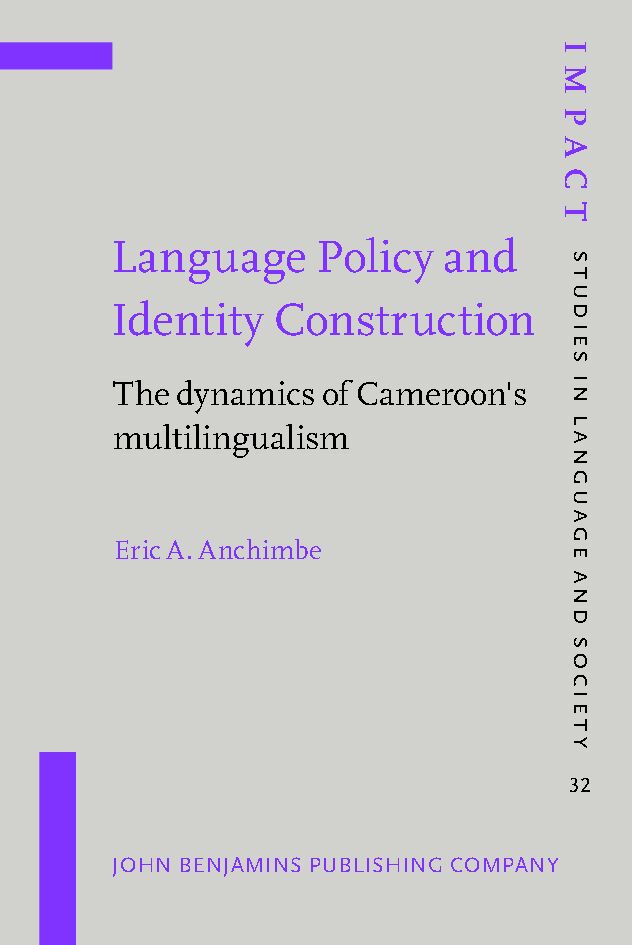
Language policy and identity construction : the dynamics of Cameroon's multilingualism
The (dis)empowerment of languages through language policy in multilingual postcolonial communities often shapes speakers' identification with these languages, their attitude towards other languages in the community, and their choices in interpersonal and intergroup communication. Focusing on the dynamics of Cameroon's multilingualism, this book contributes to current debates on the impact of politic language policy on daily language use in sociocultural and interpersonal interactions, multiple identity construction, indigenous language teaching and empowerment, the use of Cameroon Pidgin English in certain formal institutional domains initially dominated by the official languages, and linguistic patterns of social interaction for politeness, respect, and in-group bonding. Due to the multiple perspectives adopted, the book will be of interest to sociolinguists, applied linguists, pragmaticians, Afrikanists, and scholars of postcolonial linguistics.
eBook

Relative clauses in Cameroonian languages : structure, function and semantics
The series is a platform for contributions of all kinds to this rapidly developing field. General problems are studied from the perspective of individual languages, language families, language groups, or language samples. Conclusions are the result of a deepened study of empirical data. Special emphasis is given to little-known languages, whose analysis may shed new light on long-standing problems in general linguistics.
eBook

The anglophone Cameroon predicament
This study explores the predicament of Anglophone Cameroon from the experiment in federation from 1961 to the political liberalisation struggles of the 1990s to challenge claims of a successful post-independence Cameroonian integration process. Focusing on the perceptions and actions of people in the Anglophone region, Atanga argues that what has come to be called the Anglophone Problem constitutes one of the severest threats to the post-colonial nation-state project in Cameroon. As a linguistic and cultural minority, Anglophone Cameroonians realised that the Francophone-led state and government were keener in assimilation than in implementing the federal and bilingual nation agreed upon at reunification in 1960. Calls for national integration became simply a subterfuge for the assimilation of Anglophones by Francophones who dominated the state and government. The book details the various measures undertaken to exploit the Anglophone regions economy and marginalise its people. Principally the economic structures meant to facilitate self-reliant development were undermined and destroyed. Institutionalised discrimination took the form of the exclusion of Anglophones from positions of real authority, and depriving the region of any meaningful development. With the advent of multi-party politics, most Anglophone Cameroonians increasingly have made vocal demands for a return to a federation, in order to adequately guarantee their rights and recognition for them as a political and cultural minority. Actively encouraged by France, the Francophone-led regime in Cameroon has refused to yield to such demands, despite the grave danger of violent conflict and possible secession.
eBook