
Catalogue Search | MBRL


Are you sure you want to remove the book from the shelf?

{{itemTitle}}
2,501
result(s) for
"Campaign finance in the United States"
Sort by:

Ground Wars
Political campaigns today are won or lost in the so-called ground war--the strategic deployment of teams of staffers, volunteers, and paid part-timers who work the phones and canvass block by block, house by house, voter by voter. Ground Wars provides an in-depth ethnographic portrait of two such campaigns, New Jersey Democrat Linda Stender's and that of Democratic Congressman Jim Himes of Connecticut, who both ran for Congress in 2008.
eBook

Unfree Speech
At a time when campaign finance reform is widely viewed as synonymous with cleaning up Washington and promoting political equality, Bradley Smith, a nationally recognized expert on campaign finance reform, argues that all restriction on campaign giving should be eliminated. InUnfree Speech, he presents a bold, convincing argument for the repeal of laws that regulate political spending and contributions, contending that they violate the right to free speech and ultimately diminish citizens' power.
Smith demonstrates that these laws, which often force ordinary people making modest contributions of cash or labor to register with the Federal Election Commission or various state agencies, fail to accomplish their stated objectives. In fact, they have worked to entrench incumbents in office, deaden campaign discourse, burden grassroots political activity with needless regulation, and distance Americans from an increasingly professional, detached political class. Rather than attempting to plug \"loopholes\" in campaign finance law or instituting taxpayer-financed campaigns, Smith proposes a return to core First Amendment values of free speech and an unfettered right to engage in political activity.
Smith finds that campaign contributions have little corrupting effect on the legislature and shows that an unrestrained system of contributions and spending actually enhances equality. More money, not less, is needed in the political system, Smith concludes.Unfree Speechdraws upon constitutional law and historical research to explain why campaign finance regulation is doomed and to illustrate the potentially drastic costs of efforts to make it succeed. Whatever one thinks about the impact of money on electoral politics, no one should take a final stand without reading Smith's controversial and important arguments.
eBook

Presidential Party Building
Modern presidents are usually depicted as party \"predators\" who neglect their parties, exploit them for personal advantage, or undercut their organizational capacities. Challenging this view,Presidential Party Buildingdemonstrates that every Republican president since Dwight D. Eisenhower worked to build his party into a more durable political organization while every Democratic president refused to do the same. Yet whether they supported their party or stood in its way, each president contributed to the distinctive organizational trajectories taken by the two parties in the modern era.
Unearthing new archival evidence, Daniel Galvin reveals that Republican presidents responded to their party's minority status by building its capacities to mobilize voters, recruit candidates, train activists, provide campaign services, and raise funds. From Eisenhower's \"Modern Republicanism\" to Richard Nixon's \"New Majority\" to George W. Bush's hopes for a partisan realignment, Republican presidents saw party building as a means of forging a new political majority in their image. Though they usually met with little success, their efforts made important contributions to the GOP's cumulative organizational development. Democratic presidents, in contrast, were primarily interested in exploiting the majority they inherited, not in building a new one. Until their majority disappeared during Bill Clinton's presidency, Democratic presidents eschewed party building and expressed indifference to the long-term effects of their actions.
Bringing these dynamics into sharp relief,Presidential Party Buildingoffers profound new insights into presidential behavior, party organizational change, and modern American political development.
eBook

The Populist Paradox
Do small but wealthy interest groups influence referendums, ballot initiatives, and other forms of direct legislation at the expense of the broader public interest? Many observers argue that they do, often lamenting that direct legislation has, paradoxically, been captured by the very same wealthy interests whose power it was designed to curb. Elisabeth Gerber, however, challenges that argument. In this first systematic study of how money and interest group power actually affect direct legislation, she reveals that big spending does not necessarily mean big influence.
Gerber bases her findings on extensive surveys of the activities and motivations of interest groups and on close examination of campaign finance records from 168 direct legislation campaigns in eight states. Her research confirms what such wealthy interests as the insurance industry, trial lawyer associations, and tobacco companies have learned by defeats at the ballot box: if citizens do not like a proposed new law, even an expensive, high-profile campaign will not make them change their mind. She demonstrates, however, that these economic interest groups have considerable success in using direct legislation to block initiatives that others are proposing and to exert pressure on politicians. By contrast, citizen interest groups with broad-based support and significant organizational resources have proven to be extremely effective in using direct legislation to pass new laws. Clearly written and argued, this is a major theoretical and empirical contribution to our understanding of the role of citizens and organized interests in the American legislative process.
eBook
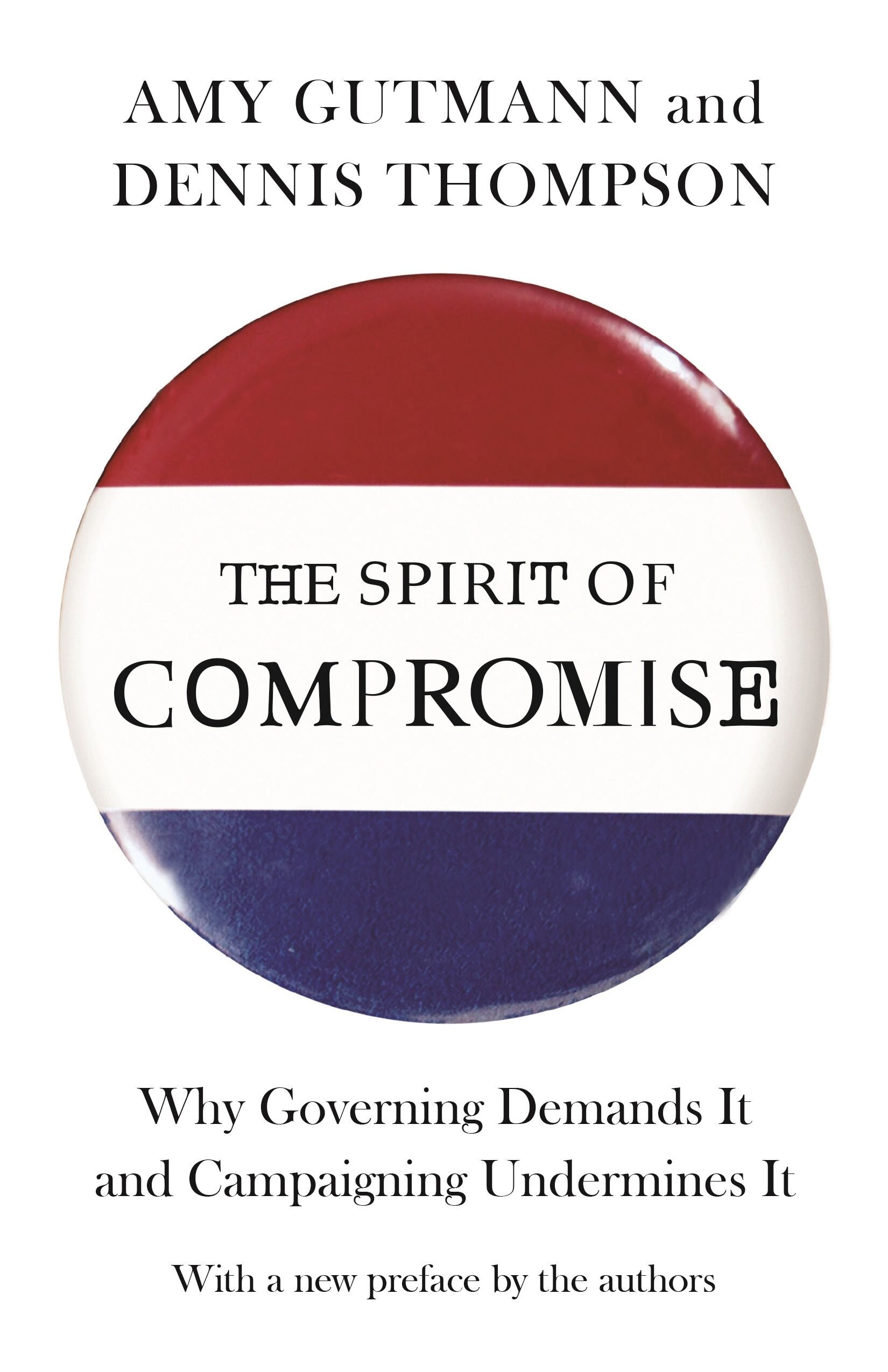
The Spirit of Compromise
Why compromise is essential for effective government and why it is missing in politics today
To govern in a democracy, political leaders have to compromise. When they do not, the result is political paralysis—dramatically demonstrated by the gridlock in Congress in recent years. In The Spirit of Compromise, eminent political thinkers Amy Gutmann and Dennis Thompson show why compromise is so important, what stands in the way of achieving it, and how citizens can make defensible compromises more likely. They urge politicians to focus less on campaigning and more on governing. In a new preface, the authors reflect on the state of compromise in Congress since the book's initial publication.
Calling for greater cooperation in contemporary politics, The Spirit of Compromise will interest everyone who cares about making government work better for the good of all.
eBook

The influence of campaign contributions in state legislatures
Campaign contributions are widely viewed as a corrupting influence but most scholarly research concludes that they have marginal impact on legislative behavior. Lynda W. Powell shows that contributions have considerable influence in some state legislatures but very little in others. Using a national survey of legislators, she develops an innovative measure of influence and delineates the factors that explain this great variation across the 99 U.S. state legislative chambers.
Powell identifies the personal, institutional, and political factors that determine how much time a legislator devotes to personal fundraising and fundraising for the caucus. She shows that the extent of donors' legislative influence varies in ways corresponding to the same variations in the factors that determine fundraising time. She also confirms a link between fundraising and lobbying with evidence supporting the theory that contributors gain access to legislators based on donations, Powell's findings have important implications for the debate over the role of money in the legislative process.
eBook

Small change
Reformers lament that, with every effort to regulate the sources of campaign funding, candidates creatively circumvent the new legislation. But in fact, political fundraisers don't need to look for loopholes because, as Raymond J. La Raja proves, legislators intentionally design regulations to gain advantage over their partisan rivals. La Raja traces the history of the U.S. campaign finance system from the late nineteenth century through the passage of the Bipartisan Campaign Reform Act (BCRA) of 2002. Then, using the 2004 presidential election as a case study, he compares the ways in which Democrats and Republicans adapted their national fund-raising and campaigning strategies to satisfy BCRA regulations. Drawing upon this wealth of historical and recent evidence, he concludes with recommendations for reforming campaign finance in ways that promote fair competition among candidates and guarantee their accountability to voters.
eBook
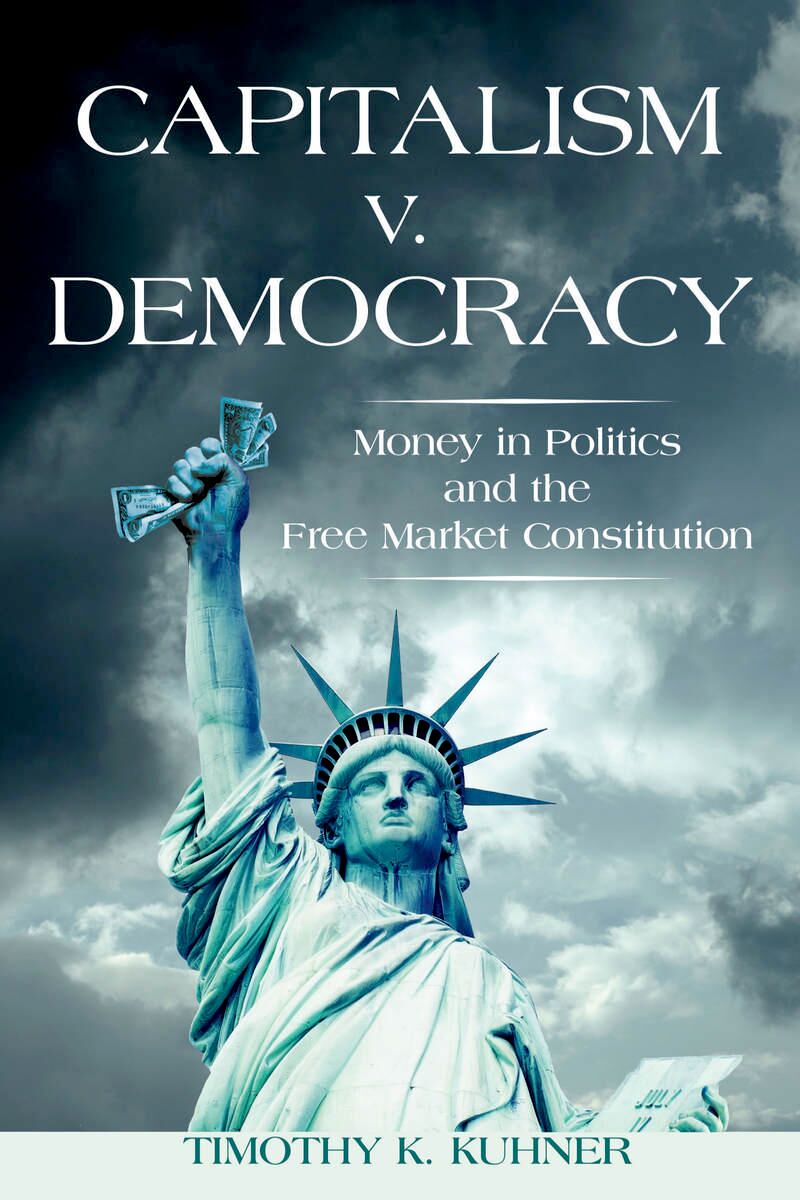
Capitalism v. democracy : money in politics and the free market constitution
As of the latest national elections, it costs approximately $1 billion to become president, $10 million to become a Senator, and $1 million to become a Member of the House. High-priced campaigns, an elite class of donors and spenders, superPACs, and increasing corporate political power have become the new normal in American politics. In Capitalism v. Democracy, Timothy Kuhner explains how these conditions have corrupted American democracy, turning it into a system of rule that favors the wealthy and marginalizes ordinary citizens. Kuhner maintains that these conditions have corrupted capitalism as well, routing economic competition through political channels and allowing politically powerful companies to evade market forces. The Supreme Court has brought about both forms of corruption by striking down campaign finance reforms that limited the role of money in politics. Exposing the extreme economic worldview that pollutes constitutional interpretation, Kuhner shows how the Court became the architect of American plutocracy.
Capitalism v. Democracy offers the key to understanding why corporations are now citizens, money is political speech, limits on corporate spending are a form of censorship, democracy is a free market, and political equality and democratic integrity are unconstitutional constraints on money in politics. Supreme Court opinions have dictated these conditions in the name of the Constitution, as though the Constitution itself required the privatization of democracy. Kuhner explores the reasons behind these opinions, reveals that they form a blueprint for free market democracy, and demonstrates that this design corrupts both politics and markets. He argues that nothing short of a constitutional amendment can set the necessary boundaries between capitalism and democracy.
eBook

The Unheavenly Chorus
Politically active individuals and organizations make huge investments of time, energy, and money to influence everything from election outcomes to congressional subcommittee hearings to local school politics, while other groups and individual citizens seem woefully underrepresented in our political system.The Unheavenly Chorusis the most comprehensive and systematic examination of political voice in America ever undertaken--and its findings are sobering.
The Unheavenly Chorusis the first book to look at the political participation of individual citizens alongside the political advocacy of thousands of organized interests--membership associations such as unions, professional associations, trade associations, and citizens groups, as well as organizations like corporations, hospitals, and universities. Drawing on numerous in-depth surveys of members of the public as well as the largest database of interest organizations ever created--representing more than thirty-five thousand organizations over a twenty-five-year period--this book conclusively demonstrates that American democracy is marred by deeply ingrained and persistent class-based political inequality. The well educated and affluent are active in many ways to make their voices heard, while the less advantaged are not. This book reveals how the political voices of organized interests are even less representative than those of individuals, how political advantage is handed down across generations, how recruitment to political activity perpetuates and exaggerates existing biases, how political voice on the Internet replicates these inequalities--and more.
In a true democracy, the preferences and needs of all citizens deserve equal consideration. Yet equal consideration is only possible with equal citizen voice.The Unheavenly Chorusreveals how far we really are from the democratic ideal and how hard it would be to attain it.
eBook

Campaign Finance Laws, Policy Outcomes, and Political Equality in the American States
Laws that regulate the financing of campaigns are one attempt to attenuate the role of money in politics and promote more egalitarian policy outcomes. Do states with stricter campaign finance regulations represent citizens' interests more equally? Using data on state spending priorities from 1977 to 2008, this article finds that states with stricter campaign finance laws devote a larger proportion of their annual budget to public welfare spending in general and to cash assistance programs in particular. In contrast, there is no relationship between the strictness of campaign finance laws and spending decisions for non-redistributive policy areas. I also investigate possible causal mechanisms and uncover evidence that stricter campaign finance laws alter incentives for candidates to respond to wealthy constituents by lessening the proportion of contributions that originate from business interests. These results suggest that laws that regulate the financial of political campaigns can play an important role in promoting the interests of disadvantaged citizens and enhancing political equality.
Journal Article