
Catalogue Search | MBRL


Are you sure you want to remove the book from the shelf?

{{itemTitle}}
2,567,508
result(s) for
"Campaigns"
Sort by:

The angry Buddhist
A dissection of the American way of life in all its sordid glory. Set in the California desert, the novel lives at the intersection of the Old Testament and Elmore Leonard. A fiercely contested congressional election is in progress. The wily incumbent, Randall Duke, is unburdened by ethical considerations and his opponent, Mary Swain, is a sexy and well-financed newcomer who does not have a firm grip on American history or elemental economics. This is the ideal setting and cast of characters for Seth Greenland, one of America's finest satirists. The Angry Buddhist convincingly explores mendacity in its modern American forms: contemporary politics, middle class sexual more, the criminal justice system, and the limits and cost of filial love--Cover p. [4].
Book
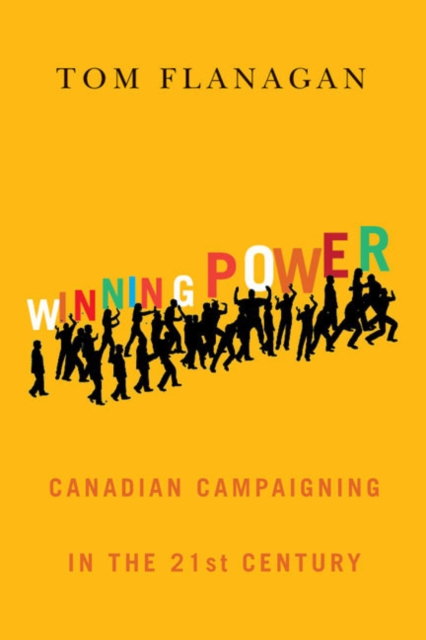
Winning Power
Campaigns are central to the practice of modern democracy and integral to political participation in the twenty-first century. In Winning Power, Tom Flanagan draws on decades of experience teaching political science and managing political campaigns to inform readers about what goes on behind the scenes. While the goal of political campaigning - using persuasion to build a winning coalition - remains constant, the means of achieving that goal are always changing. Flanagan dissects the effects of recent changes in financial regulation and grassroots fundraising, the advent of the \"permanent campaign,\" as well as the increase in negative advertising. He pulls these themes together to show how tactics are employed at specific points in a campaign by providing a firsthand account of his management of the Wildrose Party campaign in Alberta's 2012 provincial election. Lifting the veil of campaign secrecy, he provides a candid account of the successes and mistakes the newly formed party made in an election that nearly toppled the four-decade-long dynasty of Alberta's Progressive Conservatives. Modeling its campaign on the 2006 campaign that brought Stephen Harper to 24 Sussex Drive, Wildrose combined grassroots fundraising, an innovative platform that reached out to its electoral coalition, a carefully scripted leader’s tour, as well as negative and positive advertising in the race towards leadership. Success for the party seemed within reach until breakdowns in message discipline in the campaign’s final week caused the Wildrose tide to ebb. Citing diverse sources such as game theory, evolutionary psychology, and Aristotelian rhetoric, Flanagan explores the timeless aspects of campaigning and emphasizes new strategies of coalition-building. For future campaigners, Winning Power provides textbook illustrations of what does and doesn't work.
eBook


Exposing Jordan's Gas Deal with Israel
The Jordanian government has gone to great lengths to hide information about its 2014 multi-billion dollar gas deal with Israel from the public. But the government's attempt to keep the public in the dark has only energized a popular campaign demanding full disclosure of its terms.
Journal Article

The lie detectives : in search of a playbook for defeating disinformation and winning elections
\"A decade after The Victory Lab: The Secret Science of Winning Campaigns, journalist Sasha Issenberg again goes behind the scenes of political campaigns. This time, the most urgent research and strategizing are being conducted on how to deal with disinformation\"-- Provided by publisher.
Book

Small change
Reformers lament that, with every effort to regulate the sources of campaign funding, candidates creatively circumvent the new legislation. But in fact, political fundraisers don't need to look for loopholes because, as Raymond J. La Raja proves, legislators intentionally design regulations to gain advantage over their partisan rivals. La Raja traces the history of the U.S. campaign finance system from the late nineteenth century through the passage of the Bipartisan Campaign Reform Act (BCRA) of 2002. Then, using the 2004 presidential election as a case study, he compares the ways in which Democrats and Republicans adapted their national fund-raising and campaigning strategies to satisfy BCRA regulations. Drawing upon this wealth of historical and recent evidence, he concludes with recommendations for reforming campaign finance in ways that promote fair competition among candidates and guarantee their accountability to voters.
eBook

The First World War in the Middle East
\"The First World War in the Middle East is an accessibly written military and social history of the clash of world empires in the Dardanelles, Egypt and Palestine, Mesopotamia, Persia and the Caucasus. Coates Ulrichsen demonstrates how wartime exigencies shaped the parameters of the modern Middle East, and describes and assesses the major campaigns against the Ottoman Empire and Germany involving British and imperial troops from the French and Russian empires, as well as their Arab and Armenian allies. Also documented are the enormous logistical demands placed on host societies by the Great Powers' conduct of industrialised warfare in hostile terrain. The resulting deepening of imperial penetration, and the extension of state controls across a heterogeneous sprawl of territories, generated a powerful backlash both during and immediately after the war, which played a pivotal role in shaping national identities as the Ottoman Empire was dismembered. This is a multidimensional account of the many seemingly discrete yet interlinked campaigns that resulted in one to one and half million casualties. It details not just their military outcome but relates them to intelligence-gathering, industrial organisation, authoritarianism and the political economy of empires at war.\"--Book jacket.
Book

Electing Our Masters
This book covers the history of British electioneering from the 18th century right up to the present day. It explores the relationship between British politicians and their public as well as the important changes that have taken place, especially in the television age. It examines what the current state of electioneering in Britain implies for the future, asking questions as to how the media can shape that future. The book argues that in the past, British politics has been characterized by public rituals, intended to make politicians more legitimate by obliging them to face an often irreverent public. In 18th-century politics and Victorian and Edwardian elections, face-to-face interaction was central. This continued between the wars, despite the emergence of the new mass communication media of radio and cinema. However, the same cannot be said of the post-war era and the rise of television. Today, most politicians are content to offer the semblance of meaningful engagement with the public — hence, meetings are designed to ensure that politicians only come into contact with their party. Where Lloyd George and Churchill relished a tumultuous public meeting, their modern counterparts are more risk-averse. This book questions whether we can persuade our broadcasters that encounters with the public must form a staple of modern politics.
eBook


Losing Small Wars
Partly on the strength of their apparent success in insurgencies such as Malaya and Northern Ireland, the British armed forces have long been perceived as world class, if not world beating. However, their recent performance in Iraq and Afghanistan is widely seen as-at best-disappointing; under British control Basra degenerated into a lawless city riven with internecine violence, while tactical mistakes and strategic incompetence in Helmand Province resulted in heavy civilian and military casualties and a climate of violence and insecurity. In both cases the British were eventually and humiliatingly bailed out by the US army.
In this thoughtful and compellingly readable book, Frank Ledwidge examines the British involvement in Iraq and Afghanistan, asking how and why it went so wrong. With the aid of copious research, interviews with senior officers, and his own personal experiences, he looks in detail at the failures of strategic thinking and culture that led to defeat in Britain's latest \"small wars.\" This is an eye-opening analysis of the causes of military failure, and its enormous costs.
eBook