
Catalogue Search | MBRL


Are you sure you want to remove the book from the shelf?

{{itemTitle}}
73
result(s) for
"Canada Literary collections."
Sort by:

Spindrift : a Canadian book of the sea
\"Given that Canada has the longest coastline in the world and its motto is \"From Sea unto Sea,\" it is not surprising that virtually every Canadian writer has been inspired to write about some aspect of the sea at some point in their work. As this book shows, those watery passages are some of the very best writing the nation has produced. Journeying coast to coast to coast, from the picturesque and isolated Vancouver Island village of Ucluelet, through the desolate Northwest Passage, to historic Signal Hill at the tip of Newfoundland's Avalon Peninsula, Spindrift: A Canadian Book of the Sea invites the reader on an evocative voyage. Reflecting on a myriad of sea-related themes--including the earliest Indigenous presence, the first nautical exploration of Canada, the arrival of immigrants on the nation's shores, the realities of making a living on the water, tragic marine events, warfare and celebrated vessels and people--Spindrift paints a compelling portrait of Canada. Editors Michael and Anita Hadley have distilled the essence from a vast collection of maritime reflection by some of Canada's greatest fiction and non-fiction writers including Milton Acorn, Pierre Berton, Earle Birney, M. Wylie Blanchet, Emily Carr, Donald Creighton, Michael Crummey, Barry Gough, Lawrence Hill, Edith Iglauer, Joy Kogawa, Malcolm Lowry, Linden MacIntyre, Yann Martel, L.M. Montgomery, Donna Morrissey, Farley Mowat, Alice Munro, Peter C. Newman, Michael Ondaatje, E.J. Pratt, Al Purdy, Nino Ricci, Stan Rogers, Jane Urquhart and Rudy Wiebe, to name but a few. Whether yachtsman, professional seafarer, or simply an admirer of ocean vistas, the reader will be moved and delighted by this treasury of Canadian voices.\"-- Provided by publisher.
Book

Native Writers and Canadian Writing
A co-publication with the journal Canadian Literature - Canada's foremost literary journal - this collection examines the growing prominence of contemporary Native writing.
eBook


Learn, Teach, Challenge
This is a collection of classic and newly commissioned essays about the study of Indigenous literatures in North America. The contributing scholars include some of the most venerable Indigenous theorists, among them Gerald Vizenor (Anishinaabe), Jeannette Armstrong (Okanagan), Craig Womack (Creek), Kimberley Blaeser (Anishinaabe), Emma LaRocque (Métis), Daniel Heath Justice (Cherokee), Janice Acoose (Saulteaux), and Jo-Ann Episkenew (Métis). Also included are settler scholars foundational to the field, including Helen Hoy, Margery Fee, and Renate Eigenbrod. Among the newer voices are both settler and Indigenous theorists such as Sam McKegney, Keavy Martin, and Niigaanwewidam Sinclair.
The volume is organized into five subject areas: Position, the necessity of considering where you come from and who you are; Imagining Beyond Images and Myths, a history and critique of circulating images of Indigenousness; Debating Indigenous Literary Approaches; Contemporary Concerns, a consideration of relevant issues; and finally Classroom Considerations, pedagogical concerns particular to the field. Each section is introduced by an essay that orients the reader and provides ideological context. While anthologies of literary criticism have focused on specific issues related to this burgeoning field, this volume is the first to offer comprehensive perspectives on the subject.
eBook

The Official Picture
Mandated to foster a sense of national cohesion The National Film Board of Canada's Still Photography Division was the country's official photographer during the mid-twentieth century. Like the Farm Security Administration and other agencies in the US, the NFB used photographs to serve the nation. Division photographers shot everything from official state functions to images of the routine events of daily life, producing some of the most dynamic photographs of the time, seen by millions of Canadians - and international audiences - in newspapers, magazines, exhibitions, and filmstrips. In The Official Picture, Carol Payne argues that the Still Photography Division played a significant role in Canadian nation-building during WWII and the two decades that followed. Payne examines key images, themes, and periods in the Division's history - including the depiction of women munitions workers, landscape photography in the 1950s and 60s, and portraits of Canadians during the Centennial in 1967 - to demonstrate how abstract concepts of nationhood and citizenship, as well as attitudes toward gender, class, linguistic identity, and conceptions of race were reproduced in photographs. The Official Picture looks closely at the work of many Division photographers from staff members Chris Lund and Gar Lunney during the 1940s and 1950s to the expressive documentary photography of Michel Lambeth, Michael Semak, and Pierre Gaudard, in the 1960s and after. The Division also produced a substantial body of Northern imagery documenting Inuit and Native peoples. Payne details how Inuit groups have turned to the archive in recent years in an effort to reaffirm their own cultural identity. For decades, the Still Photography Division served as the country's image bank, producing a government-endorsed \"official picture\" of Canada. A rich archival study, The Official Picture brings the hisotry of the Division, long overshadowed by the Board's cinematic divisions, to light.
eBook

Keepers of the Code
Robert Lecker explores the ways in which these anthologies contributed to the formation of a Canadian literary canon, the extent to which this canon was tied to an ideal of English-Canadian nationalism, and the material conditions accounting for the anthologies' production.
eBook

Our Place in the Sun
Penned during the transition of power from Fidel Castro to Raúl Castro, Our Place in the Sun explores the Canadian-Cuban relationship from 1959 to the present day. The essays in this volume reflect upon the past but also explore the internal issues and external forces that will continue to influence the Canada-Cuba association in the years to come.
Many of this volume's contributors draw upon newly declassified sources and original interviews, providing unique insight into the historical, economic, and political realities affecting the Canada-Cuba connection. Featuring twelve original essays by a variety of scholars as well as a short memoir by former Canadian Ambassador to Cuba, Mark Entwistle, this important interdisciplinary collection calls into question past understandings of the Canadian-Cuban relationship. It is a must-read for anyone interested in Canadian and Cuban history of the last half-century, and the dynamics of North American politics more broadly.
eBook
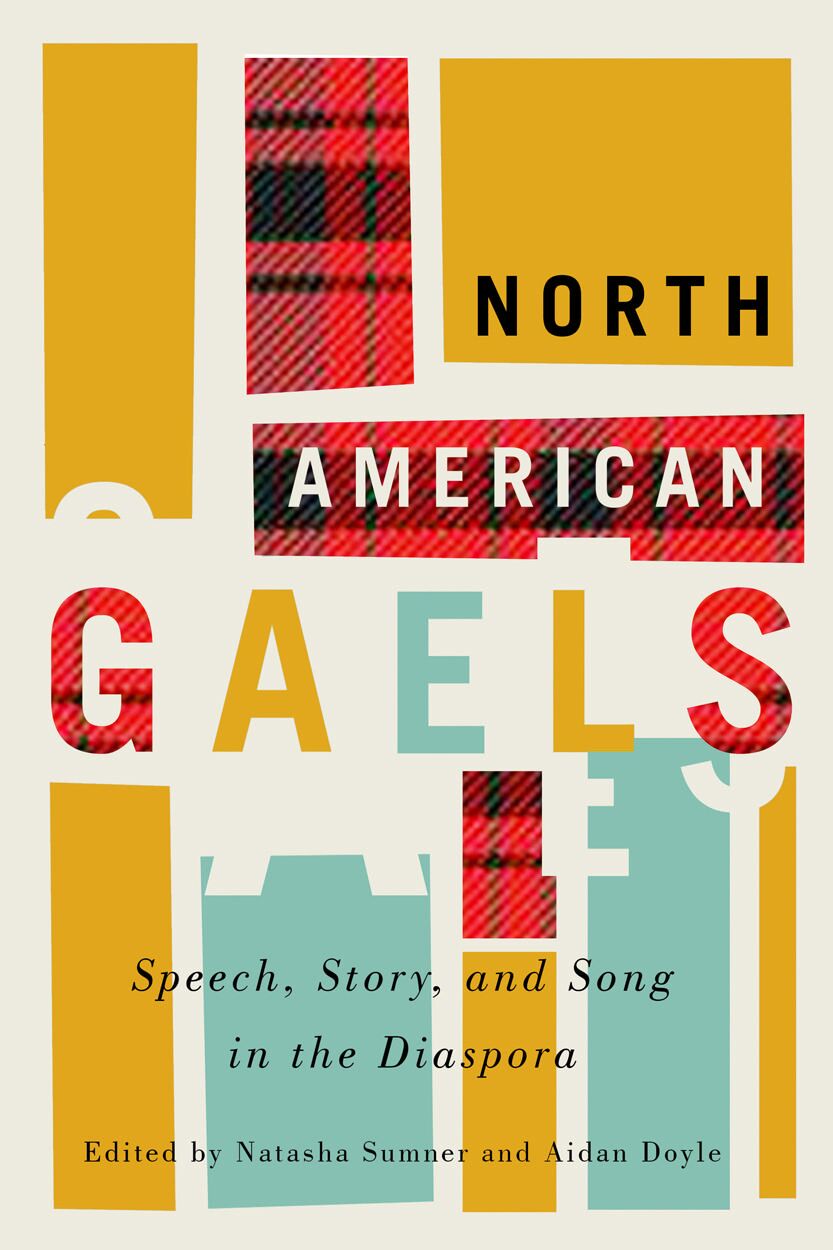
North American Gaels
A groundbreaking exploration of the literature and folklore of North America's Irish and Scottish Gaelic-speaking diaspora since the eighteenth century. North American Gaels shines new light on the ways Irish and Scottish Gaels have left an enduring mark through speech, story, and song.
eBook

Colonial Literature and the Native Author
This book is the first study of writers who are both Victorian and indigenous, who have been educated in and write in terms of Victorian literary conventions, but whose indigenous affiliation is part of their literary personae and subject matter.What happens when the colonised, indigenous, or 'native' subject learns to write in the literary language of empire? If the romanticised subject of colonial literature becomes the author, is a new kind of writing produced, or does the native author conform to the models of the coloniser?
By investigating the ways that nineteenth-century concerns are adopted, accommodated, rewritten, challenged, re-inscribed, confronted, or assimilated in the work of these authors, this study presents a novel examination of the nature of colonial literary production and indigenous authorship, as well as suggesting to the discipline of colonial and postcolonial studies a perhaps unsettling perspective with which to look at the larger patterns of Victorian cultural and literary formation.
eBook

Wisdom in Nonsense
I broke all the rules that my dad gave me. It was he who had given me, in part, the confidence to think of my life as being worthy to mix with those of the geniuses. —Heather O’Neill With generosity and wry humour, novelist Heather O’Neill recalls several key lessons she learned in childhood from her father: memories and stories about how crime does pay, why one should never keep a diary, and that it is good to beware of clowns, among other things. Her father and his eccentric friends—ex-bank robbers and homeless men—taught her that everything she did was important, a belief that she has carried through her life. O’Neill’s intimate recollections make Wisdom in Nonsense the perfect companion to her widely praised debut novel, Lullabies for Little Criminals (HarperCollins). Introduction by Kit Dobson.
eBook