
Catalogue Search | MBRL


Are you sure you want to remove the book from the shelf?

{{itemTitle}}
48
result(s) for
"Canada Militia History."
Sort by:


Militia myths : ideas of the Canadian citizen soldier, 1896-1921
Militia Myths traces the cultural history of the citizen soldier from 1896 to 1921, an ideal that lay at the foundation of how Canadians experienced and remember the First World War.
eBook
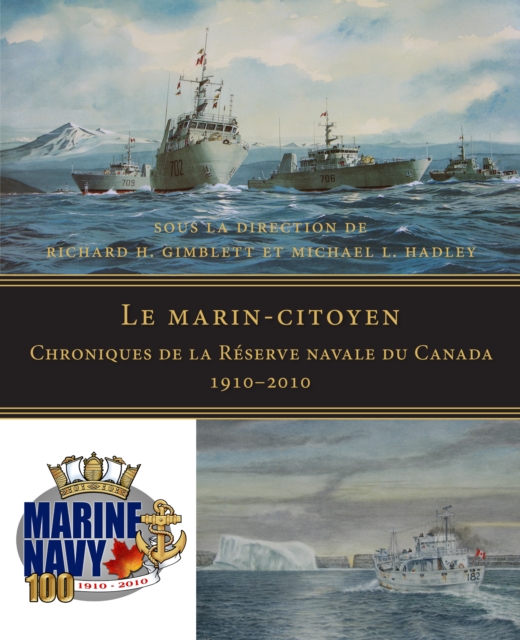
Le Marin-Citoyen
Ce livre commémoratif, produit à l'occasion du Centenaire de la Marine canadienne 1910-2010, traite d'une double citoyenneté particulière : celle des Canadiens exerçant le métier de la mer au service du Canada, tout en répondant aux devoirs de leurs activités civiles, chez eux, dans leur communauté. Les points de vue de ces citoyens marins à temps partiel, qui ont constitué la Réserve navale du Canada au cours des cent dernières années, offrent une autre histoire intéressante, utile et opportune de la Marine canadienne.La plupart des personnes ayant contribué à ce livre ont servi dans la Réserve navale du Canada, et tous sont des autorités respectées dans leur domaine. Lu isolément ou comme complément du livre Le service naval du Canada, 1910-2010 : Cent ans d'histoire(Dundurn, 2009), les lecteurs trouveront beaucoup de plaisir et d'information dans cette riche combinaison de textes, de photos et d'illustrations de personnes, de navires et d'aéronefs qui ont formé une fière institution nationale.
eBook

The Canadian Army Medical Corps affair of 1916 and Surgeon General Guy Carleton Jones
The rapid expansion of military medical service in the First World War, successfully completed under the direction of Surgeon General Guy Carleton Jones, remains an extraordinary achievement in Canada’s history. In 1916, a conflict of personalities threatened confidence in the service. Eventually Prime Minister Sir Robert Borden’s intervention restored the status quo, but the affair eclipsed Jones’s outstanding career.
Journal Article

Wilder Penfield, Sir Arthur Currie, and the Montreal Neurological Institute
Wilder Penfield and the Montreal Neurological Institute (MNI) are inextricably linked. It was Penfield’s unique idea to create a building with an academic atmosphere wherein basic neuroscience and clinical care of neurological patients would benefit from interaction and mutual support. It is clear that without Penfield that there would be no MNI; however, the role of another Canadian icon, Sir Arthur Currie, in the development of the MNI has heretofore been barely mentioned. The thesis of this paper is that Currie had a critical role in the gestation of the MNI that has generally been ignored.
Wilder Penfield, Sir Arthur Currie et l’Institut neurologique de Montréal. La vie de Wilder Penfield et l’histoire de l’Institut neurologique de Montréal (INM) sont intimement liées. C’est en effet Penfield qui a eu l’idée originale de créer une institution dotée d’une ambiance universitaire au sein de laquelle l’approche fondamentale des neurosciences et les soins cliniques prodigués à des patients atteints de troubles neurologiques pourraient bénéficier d’une forme de soutien mutuel et d’interactions. Il est donc évident que l’INM n’aurait jamais existé sans l’apport de Penfield. Toutefois, le rôle joué par Sir Arthur Currie, un autre symbole canadien, dans l’essor de cet établissement n’a été qu’à peine mentionné jusqu’à ce jour. Le présent article repose donc sur la prémisse que Currie a joué un rôle essentiel, bien que généralement ignoré, dans le développement de l’INM.
Journal Article

Western University (No. 10 Canadian Stationary Hospital and No. 14 Canadian General Hospital): a study of medical volunteerism in the First World War
The Canadian government depended on chaotic civilian volunteerism to staff a huge medical commitment during the First World War. Offers from Canadian universities to raise, staff and equip hospitals for deployment, initially rejected, were incrementally accepted as casualties mounted. When its offer was accepted in 1916, Western University Hospital quickly adopted military decorum and equipped itself using Canadian Red Cross Commission guidelines. Staff of the No. 10 Canadian Stationary Hospital and the No. 14 Canadian General Hospital retained excellent morale throughout the war despite heavy medical demand, poor conditions, aerial bombardment and external medical politics. The overwhelming majority of volunteers were Canadian-born and educated. The story of the hospital’s commanding officer, Edwin Seaborn, is examined to understand the background upon which the urge to volunteer in the First World War was based. Although many Western volunteers came from British stock, they promoted Canadian independence. A classical education and a broad range of interests outside of medicine, including biology, history and native Canadian culture, were features that Seaborn shared with other leaders in Canadian medicine, such as William Osler, who also volunteered quickly in the First World War.
Journal Article
A uniquely Canadian military moment: Sam Hughes and the No. 7 General Hospital, 1915–1916
Universities across Canada actively supported the call to arms in 1914, and Queen’s University in Kingston, Ontario, was no different. Though a myriad of units composed of Queen’s faculty and students were created, the university perceived the military hospital raised by the school’s medical faculty to be among its most vital contributions to the First World War. This commentary describes the engagement of the No. 7 General Hospital with the Minister of Militia, Sam Hughes, which has become an almost unknown footnote to its illustrious story. This commentary has an Appendix, available at canjsurg.ca.
Journal Article

Industrial Manifest Destiny: American Firearms Manufacturing and Antebellum Expansion
The years surrounding the origins of the term “Manifest Destiny” were a transitional period in the history of industrialization. Historians have done much to analyze the impact of major technological shifts on business structure and management, and to connect eastern markets and westward expansion. They have paid less attention, however, to the relationship among continental geopolitics, industrial development, and frontier warfare. This article uses War Department papers, congressional reports, and manufacturers’ records to examine how the arms industry developed in response to military conflict on the frontier. As public and private manufacturers altered production methods, product features, and their relationships to one another, they contributed to the industrial developments of the mid-nineteenth century.
Journal Article

Another Kind of Justice
The first historical survey of Canadian military law, providing insights into military justice in Canada, the purpose of military law, and the level of legal professionalism within the Canadian military.
eBook

A militia history of the occupation of the Vancouver Island coalfields, August 1913
The most notable instance of direct military intrusion into civilian life in BC history, this occupation has never been the subject of thorough investigation, despite the periodic attention it has received from historians of the labour movement in British Columbia.1 A century after the end of the Vancouver Island coal strike of 1912-14, the most recent narratives of the militias occupation of the mid-island mining towns remain mired in local myth or skewed by a bias in support of the forces of labour. [...]there can be no doubt that the deployment of the militia in the strike zone served the interests of the colliery bosses (who were intent on returning to business as usual) at least as much as it ensured public safety.
Journal Article