
Catalogue Search | MBRL


Are you sure you want to remove the book from the shelf?

{{itemTitle}}
7,459
result(s) for
"Canadian fiction"
Sort by:

Shades within us : tales of migrations and fractured borders
\"Migration comes in unlimited shades of colour where we straddle between physical, emotional, and spiritual boundaries within ourselves-and within our worlds and beyond...Who are the shades within us? We are called immigrants, locals, explorers, natives, settlers, pioneers, discoverers, newcomers, drifters, tenants, transients, nomads, expatriates, wanderers, evacuees, refugees, pilgrims, aliens, foreigners, squatters, visitors, intruders, conquerors, asylum seekers, urbanites, outsiders ... Take a journey with twenty-one speculative fiction authors through fractured borders and open frontiers, and break the monolith of our assumptions about migrants and \"others.\" Stories that transcend borders, generations, and culture-always captivating and relatable. In the end, we get a glimpse into our human need in face of change-realized or lost-to hold fast to home, tradition, family, and the places in which we find them. And no matter how difficult or challenging lives can be-the human spirit will triumph in the end as all emotions are universal: we born, we dream, we strive, we die. Introduction by Eric Choi and Gillian Clinton. In addition to dealing with migrations, immigrants, and anti-discrimination, the book also deals with mental health and mental illness. There is an appendix in the book for Mental Health Resources and another appendix for Anti-Discrimination Resources.\"-- Provided by publisher.
Book
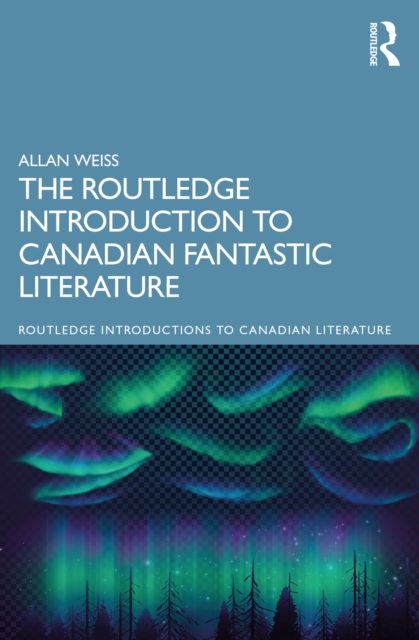
The Routledge Introduction to Canadian Fantastic Literature
This study introduces the history, themes, and critical responses to Canadian fantastic literature. Taking a chronological approach, this volume covers the main periods of Canadian science fiction and fantasy from the early nineteenth century to the first decades of the twenty-first century. The book examines both the texts and the contexts of Canadian writing in the fantastic, analyzing themes and techniques in novels and short stories, and looking at both national and international contexts of the literature’s history. This introduction will offer a coherent narrative of Canadian fantastic literature through analysis of the major texts and authors in the field and through relating the authors’ work to the world around them.
eBook


Inscrutable belongings : queer Asian North American fiction
Inscrutable Belongings brings together formalist and contextual modes of critique to consider narrative strategies that emerge in queer Asian North American literature. Stephen Hong Sohn provides extended readings of fictions involving queer Asian North American storytellers, looking to texts including Russell Leong's \"Camouflage,\" Lydia Kwa's Pulse, Alexander Chee's Edinburgh, Nina Revoyr's Wingshooters, and Noël Alumit's Letters to Montgomery Clift. Despite many antagonistic forces, these works' protagonists achieve a revolutionary form of narrative centrality through the defiant act of speaking out, recounting their \"survival plots,\" and enduring to the very last page. These feats are made possible through their construction of alternative social structures Sohn calls \"inscrutable belongings.\" Collectively, the texts that Sohn examines bring to mind foundational struggles for queer Asian North Americans (and other socially marginalized groups) and confront a broad range of issues, including interracial desire, the AIDS/HIV epidemic, transnational mobility, and postcolonial trauma. In these texts, Asian North American queer people are often excluded from normative family structures and must contend with multiple histories of oppression, erasure, and physical violence, involving homophobia, racism, and social death. Sohn's work makes clear that for such writers and their imagined communities, questions of survival, kinship, and narrative development are more than representational—they are directly tied to lived experience.
eBook

Cli-fi : Canadian tales of climate change
\"With the world facing the greatest global crisis of all time - climate change - personal and political indifference has wrought a series of unfolding complications that are altering our planet, and threatening our very existence. Reacting to the warnings sounded by scientists and thinkers, writers are responding imaginatively to the seriousness of changing ocean conditions, the widening disappearance of species, genetically modified organisms, increasing food shortages, mass migrations of refugees, and the hubris behind our provoking Mother Earth herself. These stories of Climate Fiction (Cli-fi) feature perspectives by culturally diverse Canadian writers of short fiction, science fiction, fantasy, and futurist works, and transcend traditional doomsday stories by inspiring us to overcome the bleak forecasted results of our current indifference.\"-- Provided by publisher.
Book

Writing the Roaming Subject
Engaging current debates within the studies of life writing and of the nation-state,Writing the Roaming Subjectfocuses on a group of Canadian writers who pose questions about cultural difference and national identity while writing about their own lives and their own experiences of displacement. Joanne Saul uses the term 'biotext' to describe the unique form of writing that challenges critical practices regarding both life writing and immigrant and ethnic minority writing by blurring the borders of biography, autobiography, history, fiction and theory, as well as poetry, prose, and visual representation.
In her readings of selected contemporary Canadian biotexts - including Michael Ondaatje'sRunning in the Family, Daphne Marlatt'sGhost Works, Roy Kiyooka'sMothertalk, and Fred Wah'sDiamond Grill- Saul suggests that by crossing generic boundaries, these works illuminate the complex relationships between language, place, and self as they are manifested in textual form.Writing the Roaming Subjectexplores issues of identity formation, representation, and resistance in Canada and suggests that these are particularly crucial questions during a period of Canadian literary history when so many writers are insisting on new, more diverse cultural performances that resist the pull of the national imaginary.
eBook
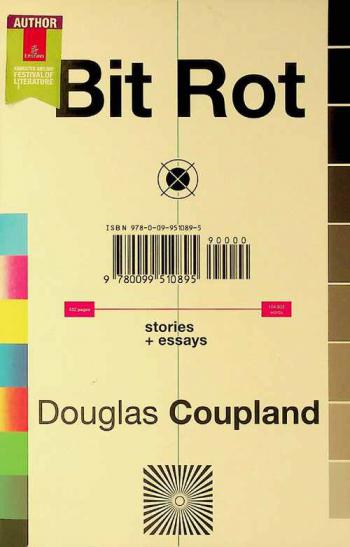
Bit rot : short stories + essays
'Bit rot' is a term used in digital archiving to describe the way digital files can spontaneously and quickly decompose. As Coupland writes, 'bit rot also describes the way my brain has been feeling since 2000, as I shed older and weaker neurons and connections and enhance new and unexpected ones'. In Bit Rot, Douglas Coupland explores the different ways in which twentieth-century notions of the future are being shredded, and creates a gem of the digital age.

Disciplining girls : understanding the origins of the classic orphan girl story
At the heart of some of the most beloved children's novels is a passionate discussion about discipline, love, and the changing role of girls in the twentieth century. Joe Sutliff Sanders traces this debate as it began in the sentimental tales of the mid-nineteenth century and continued in the classic orphan girl novels of Louisa May Alcott, Frances Hodgson Burnett, L. M. Montgomery, and other writers still popular today. Domestic novels published between 1850 and 1880 argued that a discipline that emphasized love was the most effective and moral form. These were the first best sellers in American fiction, and by reimagining discipline as a technique of the heart—rather than of the whip—they ensured their protagonists a secure, if limited, claim on power. This same ideal was adapted by women authors in the early twentieth century, who transformed the sentimental motifs of domestic novels into the orphan girl story made popular in such novels as Anne of Green Gables and Pollyanna. Through close readings of nine of the most influential orphan girl novels, Sanders provides a seamless historical narrative of American children's literature and gender from 1850 until 1923. He follows his insightful literary analysis with chapters on sympathy and motherhood, two themes central to both American and children's literature, and concludes with a discussion of contemporary ideas about discipline, abuse, and gender. Disciplining Girls writes an important chapter in the history of American, women's, and children's literature, enriching previous work about the history of discipline in America.
eBook

Setting in the East
He shows that realism arrived comparatively late to the Maritime provinces and argues that the emergence of a realist style corresponded with a dramatic period of economic and cultural disruption during which the Eastern provinces were transformed from one Canada's most developed, prosperous, and promising regions into one characterized by chronic underemployment and underdevelopment. The region is thus torn between its memory of an earlier, more traditional social order and its present experience as a modern industrial society. These tensions are embedded in the Maritime character and have affected not only the lives of its people but the imaginations and texts of its writers. The stories of Thomas Raddall, Hugh MacLennan, Charles Bruce, Ernest Buckler, Alden Nowlan, Alistair MacLeod, Donna Smyth, Budge Wilson, and David Adams Richards have been deeply influenced by the cultural shifts they have observed. In the last two decades a host of new literary voices has emerged, and Creelman also explores the works of such writers as Ann-Marie MacDonald, Lynn Coady, Nancy Bauer, Deborah Joy Corey, Carol Bruneau, Alan Wilson, Leo McKay, and Sheldon Currie. He shows that these Maritime artists share a common regional identity that shapes their narratives as they find their own paths through the tensions which envelop them.
eBook