
Catalogue Search | MBRL


Are you sure you want to remove the book from the shelf?

{{itemTitle}}
21
result(s) for
"Canadian fiction (English) 21st century."
Sort by:

Cli-fi : Canadian tales of climate change
\"With the world facing the greatest global crisis of all time - climate change - personal and political indifference has wrought a series of unfolding complications that are altering our planet, and threatening our very existence. Reacting to the warnings sounded by scientists and thinkers, writers are responding imaginatively to the seriousness of changing ocean conditions, the widening disappearance of species, genetically modified organisms, increasing food shortages, mass migrations of refugees, and the hubris behind our provoking Mother Earth herself. These stories of Climate Fiction (Cli-fi) feature perspectives by culturally diverse Canadian writers of short fiction, science fiction, fantasy, and futurist works, and transcend traditional doomsday stories by inspiring us to overcome the bleak forecasted results of our current indifference.\"-- Provided by publisher.
Book

Inscrutable belongings : queer Asian North American fiction
Inscrutable Belongings brings together formalist and contextual modes of critique to consider narrative strategies that emerge in queer Asian North American literature. Stephen Hong Sohn provides extended readings of fictions involving queer Asian North American storytellers, looking to texts including Russell Leong's \"Camouflage,\" Lydia Kwa's Pulse, Alexander Chee's Edinburgh, Nina Revoyr's Wingshooters, and Noël Alumit's Letters to Montgomery Clift. Despite many antagonistic forces, these works' protagonists achieve a revolutionary form of narrative centrality through the defiant act of speaking out, recounting their \"survival plots,\" and enduring to the very last page. These feats are made possible through their construction of alternative social structures Sohn calls \"inscrutable belongings.\" Collectively, the texts that Sohn examines bring to mind foundational struggles for queer Asian North Americans (and other socially marginalized groups) and confront a broad range of issues, including interracial desire, the AIDS/HIV epidemic, transnational mobility, and postcolonial trauma. In these texts, Asian North American queer people are often excluded from normative family structures and must contend with multiple histories of oppression, erasure, and physical violence, involving homophobia, racism, and social death. Sohn's work makes clear that for such writers and their imagined communities, questions of survival, kinship, and narrative development are more than representational—they are directly tied to lived experience.
eBook
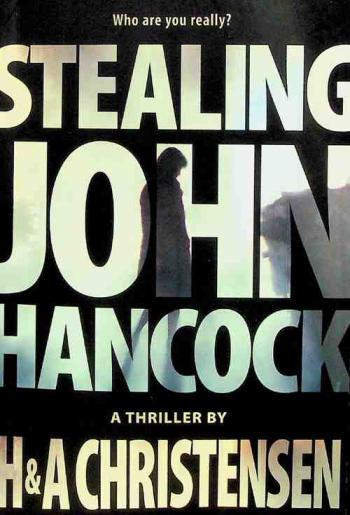
Stealing John Hancock
\"John \"JP\" Hancock's day just got a whole lot worse. After a nasty breakup and being scammed into an acting job that doesn't exist, JP suddenly finds himself the unwitting victim of identity theft and has Detective Nya Grey hot on his heels for multi-million-dollar real estate fraud he didn't commit. With the police closing in, JP finds an unlikely ally in The Vindicator, a secretive and brilliant hacker who agrees to help clear his name by whatever means necessary. But there's more to the story than meets the eye, and they soon find themselves at the centre of a high-stakes international pursuit with a master con artist. Failure to outwit him could land them in prison or far worse, but if they succeed, the payoff includes the ultimate setup for revenge.\"-- Provided by publisher.

You Look Good for Your Age
“I returned to the same respiratory therapist for my annual checkup. I told her that her words to me, ‘You look good for your age,’ had inspired a book. ‘Wow!’ she said. ‘You wrote a whole book about that?’ ‘Twenty-nine kick-ass writers wrote it,’ I said. She gave me a thumbs up.” From the Preface This is a book about women and ageism. There are twenty-nine contributing writers, ranging in age from their forties to their nineties. Through essays, short stories, and poetry, they share their distinct opinions, impressions, and speculations on aging and ageism and their own growth as people. In these thoughtful, fierce, and funny works, the writers show their belief in women and the aging process. Contributors: Rona Altrows, Debbie Bateman, Moni Brar, Maureen Bush, Sharon Butala, Jane Cawthorne, Joan Crate, Dora Dueck, Cecelia Frey, Ariel Gordon, Elizabeth Greene, Vivian Hansen, Joyce Harries, Elizabeth Haynes, Paula E. Kirman, Joy Kogawa, Laurie MacFayden, JoAnn McCaig, Wendy McGrath, E.D. Morin, Lisa Murphy Lamb, Lorri Neilsen Glenn, Olyn Ozbick, Roberta Rees, Julie Sedivy, Madelaine Shaw-Wong, Anne Sorbie, Aritha van Herk, Laura Wershler
eBook

You can't get there from here : the past as present in small-town Ontario fiction
\"Rather than reading small-town representations within works as portraits of a provincial past, this book claims that they are best understood as projections emerging from an urban present. As Ontario urbanized over the past century, small towns became a popular literary trope, and Ryan Porter argues that literary small-town Ontario functioned, and functions still, as not only a refraction but also as an exploration of the province's dominant urban modernity. Utilizing theories from heritage scholars, who view popularly understood pasts as conforming to the zeitgeist of the present, You Can't Get There from Here argues that the literary small-town Ontario past is malleable, consisting of attempts to come to terms with the present in which the narrators find themselves. The book focuses on four key Ontario authors-- Stephen Leacock, Robertson Davies, Alice Munro, and Jane Urquhart--as well as many secondary authors, and links the readings to much broader trends in actual Ontario towns and in popular culture.\"-- Provided by publisher.
Book

The Destruction of Nationalism in Twenty-First Century Canadian Apocalyptic Fiction
This article argues that, since the turn of the twenty-first century, fiction in Canada – whether by English-Canadian, Québécois, or Indigenous writers – has seen a re-emergence in the apocalyptic genre. While apocalyptic fiction also gained critical attention during the twentieth century, this initial wave was tied to disenfranchised, marginalized figures, excluded as failures in their attempts to reach a promised land. As a result, fiction at that time – and perhaps equally so in the divided English-Canadian and Québécois canons – was chiefly a (post)colonial, nationalist project. Yet, apocalyptic fiction in Canada since 2000 has drastically changed. 9/11, rapid technological advancements, a growing climate crisis, the Truth and Reconciliation Commission: these changes have all marked the fictions of Canada in terms of futurities. This article thus examines three novels – English-Canadian novelist Emily St. John Mandel’s
(2014), Indigenous writer Thomas King’s
(2014), and Québécois author Nicolas Dickner’s
(2010) – to discuss the ways in which they work to bring about the destruction of nationalism in Canada through the apocalyptic genre and affectivity to envision new futures.
Journal Article

Challenging addiction in Canadian literature and classrooms
\"In the richly interdisciplinary study, Challenging Addiction in Canadian Literature and Classrooms, Cara Fabre argues that popular culture in its many forms contributes to common assumptions about the causes, and personal and social implications, of addiction. Recent fictional depictions of addiction significantly refute the idea that addiction is caused by poor individual choices or solely by disease through the connections the authors draw between substance use and poverty, colonialism, and gender-based violence. With particular interest in the pervasive myth of the \"Drunken Indian,\" Fabre asserts that these novels reimagine addiction as social suffering rather than individual pathology or moral failure. Fabre builds on the growing body of humanities research that brings literature into active engagement with other fields of study including biomedical and cognitive behavioural models of addiction, medical and health policies of harm reduction, and the practices of Alcoholics Anonymous. The book further engages with critical pedagogical strategies to teach critical awareness of stereotypes of addiction and to encourage the potential of literary analysis as a form of social activism.\"-- Provided by publisher.
Book
Sleeping in Tall Grass
\"My emptiness will not befrenetic with the frictionof my father's silencesbut still as the unmarked gravesof his many forgotten selves\"—From \"Salt\"A cycle of poems, Sleeping in Tall Grass takes an unsparing look at a painful, sometimes abusive, yet strangely redemptive family story enfolded within the body of the Canadian prairie itself—at once physical, historical, and metaphysical. These intensely personal poems reflect the complex relationships between sound and space, language and silence. Treating time as more layered than sequential, they reflect a process of organic composition distilled from Therrien's iterative observations and utterances. This is writing that reaches \"into the very grain of existence\"—a sonorous re-presentation of the human presence on the dispassionate but eternally giving plains.
eBook

Birnam Wood
The Booker-winning author of The Luminaries delivers a gripping thriller of high drama and kaleidoscopic insight into what drives us to survive -- Provided by publisher.
Book

Australian Fiction as Archival Salvage
Australian Fiction as Archival Salvage examines developments in the Australian postcolonial historical novel from 1989 to the present, including seminal experiments in the genre by Kate Grenville, Mudrooroo, Kim Scott, Peter Carey, Rohan Wilson and others.
eBook