
Catalogue Search | MBRL


Are you sure you want to remove the book from the shelf?

{{itemTitle}}
307
result(s) for
"Canadian literature 20th century History and criticism."
Sort by:

Contested spaces, counter-narratives, and culture from below in Canada and Quâebec
\"This collection explores strategies of reading space and conflict in Canadian and Quâebâecois literary and cultural performances. How do literary texts and popular cultural performances produce and contest spatial practices? What is the role of the nation, the city, the community, and the individual subject in reproducing space, even during times of global hegemony and neocolonialism? In what ways do marginalized individuals and communities represent, contest, or appropriate spaces through counter-narratives and expressions of culture from below? And how does space itself shape conflict, counter-memory, and culture from below? Focusing on contestation instead of harmony and consensus, Contested Spaces disturbs the idealized space of Canadian multicultural pluralism to carry literary analysis and cultural studies into spaces often undetected and unforeseen; Contested Spaces exposes geographies of exclusion and difference such as flophouses and \"slums,\" shantytowns and urban alleyways, underground spaces and peep shows, inner city urban parks as experienced by minority ethnics, the poor, women, social activists, Indigenous people, and Francophones in Canada. These essays are the product of sustained and high-level collaboration across French and English academic communities in Canada to facilitate theoretical exchange on the topic of space and contestation, to expose geographies of exclusion, and to generate new spaces of hope in the spirit of pioneering work by Henri Lefebvre, Michel Foucault, Michel de Certeau, Doreen Massey, David Harvey, and other more recent theorists of space.\" -- Provided by publisher.
Book

The Literary Legacy of the Macmillan Company of Canada
The Literary Legacy of the Macmillan Company of Canadaalso illuminates the key individuals – including Hugh Eayrs, John Gray, and Hugh Kane – whose personalities were as fascinating as those of the authors they published, and whose achievements helped to advance modern literature in Canada.
eBook

Women's writing in Canada
\"Spanning the period from the Massey Commission to the present and reflecting on the media of print, film, and song, this study attends to the burgeoning energy of women writers across genres. It explores how their work interprets our national story. The questioning, disruptive feminist practice of their fiction, filmmaking, poetry, song-writing, drama, and non-fiction reveals the tensions of colonial society at the same time as it transforms cultural life in Canada. Women's Writing in Canada resurrects foremothers who were active before and after the mid-century--Ethel Wilson, Gabrielle Roy, Gwen Pharis Ringwood, Dorothy Livesay, and P.K. Page-- as well as such forgotten writers as Grace Irwin, Patricia Blondal, and Edna Jaques. Its breadth extends to the contemporary voices and influences of novelists Tracey Lindberg and Heather O'Neill, poets Marilyn Dumont and Leanne Betasamosake Simpson, playwrights Hannah Moscovitch and Anna Chatterton, and filmmakers Sarah Polley and Mina Shum. Writing for children as well as memoirs, autobiographies, comic books, and cookbooks illustrate the wide and impressive range of women's talents.\"-- Provided by publisher.
Book

Comrades and Critics
While Canadian historians have studied socialism in the 1930s, and although there have been many studies of American and British literary leftists from this period, Comrades and Critics is the first full-length study of Canada's 1930s literary left. Challenging dominant perceptions that this decade was a lull between the more celebrated modernist enterprises of the 1920s and 1940s, Candida Rifkind argues that the events of the 1930s - from mass unemployment, to the dustbowl, to the Spanish Civil War - galvanized a generation of writers, leading them to unite artistic practice and political action in provocative and influential ways.
Analyzing and recovering much-neglected poems, plays, manifestoes, and documentaries, Rifkind demonstrates how leftist cultural production came to dominate English-Canadian literature by the end of the decade. She pays particular attention to the significant role that women writers played in this period and examines a diverse group of writers that included Dorothy Livesay, Anne Marriott, Irene Baird, and Toby Gordon Ryan. These writers negotiated the struggle to revolutionize both literature and politics, while being subject to the gender hierarchies of socialism and literary modernism that continued long after the thirties came to an end.
A groundbreaking study in Canadian history and literature, Comrades and Critics is a much-needed examination of an important and still influential literary period.
eBook

Mapping with words : Anglo-Canadian literary cartographies, 1789-1916
Mapping with Words re-conceptualizes settler writing as literary cartography. The topographical descriptions of early Canadian settler writers generated not only picturesque and sublime landscapes, but also verbal maps. These worked to orient readers, reinforcing and expanding the cartographic order of the emerging colonial dominion. Drawing upon the work of critical and cultural geographers as well as literary theorists, Sarah Wylie Krotz opens up important aesthetic and political dimensions of both familiar and obscure texts from the nineteenth century, including Thomas Cary's Abram's Plains, George Monro Grant's Ocean to Ocean, and Susanna Moodie's Roughing it in the Bush. Highlighting the complex territoriality that emerges from their cartographic aesthetics, Krotz offers fresh readings of these texts, illuminating their role in an emerging spatial imaginary that was at once deeply invested in the production of colonial spaces and at the same time enmeshed in the realities of confronting Indigenous sovereignties.
Book

Writing in the Feminine in French and English Canada
Considers the contemporary movement of \"writing in the feminine\", by examining the work of five women writers from French and English Canada and the dialogue therein with feminist and psychoanalytic theory and theories of ethics.
eBook

The Burgess Shale : the Canadian writing landscape of the 1960s
\"Margaret Atwood considers the Canadian literary landscape of the 1960s to be like the Burgess Shale, a geological formation that contains the fossils of many weird and strange early life forms, different from but not unrelated to contemporary writerly ones. The Burgess Shale is not all about writerly pursuits, though. Atwood also gives readers some insight into the fashions and foibles of the times. Her recollections and anecdotes offer a wry and often humorous look at the early days of the institutions taken for granted today--from writers' unions and grant programs to book tours and festivals.\"-- Provided by publisher.
Book

Canadian literature
An important critical study of Canadian literature, placing internationally successful anglophone Canadian authors in the context of their national literary history.
While the focus of the book is on twentieth-century and contemporary writing, it also charts the historical development of Canadian literature and discusses important eighteenth- and nineteenth-century authors. The chapters focus on four central topics in Canadian culture: Ethnicity, Race, Colonisation; Wildernesses, Cities, Regions; Desire; and Histories and Stories. Each chapter combines case studies of five key texts with a broad discussion of concepts and approaches, including postcolonial and postmodern reading strategies and theories of space, place and desire. Authors chosen for close analysis include Margaret Atwood, Michael Ondaatje, Alice Munro, Leonard Cohen, Thomas King and Carol Shields.
Key Features
The first critical guide to Canadian literature in EnglishAuthors selected on the basis of their popularity on undergraduate coursesCombines historical and thematic approaches to Canadian writingLinks close reading of key texts with theoretical approaches to Canadian literatureDiscusses in detailObasanby Joy Kogawa,Anne of Green Gablesby L. M. Montgomery,The Republic of Loveby Carol Shields, 'Wilderness Tips' andThe Journals of Susanna Moodieby Margaret Atwood,Wild Geeseby Martha Ostenso,Fugitive Piecesby Anne Michaels,The Divinersby Margaret Laurence andIn the Skin of a Lionby Michael Ondaatje
eBook

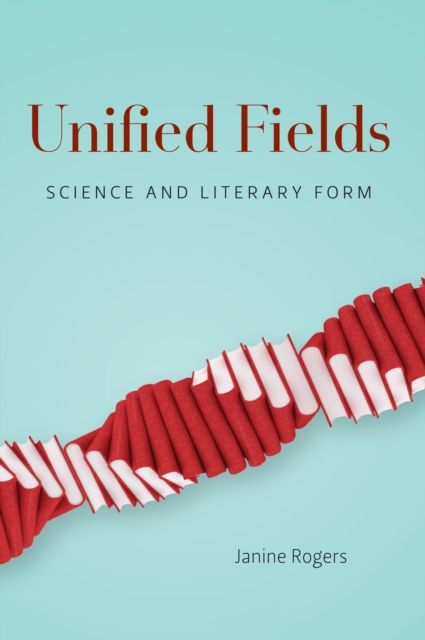
Unified Fields
Literary form presents an important opportunity for understanding the relationship between literature and science. Through a series of close readings of poetry and prose, Unified Fields demonstrates that formal structures in literature can relate to scientific concepts through their essential interpretive functions. Janine Rogers engages with a wide range of writing from Canadian, British, and American authors, including the poetry of Elizabeth Bishop and Robyn Sarah as well as prose by Margaret Atwood, Ian McEwan, and Stephen Hawking. She employs an interdisciplinary approach combining formalist, historical, and theoretical literary practice, informed by interpretive frameworks developed in the philosophy of science. Although dedicated to contemporary texts, Rogers's analysis is frequently rooted in historical contexts of form, including Euclidean geometry and medieval romance, developed when the distinction between literature and science was not so drastic. These historical connections demonstrate that continuities of form resonate in both contemporary literature and science. Through critical analysis and engaging prose, Unified Fields bridges an important disciplinary gap by revealing how literary practice informs scientific understanding.
eBook