
Catalogue Search | MBRL


Are you sure you want to remove the book from the shelf?

{{itemTitle}}
1,528
result(s) for
"Cancer Patients Biography."
Sort by:

Always smile : Carley Allison's secrets for laughing, loving and living
\"Carley Allison was an up-and-coming young figure skater and singer who died tragically at the age of 18 of a cancer so rare there were only seven cases in the world. In this book, you will come to know Carley in her own words and in the words of the people who knew and loved her. Award-winning author Alice Kuipers weaves the memories of Carley's friends, family, and boyfriend with the blog Carley kept throughout her journey, from the moment she was diagnosed until her final months of searching for treatment that would keep the disease at bay. Kuipers also recreates pivotal moments from Carley's point of view, acting as ventriloquist for a voice lost too young. This book is built around the words she lived by, both in sickness and in health. Above all, again and again, she summed up her philosophy in two words: always smile.\"-- Provided by publisher.
Book


The Guardian Poplar
When Barney Clark received the Jarvik-7 artificial heart in 1983 and Cold Fusion came under fire in 1989, Chase Peterson, as the University of Utah president, was inevitably pulled into these campus events. While these episodes may be the best known in Peterson’s professional history, they are certainly not the only stories that make his autobiography worth reading.
The Guardian Poplar tells of a man who grew up in small-town Utah and carried his pioneer and Mormon heritage to a New England prep school and later to Harvard. He then returned to Utah as a doctor, but unexpectedly found himself back at Harvard as its dean of admissions, handling issues such as the Vietnam War and racial and gender reform. The book explains how Peterson’s home state recruited him back to become an administrator at the University of Utah and how he would eventually become the university president, taking on new issues and challenges. Peterson recounts these years by drawing on anecdotes that recall the people he served and the moments that brought his life meaning.
This autobiography is a compelling account of how Peterson has managed to balance family and career, handle the tensions that have arisen between his faith and his scientific training, and remain solid in the face of his newest challenge—cancer. The book’s engaging prose and honest reflections are sure to intrigue and inspire readers who know the man well, as well as those readers who simply want to know a man who can be described as dedicated, faithful, hardworking, and hopeful about the future.
“When I first met Chase Peterson as a Harvard freshman—along with our joint friend and brother David Evans—something deeply touched me. It was not only his sincere smile and open embrace but also a sense that here was a kind and courageous man comfortable in his own skin, secure in who he was yet eager to encounter new persons, new experiences, and new challenges. . . . He was from Utah but in New England, a Mormon in old Harvard, and a medical doctor in the deanship of admissions. Little did I know that his journey would enhance and enrich my own—owing to his critical allegiance to his family, his faith, his friends, and to his citizenship of country and world. His prophetic witness at Harvard in the turbulent ‘60s and ‘70s, his promotion of black priesthood in the Mormon church, his support of antiapartheid protests in the ‘80s, and his steadfast defense of academic freedom in the Cold Fusion controversy in the early ‘90s all express his quiet and humble effort to be true to himself—a self grounded in, but
not limited by, a rich Mormon tradition.”—from the foreword by Cornel West
eBook

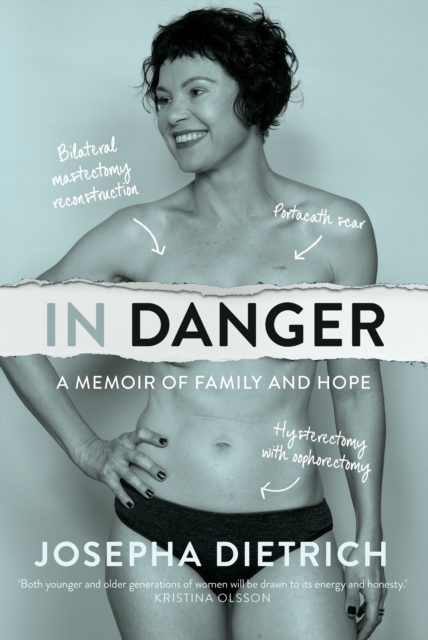
In Danger
One woman's powerful story of how her mother's death saved her life. When Josepha Dietrich was 21, her mother was diagnosed with breast cancer. Years later, after her mother's death, the disease reared up in Josie's own cells. She was 35, and her high-needs son was not yet one. As the daughter of a woman who had sought out alternatives to conventional medicine, Josie used her own knowledge and her mother's experience to find solutions for herself. Later, with what she'd learnt, she also helped her son rise out of his autistic state. Capturing Josie's energy and force-of-nature personality, In Danger tells of her journey through breast cancer, exploring disease and the human condition, and shedding light on life's darker aspects. At its heart, this moving memoir delves deep into how it feels when everything you love is in danger.
eBook


Fractured borders
Women have been writing about cancer for decades, but since the early 1990s, the body of literature on cancer has increased exponentially as growing numbers of women face the searing realities of the disease and give testimony to its ravages and revelations. Fractured Borders: Reading Women's Cancer Literature surveys a wide range of contemporary writing about breast, uterine, and ovarian cancer, including works by Marilyn Hacker, Margaret Edson, Carole Maso, Audre Lorde, Eve Sedgwick, Mahasweta Devi, Lucille Clifton, Alicia Ostriker, Jayne Anne Phillips, Terry Tempest Williams, and Jeanette Winterson, among many others. DeShazer's readings bring insights from body theory, performance theory, feminist literary criticism, French feminisms, and disability studies to bear on these works, shining new light on a literary subject that is engaging more and more writers.
eBook

