
Catalogue Search | MBRL


Are you sure you want to remove the book from the shelf?

{{itemTitle}}
232
result(s) for
"Canterbury (England)"
Sort by:

The Canterbury tales
A retelling of the medieval poem about a group of travelers on a pilgrimage to Canterbury and the tales they tell each other. With their astonishing diversity of tone and subject matter, The Canterbury Tales have become one of the touchstones of medieval literature. Translated here into modern English, these tales of a motley crowd of pilgrims drawn from all walks of life-from knight to nun, miller to monk-reveal a picture of English life in the fourteenth century that is as robust as it is representative.
Book

Magic in the Cloister
During the late thirteenth and early fourteenth centuries a
group of monks with occult interests donated what became a
remarkable collection of more than thirty magic texts to the
library of the Benedictine abbey of St. Augustine's in Canterbury.
The monks collected texts that provided positive justifications for
the practice of magic and books in which works of magic were copied
side by side with works of more licit genres. In Magic in the
Cloister , Sophie Page uses this collection to explore the
gradual shift toward more positive attitudes to magical texts and
ideas in medieval Europe. She examines what attracted monks to
magic texts, works, and how they combined magic with their
intellectual interests and monastic life. By showing how it was
possible for religious insiders to integrate magical studies with
their orthodox worldview, Magic in the Cloister
contributes to a broader understanding of the role of magical texts
and ideas and their acceptance in the late Middle Ages.
eBook

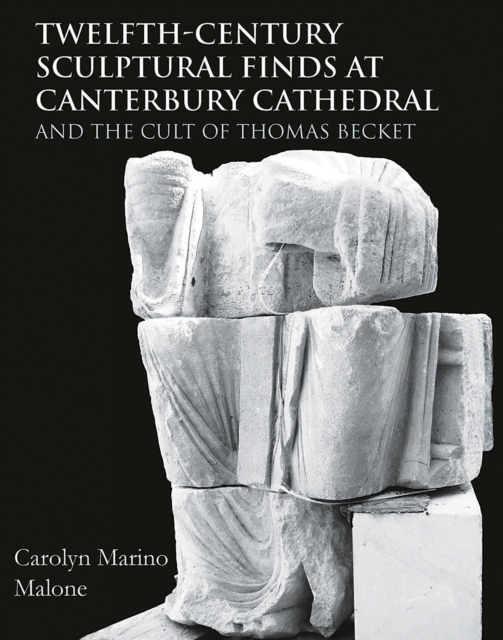
Twelfth-Century Sculptural Finds at Canterbury Cathedral and the Cult of Thomas Becket
This study reconstructs twelfth-century sculptural and architectural finds, found during the restoration of the Perpendicular Great Cloister of Christ Church, Canterbury, as architectural screens constructed around 1173. It proposes that the screens provided monastic privacy and controlled pilgrimage to the Altar of the Sword's Point in the Matrydom, the site of Archbishop Thomas Becket's murder in 1170. Excavations in the 1990s discovered evidence of a twelfth-century tunnel leading to the Matyrdom under the crossing of the western transept. Constuction would have required rebuilding the crossing stairs and the screens flanking the crossing. The roundels, portraying lions, devils, a 'pagan', Jews, and a personification of the synagogue, are reconstucted on the south side of the crossing as a screening wall framing the entrance to this tunnel. The quatrefoils with images of Old Testament prophets are reconstructed as a rood screen on the west side of the crossing. In the Matyrdom, a screen, is proposed with, perhaps, the earliest known sculptural representation of Thomas Becket. The rood screen, located behind the Altar of the Holy Cross, would have provided a visual focus during Mass, monastic processions, and sermons, especially during Christmas and Holy Week. The row of prophets, pointing upwards at the Rood, would have functioned as the visual equivalent of the dialogue of the ‘Ordo prophetarum’ that predicted the Messiah as proof to Jews and other unbelievers of Christian redemption. The roundels, just around the corner on the south screening wall, can be interpreted as representing the unbelieving Other and forces of evil warning pilgrims to seek penance at the altar of the newly canonized St Thomas. In addition to this new interpretation, a catalog raisonné and an account of the discovery of the finds offers material for future research that has been unavailable to previous studies. All the finds were photographed by the author as the restoration progressed and 16 pieces have since been lost, making some of the unpublished photographs essential evidence of the archaeological record
eBook

Sacrilege : a thriller
Summer, 1584. Sir Francis Walsingham, spymaster to Queen Elizabeth, has long suspected an undercurrent of Catholic resistance in the city that was once England's greatest centre of pilgrimage. He calls Giordano Bruno, his maverick secret agent, away from his post at the French Embassy to investigate. But when Bruno arrives in Canterbury, he has no idea of the dark secrets he's about to uncover. He must turn his detective's eye on history--on Saint Thomas Becket, the twelfth-century archbishop murdered in Canterbury Cathedral, and on the legend surrounding the disappearance of his body--in order to solve the crime.
BOOK
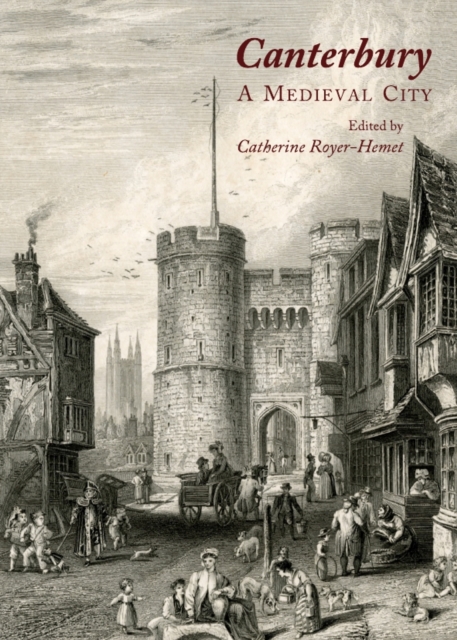
Canterbury
Between the Celtic tribe of the Iron Age the Cantiaci and the twenty-first-century inhabitants of Canterbury, three millenia stand during which the city has been enjoying unparalleled fame, particularly since it became the religious heart of the country in 597 AD. While ambling through the streets of modern Canterbuy, one is able to if careful enough to do so get the feel of the medieval city. There must be reasons for that enduring impact of the past and it might be because of the ov.
eBook

Secret world
\"June, 1589. Now a feted poet and playwright, Kit Marlowe is visiting his family in Canterbury. But it's not the happy homecoming he had hoped for. A longstanding family friend has been found dead in her bed, killed by several blows to the head. Convinced that the wrong person has been found guilty of the crime, Marlowe determines to uncover the truth\"--Dust jacket flap.
BOOK

Archbishops Ralph d'Escures, William of Corbeil and Theobald of Bec
The first two archbishops of Canterbury after the Norman Conquest, Lanfranc and Anselm, were towering figures in the medieval church and the sixth archbishop, the martyred Thomas Becket, is perhaps the most famous figure ever to hold the office. In between these giants of the ecclesiastical world came three less noteworthy men: Ralph d'Escures, William of Corbeil, and Theobald of Bec. Jean Truax's volume in the Ashgate Archbishops of Canterbury Series uniquely examines the pontificates of these three minor archbishops. Presenting their biographies, careers, thought and works as a unified period, Truax highlights crucial developments in the English church during the period of the pontificates of these three archbishops, from the death of Anselm to Becket. The resurgent power of the papacy, a changed relationship between church and state and the expansion of archiepiscopal scope and power ensured that in 1162 Becket faced a very different world from the one that Anselm had left in 1109. Selected correspondence, newly translated chronicle accounts and the text and a discussion of the Canterbury forgeries complete the volume.
Contents: Part I The Archbishops and Their Careers: Introduction: the English Church as Anselm left it; Ralph d'Escures: a different kind of archbishop; The road to Rome: Ralph of Canterbury, Thurstan of York and the primacy dispute; Roman holiday: William of Corbeil and the Canterbury forgeries; Securing the future: William of Corbeil and the Anglo-Norman succession crisis; Juggling act: Archbishop, bishop, king, empress and pope; The limits of power: Archbishop Theobald and his neighbors; Trouble on the way: Theobald and the new regime; Conclusion: the world as Becket found it. Part II Appendices: Contemporary Documents; Bibliography; Index.
Jean Truax is an independent scholar who resides in Houston, Texas.
eBook
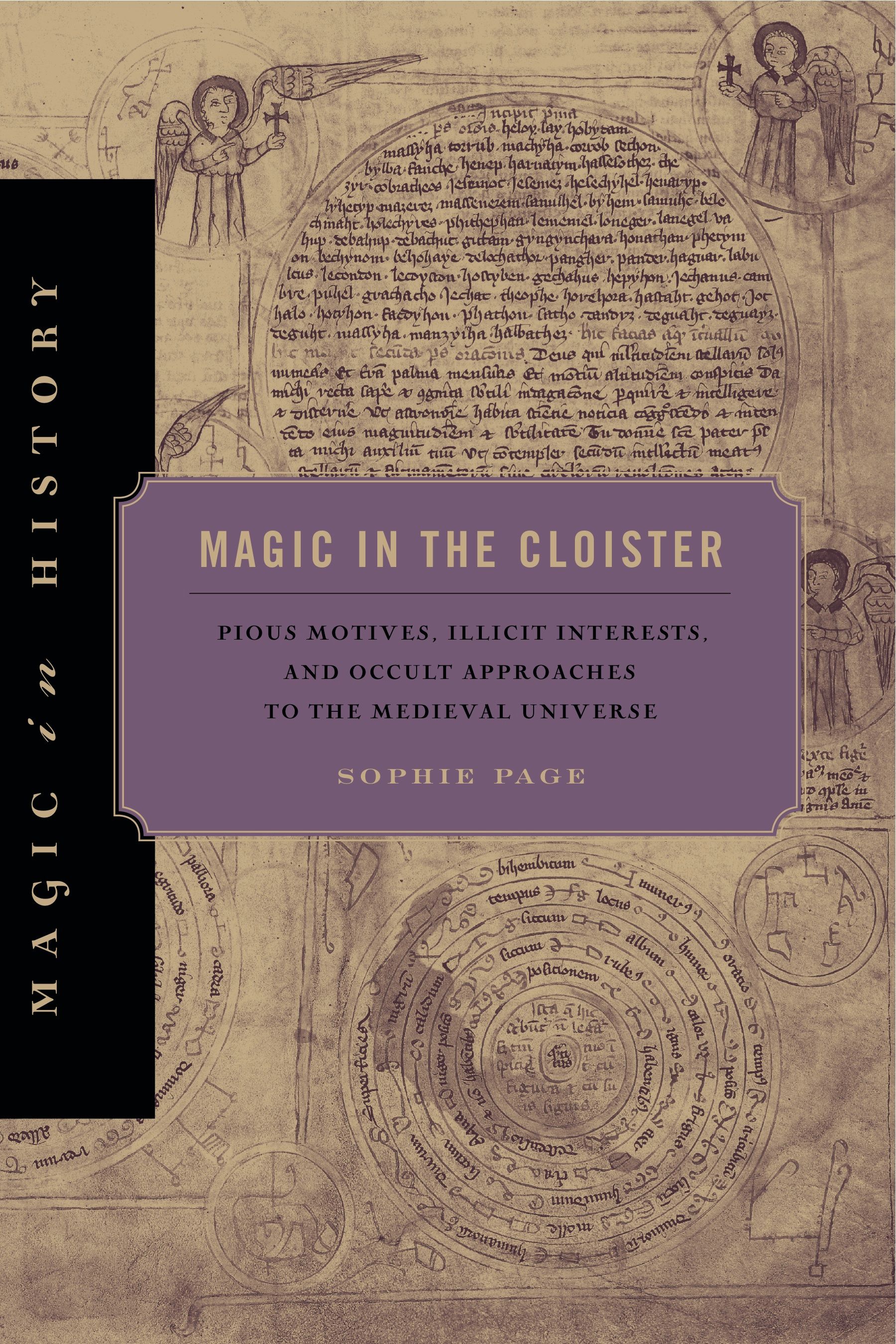
Magic in the Cloister
During the late thirteenth and early fourteenth centuries a group of monks with occult interests donated what became a remarkable collection of more than thirty magic texts to the library of the Benedictine abbey of St. Augustine's in Canterbury. The monks collected texts that provided positive justifications for the practice of magic and books in which works of magic were copied side by side with works of more licit genres. In Magic in the Cloister, Sophie Page uses this collection to explore the gradual shift toward more positive attitudes to magical texts and ideas in medieval Europe. She examines what attracted monks to magic texts, works, and how they combined magic with their intellectual interests and monastic life. By showing how it was possible for religious insiders to integrate magical studies with their orthodox worldview, Magic in the Cloister contributes to a broader understanding of the role of magical texts and ideas and their acceptance in the late Middle Ages.
eBook
