
Catalogue Search | MBRL


Are you sure you want to remove the book from the shelf?

{{itemTitle}}
220,538
result(s) for
"Capitalism"
Sort by:

The origin of capitalism : a longer view
\"How did the dynamic economic system we know as capitalism develop among the peasants and lords of feudal Europe? In The Origin of Capitalism, a now-classic work of history, Ellen Meiksins Wood offers readers a clear and accessible introduction to the theories and debates concerning the birth of capitalism, imperialism, and the modern nation state. Capitalism is not a natural and inevitable consequence of human nature, nor simply an extension of age-old practices of trade and commerce. Rather, it is a late and localized product of very specific historical conditions, which required great transformations in social relations and in the relationship between humans and nature.\"--Page 4 of cover.
Book



Trans Joy as Resistance
Abstract Theorist Lauren Berlant defines inconvenience as an affect, one exerted by dominant forces onto subordinate populations. In the same way subordinate populations exert inconvenient affects as well, creating a dynamic of dominant and subordinate inconvenience through which social power relationships may be understood. Following this structure, this article charts the dominant and subordinate affects exerted by capitalism and trans* bodies, respectively, and how capitalist oppression responds to and shapes trans* embodiment. Through an autotheoretical lens, this relationship is here examined in the 2020 film Possessor and the 2015 film Tangerine, highlighting the points of interaction between trans*ness and capitalism's state structures of domination and oppression. Ultimately, I point to trans* joy as an affect that presents a danger to capitalism's domination, providing space for trans* persons to thrive.
Journal Article


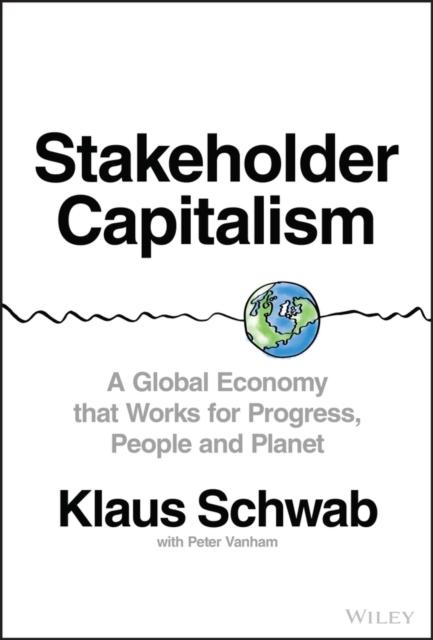
The Global Reset: The Case for Stakeholder Capitalism
Think of the global economy as a jigsaw puzzle. At the heart of soslving the puzzle -- and address global disturbance and uncertainty--lies three identifiable issues that need need to fit: First, income and other inequality within societies has been on the rise, while productivity and wage growth slowed, and countries are burdened by debt. Second, the market power of the world´s largest companies reached unprecedented levels, raising questions on the spread of innovation and productivity gains. And third, the exploitation of natural resources is leading to a deteriorating environment, affecting the lives of many for the worse. The debate over what caused this situation is still open: whether laissez-faire governments,a poorly managed globalization, or the rise of technology that favours the few, the possible culprits are legion. In any case, Schwab argues our current system has failed to properly register and address many of the issues we are now faced with. What are the real causes of our system's shortcomings, and what are false positives? Do solutions lie in small adjustments to our current system, or a complete overhaul of it? And what best practices exist around the world, including Asia, that would allow for better outcomes? There are no easy answers, and no single stakeholder can provide them. But it is certain that individual actors do have agency, and that policies matter, when it comes to dealing with external forces. Moreover, as success stories from the Switzerland to Singapore, and from Costa Rica to China show it is only when government, businesses and individuals all play their respective roles, and agree on a social contract with shared responsibility that societal outcomes will be optimal.The Jigsaw Economy addresss these problems, ad provides achievable answers to solve them. Piece by piece, this new book by Professor Klaus Schwab, Founder and Chairman of the World Economic Forum, shares answers for all stakholderes in the global economy, rich and poor, vested and disenfranchised, engaged or searching. optimistic. The goall: to address problems and provide solutions, piece by piece, stakeholder by stakeholdere, country by coutrny, world citizen by world citizen.
eBook