
Catalogue Search | MBRL


Are you sure you want to remove the book from the shelf?

{{itemTitle}}
7,816
result(s) for
"Cardiology History."
Sort by:

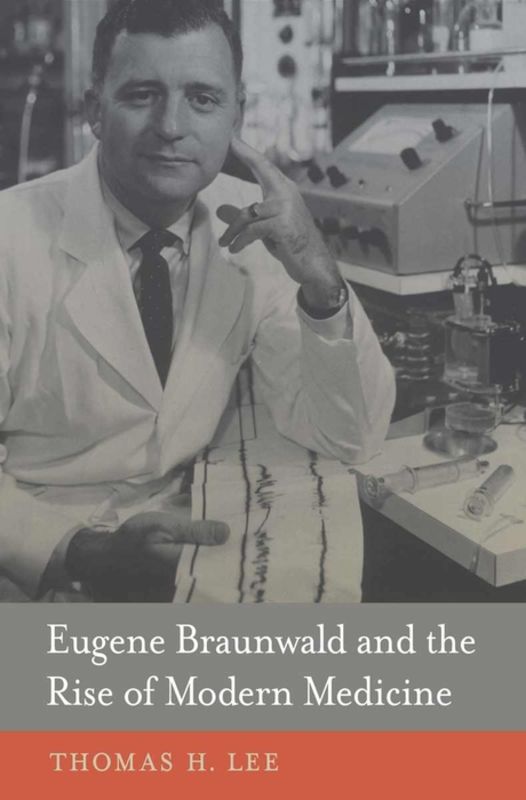
Eugene Braunwald and the Rise of Modern Medicine
Much of the improved survival rate from heart attack can be traced to Eugene Braunwald's work. He proved that myocardial infarction was an hours-long dynamic process which could be altered by treatment. Thomas H. Lee tells the life story of a physician whose activist approach transformed not just cardiology but the culture of American medicine.
eBook


Caring for the Heart
This groundbreaking book describes developments in the diagnosis and treatment of heart disease, explains how the Mayo Clinic became a world-famous medical center, and reveals how new technologies and procedures promoted medical specialization. It is written for general readers as well as health care professionals, historians, and policy analysts.
eBook

The man who touched his own heart : true tales of science, surgery, and mystery
Tells the raucous, gory, mesmerizing story of the heart, from the first \"explorers\" who dug up cadavers and plumbed their hearts' chambers, through the first heart surgeries-which had to be completed in three minutes before death arrived-to heart transplants and the latest medical efforts to prolong our hearts' lives, almost defying nature in the process. Thought of as the seat of our soul, then as a mysteriously animated object, the heart is still more a mystery than it is understood. Why do most animals only get one billion beats? (And how did modern humans get to over two billion-effectively letting us live out two lives?) Why are sufferers of gingivitis more likely to have heart attacks? Why do we often undergo expensive procedures when cheaper ones are just as effective? What do Da Vinci, Mary Shelley, and contemporary Egyptian archaeologists have in common? And what does it really feel like to touch your own heart, or to have someone else's beating inside your chest? Rob Dunn's fascinating history of our hearts brings us deep inside the science, history, and stories of the four chambers we depend on most.
Book

50 Years of the Czech and Slovak Society of Experimental Cardiology – Historical Background and Scientific Benefit
The history of the Czech and Slovak experimental cardiology describes a completely unusual curve. The personality of J.E. Purkynje caused this field to reach unprecedented peak at the very beginning of its modern history. The development of experimental cardiology after the death of the great scholar was certainly not linear. Just when it seemed to be raising its head, the German occupation came. Its second hopeful awakening was delayed for a long time by forty years of isolation. The significant limitation of foreign contacts gradually led to the loss of hopefully developing contacts, to professional isolation and lagging behind the stormy development of world science. At the moment of greatest depression, in 1971, in Prague there was created a professional forum that was supposed to enable its intellectual survival and reduce the negative consequences of the “splendid isolation”. The Society of Experimental Cardiology (SEC) was founded at the Czechoslovak Physiological Society of the Czechoslovak Medical Society J.E. Purkynje, with the main task of introducing theoretical and clinical cardiologists to the advances in world cardiology. The first meeting was held in 1973 and in 2023 we celebrated already the 50th anniversary of SEC. Moreover, nowadays we see the increasing interest of the young researchers, both experimental and clinical cardiologists, who consider SEC a very attractive platform for their education and professional growth.
Journal Article

Heart and fiction: where historical reality ends and fantasy begins
The heart is a remarkable organ from both a scientific and functional standpoint, as well as a symbolic representation of many noble elements of human concern found in poetry, art, and religion. Cinema, a form of art in and of itself, has also taken an interest in the heart. Recently, a TV series dedicated to this organ has combined historical research on the groundbreaking development of the possibility of curing it with the romantic element of the love affair that, in a figurative sense, passes through the same organ. About 75 years ago, cardiology began to evolve and culminate in cardiac surgery, which has since spread quickly throughout the globe, including Italy. Fiction is an enjoyable and easily accessible instrument that tells the tale of the creation and quick evolution of cardiology. It is undoubtedly a superb educational medium that helps both the younger and older generations learn about, understand, and value our heritage.
Journal Article
