
Catalogue Search | MBRL


Are you sure you want to remove the book from the shelf?

{{itemTitle}}
36,755
result(s) for
"Cardiovascular system Physiology"
Sort by:

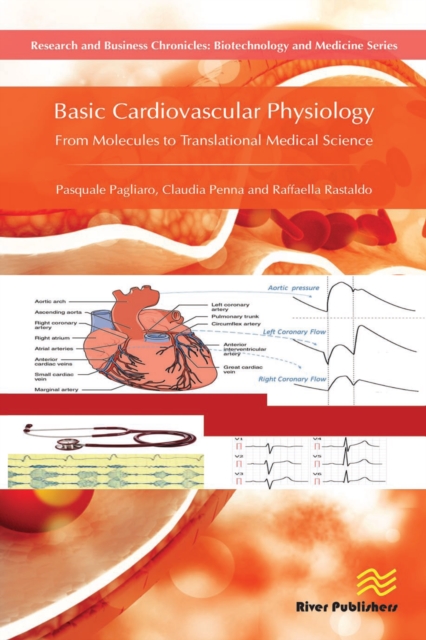
Basic Cardiovascular Physiology: From Molecules to Translational Medical Science
This book focuses on established cardiovascular principles and highlights some of the progress achieved by recent research in the cardiovascular field. The authors report the basic concepts related to the functioning of the cardiovascular system necessary for medical students to understand. To foster learning, in each chapter the fundamental points are highlighted in italics and/or bold. In addition, we have added boxes that contain some more detailed information about physiological mechanisms or clinical aspects are analyzed and described in greater detail. The book describes the structure and function of the heart and vascular system for the reader to understand how the cardiovascular system responds in both health and disease. The book conveys a unified vision of the function of the heart and the vascular system, explaining the complexity of the system that goes far beyond the integrated connection between preload, afterload and cardiac contractility. The endothelium covers the internal part of the whole cardiovascular system; therefore, endothelial physiology is treated in several chapters. Given the importance of coronary circulation in cardiac pathophysiology, this special circulation is described in detail and enriched with the most up-to-date information. Several paragraphs and boxes on clinical implications are dedicated to the principles of electrophysiology and the electrocardiogram. A space is also dedicated to myocardial ischemia/reperfusion injury and cardioprotective procedures. The book is written in a linear and simple language without compromising the scientific rigor of the various topics covered.
eBook

Vital Circuits
Most of us think about our circulatory system only when something goes wrong, but the amazing story of how it goes right -- “magnificently right,” as author Steven Vogel puts it -- is equally worthy of our attention. In Vital Circuits, Steven Vogel gives us a fascinating, often witty, and highly original guide to the heart, vessels, and blood. He takes us through the realm of biology and into the neighbouring fields of physics, fluid mechanics, and chemistry. We relive the discoveries of such scientists as William Harvey and Otto Loewi, and we consider the circulatory systems of such fellow earth-dwellers as octopuses, hummingbirds, sea gulls, alligators, snails, snakes, and giraffes. Vogel is a master at using everyday points of reference to illustrate potentially daunting concepts. And we learn not only such practical information as why you might want to wear support hose on a long aeroplane flight, but also the answers to such seemingly unrelated issues as why duck breasts (but not chicken breasts) have dark meat, and why dust accumulates on the blades of a fan. The author reveals himself to be an eloquent advocate for the cause of science as the most interesting of the humanities, Vogel’s story will appeal to everyone who has ever wondered what “120 over 80” means, who exercises regularly for cardiovascular fitness, or who has an interest in how the heart works.
eBook

The circulatory story
Your hardworking heart started beating eight months before you were born and continues to beat about one hundred thousand times a day. \"By the time you're seventy years old, it will have beaten about 2.5 billion times.\" Find out the story behind each beat on a journey through the body's circulatory system.
Book

Essentials of Cardiovascular Physiology
Essentials of Cardiovascular Physiology was first published in 1987. Modern cardiovascular physiology ranges from subcellular function to integrated responses that involve all of the body’s systems, yet medical students are usually given only a few weeks in which t master this diverse and complex subject. To help overcome these difficulties, Harvey Sparks, Jr., M.D., and Thom W. Rooke, M.D., have written an introductory text which can be read and understood in the two-to-three week period most curricula provide for cardiovascular physiology. Each of the eight chapters integrates basic science with areas of clinical relevance in the simplest, most succinct way for students of medicine, physiology, nursing, and pharmacology. The authors’ aim throughout is to select those facts and concepts that are essential to a solid initial comprehension of the subject. The numerous illustrations and flow diagrams will help students understand the complex interrelationships among factors regulating the heart and blood vessels -- and will also be useful for rapid review, because they cover most of the text’s major points. Each chapter includes references leading the student to expand treatments of individual topics, and from there to the original literature. The topics covered include: overall arrangement of the circulatory system, electrical activity of the heart, the heart as a pump, systematic circulation, neural and hormonal control of circulation, regulation of flow and exchange, regulation of blood flow in specific organs, and integrated cardiovascular responses.
eBook

Why do I bleed?
\"Want to know how arteries carry oxygen-rich blood throughout our bodies and what blood type means? Fun illustrations and entertaining text help give kids a clear understanding of the blood and circulatory system\"-- Provided by publisher.
Book

Cardiac autonomic regulation during exposure to auditory stimulation with classical baroque or heavy metal music of different intensities
The effects of chronic music auditory stimulation on the cardiovascular system have been investigated in the literature. However, data regarding the acute effects of different styles of music on cardiac autonomic regulation are lacking. The literature has indicated that auditory stimulation with white noise above 50 dB induces cardiac responses. We aimed to evaluate the acute effects of classical baroque and heavy metal music of different intensities on cardiac autonomic regulation.
The study was performed in 16 healthy men aged 18-25 years. All procedures were performed in the same soundproof room. We analyzed heart rate variability (HRV) in time (standard deviation of normal-to-normal R-R intervals [SDNN], root-mean square of differences [RMSSD] and percentage of adjacent NN intervals with a difference of duration greater than 50 ms [pNN50]) and frequency (low frequency [LF], high frequency [HF] and LF/HF ratio) domains. HRV was recorded at rest for 10 minutes. Subsequently, the volunteers were exposed to one of the two musical styles (classical baroque or heavy metal music) for five minutes through an earphone, followed by a five-minute period of rest, and then they were exposed to the other style for another five minutes. The subjects were exposed to three equivalent sound levels (60-70dB, 70-80dB and 80-90dB). The sequence of songs was randomized for each individual.
Auditory stimulation with heavy metal music did not influence HRV indices in the time and frequency domains in the three equivalent sound level ranges. The same was observed with classical baroque musical auditory stimulation with the three equivalent sound level ranges.
Musical auditory stimulation of different intensities did not influence cardiac autonomic regulation in men.
Journal Article

Dynamics of the vascular system
Recent advances in vascular biology and vascular engineering have led to the understanding and integration of the two fields. A feature that is fundamental to both is the dynamic aspects of the vascular system. Although the basic principles governing blood flow and the circulatory function are known, new approaches to examining the interaction of different parts of the vascular system have emerged. These include measurement techniques and quantitative methods with greater use of modern technology and computer modeling. An obvious need therefore exists for a book that deals specifically with the dynamics of the vascular system. This book begins with the historical discoveries of the features of the vascular system and its importance in the overall circulatory function. Modern aspects of vascular biology in terms of structure and function are then described, followed by the introduction of physical principles and basic fluid mechanics for quantitative analysis. The hemodynamics of large arteries, the optimal structure of vascular branching and the pulsatile energy transmission and modeling aspects are elaborated. These are extended to analyze the function of the venous system and the microcirculation. Finally, the integrated vascular system and its response and adaptation to diseased conditions, such as aging, stenosis, hypertension, myocardial ischemia, atheroslerosis and stroke are explained. The overall emphasis is on the dynamic nature of the vascular system.
eBook