
Catalogue Search | MBRL


Are you sure you want to remove the book from the shelf?

{{itemTitle}}
59,049
result(s) for
"Cardiovascular system Surgery."
Sort by:

The African-American heart surgery pioneer : the genius of Vivien Thomas
\"Learn about Vivien Thomas and the clamp he invented to help stop bleeding in a very small space\"-- Provided by publisher.
Book


How to treat people : a nurse's notes
\"As a teenager, Molly Case underwent an operation that saved her life. Nearly a decade later, she finds herself in the operating room again--this time as a trainee nurse. She learns to care for her patients, sharing not only their pain, but also life-affirming moments of hope. In doing so, she offers a compelling account of the processes that keep them alive, from respiratory examinations to surgical prep, and of the extraordinary moments of human connection that sustain both nurse and patient. In rich, lyrical prose, Case illustrates the intricacies of the human condition through the hand of a stranger offered in solace, a gentle word in response to fear and anger, or the witnessing of a person's last breaths. It is these moments of empathy, in the extremis of human experience, that define us as people. But when Molly's father is admitted to the cardiac unit where she works, the professional and the personal suddenly collide. Weaving together medical history, art, memoir, and science, How to Treat People beautifully explores the oscillating rhythms of life and death in a tender reminder that we can all find meaning in being, even for a moment, part of the lives of others.\"--Publisher's description.
Book
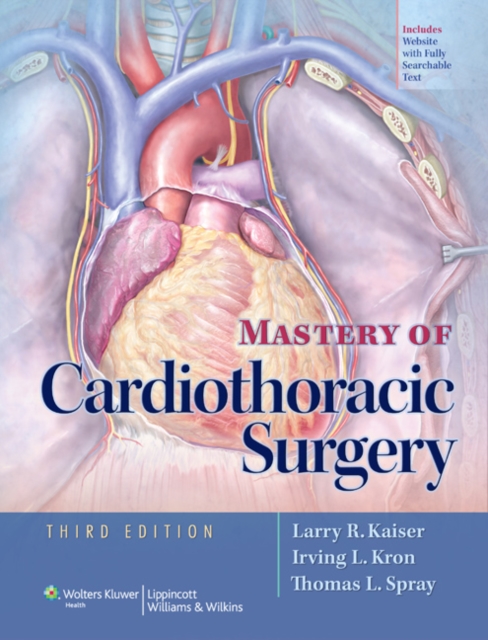
Mastery of Cardiothoracic Surgery
This volume in the acclaimed Mastery Series delivers clear, how-to guidance on the most commonly performed procedures in adult and pediatric thoracic surgery. As with other volumes in the series, Mastery of Cardiothoracic Surgery delivers expert commentary from master surgeons following each chapter. Invaluable for cardiothoracic fellows, as well as thoracic and cardiac surgeons.
eBook

Breakthrough! : how three people saved \blue babies\ and changed medicine forever
\"The story of the landmark 1944 surgical procedure that repaired the heart of a child with blue baby syndrome--lack of blood oxygen caused by a congenital defect. The team that developed the procedure included a cardiologist and a surgeon, but most of the actual work was done by Vivien Thomas, an African American lab assistant who was frequently mistaken for a janitor\"-- Provided by publisher.
Book

Cardiothoracic Surgery Review
Cardiothoracic Surgery Review covers all of the core knowledge necessary to pass the cardiothoracic boards or the cardiothoracic recertification exam. Eachtopicpresents core information in two-to-four pages and concludes with a brief list of themost important references.The topics cover all areas incardiothoracic surgery, including cardiac surgery, pediatric cardiac surgery, and thoracic surgery. Included with the book is a companion website featuring the fully searchable text and over 60 procedural videos. This topic-based review is ideal for anyone needing to rapidly reference an up-to-date knowledge base in cardiothoracic surgery, including cardiothoracic fellows, practitioners studying for recertification, and surgical nurses.
eBook
The First Balloon-Expandable Coronary Stent
The premise of this intriguing book is technical innovation and scientific development. It is about coronary and vascular stenting, a technique that has improved the plight of patients who have unfortunately succumbed to the most devastating epidemic facing modern man—coronary and vascular atherosclerosis. It is also about a lifetime and a career devoted to finding safer, effective, and less invasive solutions to these clinical problems. Gary S. Roubin, MD, PhD, writes of the pioneering work done by Andreas Gruentzig on balloon angioplasty for peripheral and coronary arteries. After Gruentzig's untimely death, Roubin was determined that Gruentzig's method would indeed work. He writes of the work involved to get the balloon-expandable coronary stent to the point where it was deployed in man: September 3, 1987, and follows its development to the current day. This is an account of the expedition that began with the Model T Ford of cardiovascular intervention—an endeavor that evolved into the Ferrari that we know today. This personal story tells of the collaboration of inventors, physician scientists, engineers, and the cardiovascular device industry that has changed the practice of cardiovascular medicine forever.
eBook

Broken hearts : the tangled history of cardiac care
A history illustrating the complexity of medical decision making and risk.
Still the leading cause of death worldwide, heart disease challenges researchers, clinicians, and patients alike. Each day, thousands of patients and their doctors make decisions about coronary angioplasty and bypass surgery. In Broken Hearts David S. Jones sheds light on the nature and quality of those decisions. He describes the debates over what causes heart attacks and the efforts to understand such unforeseen complications of cardiac surgery as depression, mental fog, and stroke.
Why do doctors and patients overestimate the effectiveness and underestimate the dangers of medical interventions, especially when doing so may lead to the overuse of medical therapies? To answer this question, Jones explores the history of cardiology and cardiac surgery in the United States and probes the ambiguities and inconsistencies in medical decision making. Based on extensive reviews of medical literature and archives, this historical perspective on medical decision making and risk highlights personal, professional, and community outcomes.
eBook

Incidence, Outcome, and Risk Factors of Cardiovascular Surgery-Associated Disseminated Intravascular Coagulation: A Single-Center Retrospective Study
Cardiovascular surgery is highly invasive, with a risk of postoperative coagulopathy due to various factors such as bleeding. Coagulopathy can progress to disseminated intravascular coagulation (DIC), which complicates various clinical conditions. However, no study to date has reported on DIC associated with cardiovascular surgery. Therefore, we investigated retrospectively the incidence, outcome, and risk factors of cardiovascular surgery-associated DIC in our institute. All patients who underwent cardiovascular surgery and were admitted to our intensive care unit between January 2016 and December 2017 were included in this study. The Japanese Association for Acute Medicine (JAAM) DIC score was calculated using our institute’s database at the following time points: preoperatively, postoperative day 1 (POD1), POD3, and POD7. Data regarding surgery, 90-day mortality, and risk factors of DIC were also collected and analyzed by multiple regression. In total, 553 patients were considered eligible for analysis. Median age of eligible patients was 72 years, with a 90-day mortality rate of 1.4%. Patients with DIC at POD7 had higher Sequential Organ Failure Assessment (SOFA) score, preoperative JAAM DIC scores, and a longer anesthesia time than those without DIC. Female sex, preoperative DIC score, and anesthesia time were found to be risk factors for DIC.
Journal Article