
Catalogue Search | MBRL


Are you sure you want to remove the book from the shelf?

{{itemTitle}}
74
result(s) for
"Caribbean Area Fiction."
Sort by:


Exhibiting Slavery
Exhibiting Slaveryexamines the ways in which Caribbean postmodern historical novels about slavery written in Spanish, English, and French function as virtual museums, simultaneously showcasing and curating a collection of \"primary documents\" within their pages. As Vivian Nun Halloran attests, these novels highlight narrative \"objects\" extraneous to their plot-such as excerpts from the work of earlier writers, allusions to specific works of art, the uniforms of maroon armies assembled in preparation of a military offensive, and accounts of slavery's negative impact on the traditional family unit in Africa or the United States. In doing so, they demand that their readers go beyond the pages of the books to sort out fact from fiction and consider what relationship these featured \"objects\" have to slavery and to contemporary life. The self-referential function of these texts produces a \"museum effect\" that simultaneously teaches and entertains their readers, prompting them to continue their own research beyond and outside the text.
eBook


Crossing the Line
Crossing the Lineexamines a group of early nineteenth-century novels by white creoles, writers whose identities and perspectives were shaped by their experiences in Britain's Caribbean colonies. Colonial subjects residing in the West Indian colonies \"beyond the line,\" these writers were perceived by their metropolitan contemporaries as far removed-geographically and morally-from Britain and \"true\" Britons. Routinely portrayed as single-minded in their pursuit of money and irredeemably corrupted by their investment in slavery, white creoles faced a considerable challenge in showing they were driven by more than a desire for power and profit.Crossing the Lineexplores the integral role early creole novels played in this cultural labor.
The emancipation-era novels that anchor this study of Britain's Caribbean colonies question categories of genre, historiography, politics, class, race, and identity. Revealing the contradictions embedded in the texts' constructions of the Caribbean \"realities\" they seek to dramatize, Candace Ward shows how these white creole authors gave birth to characters and enlivened settings and situations in ways that shed light on the many sociopolitical fictions that shaped life in the anglophone Atlantic.
Crossing the Lineexplores the integral role early white creole novels played in shedding light on the many sociopolitical fictions that shaped life in the anglophone Atlantic.
eBook

The jumbies
Eleven-year-old Corinne must call on her courage and an ancient magic to stop an evil spirit and save her island home.
Book

Sex and the Citizen
Sex and the Citizenis a multidisciplinary collection of essays that draws on current anxieties about \"legitimate\" sexual identities and practices across the Caribbean to explore both the impact of globalization and the legacy of the region's history of sexual exploitation during colonialism, slavery, and indentureship. Speaking from within but also challenging the assumptions of feminism, literary and cultural studies, and queer studies, this volume questions prevailing oppositions between the backward, homophobic nation-state and the laid-back, service-with-a-smile paradise or between giving in ignominiously to the autocratic demands of the global north and equating postcolonial sovereignty with a \"wholesome\" heterosexual citizenry.
The contributors use parliamentary legislation, novels, film, and other texts to examine Martinique's relationship to France; the diasporic relationships between the Dominican Republic and New York City, between India and Trinidad, and between Mexico's capital city and its Caribbean coast; \"indigenous\" names for sexual practices and desires in Suriname and the Eastern Caribbean; and other topics. This volume will appeal to readers interested in how sex has become an important register for considerations of citizenship, personal and political autonomy, and identity in the Caribbean and the global south.
Contributors: Vanessa Agard-Jones * Odile Cazenave * Michelle Cliff * Susan Dayal * Alison Donnell * Donette Francis * Carmen Gillespie* Rosamond S. King * Antonia MacDonald-Smythe * Tejaswini Niranjana * Evelyn O'Callaghan * Tracy Robinson * Patricia Saunders * Yasmin Tambiah * Omise'eke Natasha Tinsley * Rinaldo Walcott * M. S. Worrell
eBook

Privateer
Hector Lynch and his companions are in the Caribbean, diving to plunder a wreck on the notorious Vipers reef, when they are spotted by a passing Spanish ship. To prevent news of their activities getting out, they cripple the Spanish vessel by burning her sails - an act of piracy - and then head for their base in Tortuga. There Hector's wife Maria awaits, for she and Hector are planning a better life for themselves - this time on the right side of the law. But a chance encounter at sea means that Hector and his comrades run afoul of Laurens de Graff - renowned swashbuckling mercenary captain - now in command of a royal French frigate. Slipping from de Graff's clutches, Hector and his friends are cast away on the tiny desert island, Salt Tortuga. Hector tries desperately to make his way back to Maria, meanwhile she has decided to undertake the hazardous journey to find him. Hector's adventures and Maria's tenacity lead them towards Port Royal in Jamaica - known as the wickedest city on earth. And Hector, accused of piracy, once more enters a world he had sworn to leave behind.
BOOK
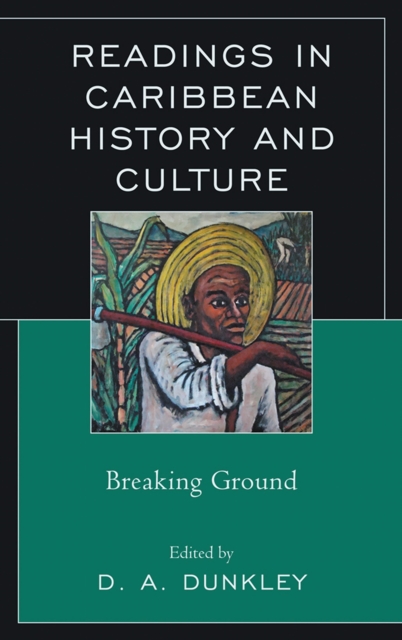
Readings in Caribbean History and Culture
This collection of eleven essays is designed to highlight some important new voices who have been doing research on the general subject areas of the history and culture of the Caribbean. The essays in this volume also address a number of themes which are critical to developing an understanding of current scholarly work on the two broad subject areas. Among the themes examined are colonialism, slavery, and the involvement of the Christian Church in both colonial rule and enslavement. The essays also analyze the pre-independence and post-independence periods of the twentieth century, with examinations on topics that include prostitution, departmentalization, education, visual art, and the musical form known as Reggae. The purpose of this book is to stimulate discussion around these important topics based on the perspectives of a number of new scholars. The book is also designed as a teaching device, principally for courses focusing on Caribbean society, whether in the past or the present.
eBook

Caribbean
From the 1310 conquest of the peaceful Arawaks by voracious cannibals to the decline of the Mayan empire, from Columbus's arrival to buccaneer Henry Morgan's notorious reign, from the bloody slave revolt on Haiti to the rise of Castro--Caribbean carries us through 700 dramatic years in a tale teeming with revolution and romance, slavery and superstition, heartfelt characters and thunderous destinies.
Book

Phonographic Memories
Phonographic Memories is the first book to perform a sustained analysis of the narrative and thematic influence of Caribbean popular music on the Caribbean novel. Tracing a region-wide attention to the deep connections between music and memory in the work of Lawrence Scott, Oscar Hijuelos, Colin Channer, Daniel Maximin, and Ramabai Espinet, Njelle Hamilton tunes in to each novel’s soundtrack while considering the broader listening cultures that sustain collective memory and situate Caribbean subjects in specific localities. These “musical fictions” depict Caribbean people turning to calypso, bolero, reggae, gwoka, and dub to record, retrieve, and replay personal and cultural memories. Offering a fresh perspective on musical nationalism and nostalgic memory in the era of globalization, Phonographic Memories affirms the continued importance of Caribbean music in providing contemporary novelists ethical narrative models for sounding marginalized memories and voices. Njelle W. Hamilton's Spotify playlist to accompany Phonographic Memories: https://spoti.fi/2tCQRm8
eBook