
Catalogue Search | MBRL


Are you sure you want to remove the book from the shelf?

{{itemTitle}}
8,852
result(s) for
"Caring"
Sort by:


Landscapes of care
The term ‘landscapes of care’ has increasingly taken hold in the lexicon of health geography. As the complex social, embodied and organizational spatialities that emerge from and through relationships of care, landscapes of care open up spaces that enable us to unpack how differing bodies of geographical work might be thought of in relationship to each other. Specifically, we explore the relation between ‘proximity’ and ‘distance’ and caring for and about. In doing so, we seek to disrupt notions of proximity as straightforward geographical closeness, maintaining that even at a physical distance care can be socially and emotionally proximate.
Journal Article


A caring model for nursing education
With the many changes occurring within the health system and nursing education, ongoing shortages in the number of nurses and nursing faculty, increased incidences of incivility, and the charge to transform nursing education while upholding and transmitting the core professional values, a better understanding of the climate within nursing education is warranted. Caring is a core value of the profession of nursing and has received much attention and study, primarily in the practice setting. In nursing education much of this work has centered on the structure and processes of nursing education and the nursing student’s development of caring behaviors. This article proposes a caring model for nursing education that integrates the key concepts of organizational climate, leadership, and caring theories. The intent of the model is to provide a framework that can be used for professional nursing education that incorporates the core value of caring and develops graduates prepared to provide relationship-based, patient-centered care.
Journal Article

Because Amelia smiled
A little girl's smile as she skips down the street in New York inspires a neighbor to send cookies to her grandson in Mexico, and the goodwill soon spreads around the world.
Book

A Thematic Analysis of Obstacles to Workplace Caring as Perceived and Experienced by Working Adults
Caring, which includes behaviors, emotions, and cognitions aimed at fostering the well‐being of others, has been identified as a vital aspect of work relationships. Yet, little is known about what impedes caring in the workplace, especially from the subjective perspectives of working people. This qualitative study explored obstacles to caring between co‐workers, as experienced and perceived by 40 adults who worked full‐time in office and administrative positions. Based on reflexive thematic analysis of research interviews with participants, several major themes were constructed from the data. The themes point to tensions in work‐related values, motivations, attitudes, and behaviors that were perceived as reducing the caring experienced and expressed within work relationships. Potential implications for career practitioners and organizations are discussed, along with suggestions for future research.
Journal Article

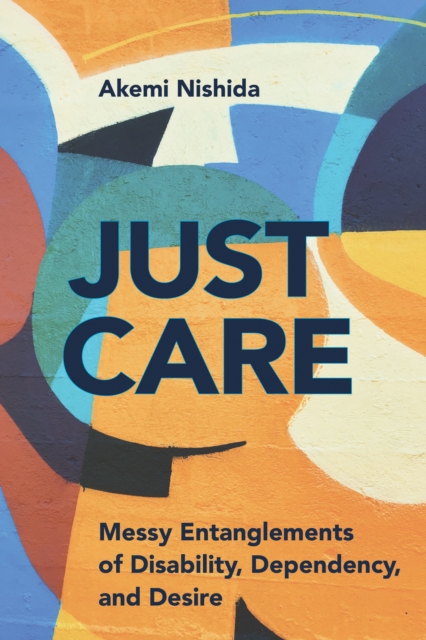
Just care : messy entanglements of disability, dependency, and desire
Just Care is Akemi Nishida's thoughtful examination of care injustice and social justice enabled through care. The current neoliberal political economy has turned care into a business opportunity for the healthcare industrial complex and a mechanism of social oppression and control. Nishida analyzes the challenges people negotiate whether they are situated as caregivers, receivers, or both. Also illuminated is how people with disabilities come together to assemble community care collectives and bed activism (resistance and visions emerging from the space of bed) to reimagine care as a key element for social change. The structure of care, Nishida writes, is deeply embedded in and embodies the cruel social order—based on disability, race, gender, migration status, and wealth—that determines who survives or deteriorates. Simultaneously, many marginalized communities treat care as the foundation of activism. Using interviews, focus groups, and participant observation with care workers and people with disabilities, Just Care looks into lives unfolding in the assemblage of Medicaid long-term care programs, community-based care collectives, and bed activism. Just Care identifies what care does, and asks: How can we activate care justice or just care where people feel cared affirmatively and care being used for the wellbeing of community and for just world making?
eBook


Rediscovering the Core of Western Culture: Lest We Lose Love
Few are aware that since antiquity, there has always been the philosophy of love at the core of Western culture. It articulates what makes life meaningful and worthwhile, and how we can live a good life together through an ethic of love. This book fills this significant gap, not only reconnecting the reader with such important wisdom, and more crucially, also reorienting our socio-economic institutions and collective actions towards more loving and caring, and more concerned with the qualities of our lived experiences. By re(dis)covering the gifts of love, we may challenge the existing systemic dehumanisation, and draw from knowledge and understanding already present in our culture. This is timely because the global crises we are facing are catastrophic, especially when it comes to climate change. Therefore we must respond from a place of love rather than fear. Whether it is reducing the use of fossil fuels, lowering greenhouse emission, choosing the right food to eat, or advocating for structural transformation, our concerted endeavours start with an appropriate appreciation of the nature of our well-being which includes the planet's well-ness. This book highlights a clear pathway forward: to ensure collective healing and co-flourishing with nature, we must practise the art of loving.
eBook