
Catalogue Search | MBRL


Are you sure you want to remove the book from the shelf?

{{itemTitle}}
28,579
result(s) for
"Carnival"
Sort by:


Geothe rom carneval
69 Seiten mit gestochener Titelvignette von Johann Heinrich Lips und 20 handkolorierten Kupferstichen von Georg Melchior Kraus nach Georg Schütz. Bezeichnet: Beschriftet in Feder auf der ersten Seite: \"Dies Büchlein ist selten, weil es nicht in den Buchhandel gekommen ist und bald vergriffen war. Göthe soll der Verfasser desselben seyn.
Rare Book
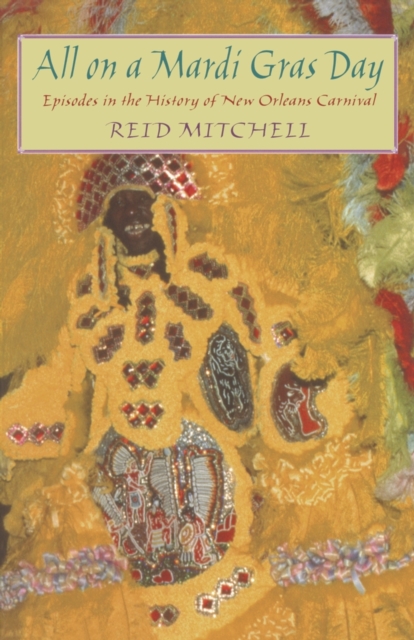
All on a Mardi Gras day: episodes in the history of the New Orleans carnivals
In this study, Reid Mitchell takes the reader to Mardi Gras - a yearly ritual that sweeps the multicultural city of New Orleans into a frenzy of parardes, pageantry, dance, drunkeness, music, sexual display, and social and political bombast.
eBook
Goethe rom carnival
69 Seiten mit gestochener Titelvignette von Johann Heinrich Lips und 20 handkolorierten Kupferstichen von Georg Melchior Kraus nach Georg Schütz. Bezeichnet: Beschriftet in Feder auf der ersten Seite: \"Dies Büchlein ist selten, weil es nicht in den Buchhandel gekommen ist und bald vergriffen war. Göthe soll der Verfasser desselben seyn.
Rare Book

Festival and Urban Identity: A Case Study of the Malang Flower Carnival in Yogyakarta
Cultural festivals, often called carnivals, events, or celebrations, have become prominent showcases across Indonesia, particularly in the post-New Order period. These festivals serve two main objectives: promoting tourism and reviving regionalism as well as traditional identities in response to past centralization policies. This study examines the Malang Flower Carnival (MFC) in Malang City, East Java, which has been a key feature of the city's cultural landscape since 2010. In 2022, the MFC deviated from its tradition by participating in the Jogja Fashion Carnival in Yogyakarta instead of holding its own event in Malang. This shift provides a unique opportunity to analyze how Malang's cultural identity is represented to an audience in another city. The findings suggest that while the MFC captivated visitors with its elaborate costumes, it struggled to convey the intended narrative of Malang's cultural identity. This difficulty stems from the complexity of representing Malang's multiple identities—rooted in its historical legacy, contemporary identity as the \"City of Flowers,\" and broader regional narratives. The themes of bravery and heroism, although recognized, were often disconnected from Malang's broader historical and cultural context
Journal Article

Escape from greasy world
\"Henry and Avril have just discovered that Professor Fizzy is missing from the Lunch Lab. And so is the rest of the crew, even the Freezer Burn Band. It can only be the work of their archnemesis, Fast Food Freddy, who is holding his rivals captive at Greasy World, the unhealthiest theme park on the planet.\"--Publisher.
Book

Did Indian Muharram Transform into Malaysian Boria?: Reassessing the Transformation of Indian and Shi'i Muharram into Boria, a Carnivalesque Malaysian Performance
Boria in contemporary Malaysia is a popular annual choral street performance that is composed predominantly of Sunni Malays. The performance may vary from year to year, but what is common is that boria is traditionally performed during the first ten days of the Islamic month of Muharram. As to its origin, most scholars advocate that boria is in fact not indigenous; rather, they locate its roots in the solemn Shi'i Indian-Persian Muharram that arrived with them after the 1786 British settlement of Penang. These scholars maintain that by the midnineteenth century, the new generation of the Muharram observers, including the locals and the indigenous population, transformed it into boria–a jovial and carnival type occasion. This article, however, dismisses the popular notion that the Shi'i Muharram was transformed into boria. I suggest that boria is connected to the understudied faqir outdoor aspects of the historic Muharram observance of south-central India.
Journal Article

Afro-Brazilian Returnee Festivals: From Brazilian Bumba-Meu-Boi to Contemporary Lagos Carnival
Drawing upon the works of Kazadi wa Mukuma, Gerhard Kubik, Carlos de Lima, Vivian Gotheim, Wilson Nogueira, Temitope Fagunwa, and Alaba Simpson, this study traced the evolution of Bumba-Meu-Boi from its regional origins in Maranhao, Brazil, to its adaptation in Lagos, Nigeria, as an Afro-Brazilian returnee festival within the context of Lagos carnival. Beyond serving as a crucible for the historical return of repatriated Africans from Brazil following abolition of slavery in Brazil, the study also documents how the Afro-Brazilian community has been fully integrated into the Nigerian society. Through the formation of a thriving Brazilian Descendants Association, the Brazilian community has been able to sustain their Afro-Brazilian heritage through social events and community impact by preserving Brazilian architecture, culinary knowledge, festivals, teaching of Portuguese language, and the celebration of their Afro-Brazilian genealogical past.
Journal Article