
Catalogue Search | MBRL


Are you sure you want to remove the book from the shelf?

{{itemTitle}}
3,479
result(s) for
"Carson, Rachel, 1907-1964."
Sort by:


Harm built in—why the gambling industry needs a Silent Spring moment
A watershed moment is needed to expose the inherent harms of gambling and protect vulnerable people, write May van Schalkwyk and colleagues
Journal Article

Silent spring revisited
American scientist and author Rachel Carson is said to have sparked the modern day environmental movement with the publication of Silent Spring in 1962. She made vivid the prospect of life without birdsong. But has her warning been heeded?
Book
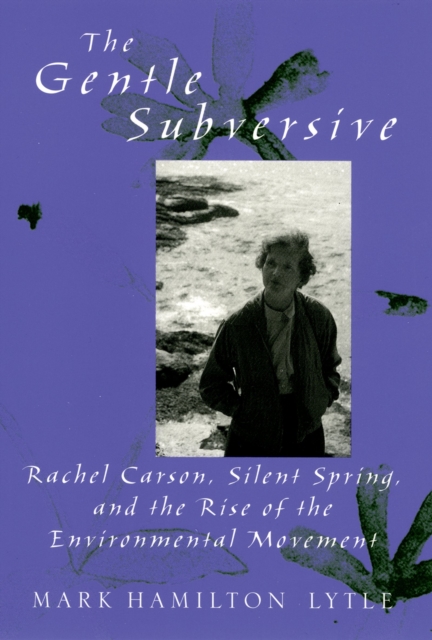
The Gentle Subversive
“There is properly no history; only biography;’ Ralph Waldo Emerson once observed. Few historians would agree. The frame of biography is simply too narrow to suit their aims. Measuring as they do the lines of change and continuity, concerned as they must be in reconstructing context, historians often find a single life unequal to these tasks. Yet some lives can serve such purposes if they are recreated with a telling sense of time and place.
Such surely is the case with Mark Lytle’s The Gentle Subversive. In it, Lytle chronicles the life of Rachel Carson, a modern-day naturalist who produced one of the most important books of the twentieth century. When it appeared in 1962, Silent Springsounded an alarm that still rings today, of an impending crisis brought on by the indiscriminate use of pesticides. What began as a well-intentioned effort to rid the environment of insects that destroyed crops and spread disease ended by threatening to poison the planet.
eBook

Rachel Carson : pioneer of ecology
Biography of the pioneering woman ecologist and conservationist who wrote Silent spring.
Book

Rachel Carson – a woman ahead of her time
Rachel Carson's genius is apparent in Silent Spring, the book that helped to launch the modern environmental movement and galvanized millions of people. Carson, who also wrote Under the Sea-Wind, The Sea Around Us and The Edge of the Sea was a renowned author by the time she penned Silent Spring, which was published two years before her death. However, none of her previous works garnered the publicity, placed her under a microscope, or subjected her to vicious attacks the way Silent Spring did. Carson was a scientist, writer, and thinker who was ahead of her time. A white woman of modest economic means, Carson grew up on a farm in Pennsylvania. She was interested in marine science, a theme that permeates her early books. In her books, Carson demonstrates an understanding of how to use her insider--outsider status to convey her ideas to broad audiences. Here, Taylor argues that in Silent Spring, Carson was underappreciated by her readers at the time in the blistering critiques she levied against federal, state, and local governments' callous use of harmful chemicals to control populations of insect pests.
Journal Article


Circulating Silence. The Reaction to Rachel Carson’s Book Silent Spring (1962) in Scandinavian Gardening Magazines
This article examines the reception of Rachel Carson’s book
in Scandinavian family gardening magazines. In Sweden, Norway and Denmark, family gardening associations were broad organisations with significant social impact. They were the most important arenas for transfer of scientific knowledge and values on gardening, linking plant protection experts, producers and sellers of gardening chemicals, horticultural advisors and the general public. Thus, these associations and their magazines influenced many social groups that had common interests in non-commercial gardening as part of their everyday life. In practice, these family gardening magazines were heavily dependent on the income from garden chemicals advertisements. Consequently, their editorial policies and plant protection technical advice were deeply rooted in the post-war ideals of chemical agriculture and horticulture. These ideals were pursued and applied everywhere—even into the tiniest allotment and family garden. Scandinavian countries and their gardening associations have many similarities and some differences between them. This makes them an interesting case for comparison. The gardening magazines of Sweden, Norway and Denmark show quite a few similarities in the way they first pretended to ignore Carson while spending much effort countering the possible effects of her message, and in the way they retrospectively engaged with her book. There are, however, quite interesting differences in the way the national garden associations, their magazine editors and the magazines’ pesticide experts handled the publicity generated by
on the harmfulness of garden chemicals.
Journal Article