
Catalogue Search | MBRL


Are you sure you want to remove the book from the shelf?

{{itemTitle}}
856
result(s) for
"Cartels -- History"
Sort by:

Cartels, markets and crime : a normative justification for the criminalisation of economic collusion
\"As a means of industrial organization, cartels have had mixed acceptance in Europe after the end of the Industrial Revolution. In the late Nineteenth Century there were approximately four industry-wide cartels operating in Germany. By 1923, the figure had grown to over 1,500. Such organizations were a common, legal and (often) encouraged means of facilitating industrial and national development\" -- Provided by publisher.
Book

Gothic Sovereignty
Gang-related violence has forced thousands of Hondurans to flee their country, leaving behind everything as refugees and undocumented migrants abroad. To uncover how this happened, Jon Carter looks back to the mid-2000s, when neighborhood gangs were scrambling to survive state violence and mass incarceration, locating there a critique of neoliberal globalization and state corruption that foreshadows Honduras’s current crises. Carter begins with the story of a thirteen-year-old gang member accused in the murder of an undercover DEA agent, asking how the nation’s seductive criminal underworld has transformed the lives of young people. He then widens the lens to describe a history of imperialism and corruption that shaped this underworld—from Cold War counterinsurgency to the “War on Drugs\" to the near-impunity of white-collar crime—as he follows local gangs who embrace new trades in the illicit economy. Carter describes the gangs’ transformation from neighborhood groups to sprawling criminal societies, even in the National Penitentiary, where they have become political as much as criminal communities. Gothic Sovereignty reveals not only how the revolutionary potential of gangs was lost when they merged with powerful cartels but also how close analysis of criminal communities enables profound reflection on the economic, legal, and existential discontents of globalization in late-liberal nation-states.
eBook

The cartels : the story of Mexico's most dangerous criminal organizations and their impact on U.S. security
\"An up-to-date examination of Mexico's version of the \"War on Drugs\" that exposes the evolution of major cartels and their corruption of politicians, law-enforcement agencies, and the Army\"-- Provided by publisher.
Book

The International Tin Cartel
For most of the twentieth century, tin was the site of new forms of international regulation which became a model for other commodities. The onset of the depression of the 1930s saw a collapse in commodity prices, and governments of tin producing countries decided to form a cartel to return the industry to comparative prosperity. This is a detailed study of how the tin industry found itself in difficulty and how the cartel developed its policies of control over production and stocks, together with its enduring legacy after World War II.
This study of a cartel brings together two levels of analysis that are normally kept separate; international cooperation, and national organization, and demonstrates how each affected the other. It is based on a comprehensive review of a wide range of archival sources which are sufficiently rich and frank that they provide an insider’s sense of how a cartel actually worked.
1. Introduction 2. Tin: The Foundations of an Industry 3. Tin and Industrial Capitalism, 1815-1918 4. The Problem with Tin, 1919-1929 5. The Depression: Initial Responses, 1928-1930 6. The Formation of the International Tin Committee, 1927-1931 7. Constructing the Machinery of Control 8. Rescuing the Industry, 1931-1933 9. Renewing the Second Agreement, 1933-1934 10. Stabilizing the Tin Market, 1934-1936 11. Renewing the Third Agreement, 1935-1936 12. Riding the Commodity Roller-coaster, 1937-1939 13. Development under Restriction: The Producers 14. Tin Consumption and Research 15. The International Tin Committee and World War II, 1939-1942 16.The International Tin Committee and its Critics 17. The Demise of the International Tin Committee, 1945-1946 18. From the International Tin Committee to the International Tin Council, 1945-1985 19. Conclusion
John Hillman is Professor Emeritus at Trent University, Canada.
eBook

Making Europe : experts, cartels, and international organizations
\"Technologies have created crucial connections across borders requiring new forms of regulation. This book analyses how experts, cartels and international organizations have written the rules for Europe since around 1850. Based on fresh research in the archives of multiple international organizations and European countries it explores the 'hidden integration' of Europe--forms of integration that were not always visible, but affected the citizens of Europe in their everyday lives. Richly illustrated and engagingly written, the book de-centers the present-day European Union in a new long-term understanding of European integration\"-- Provided by publisher.
Book
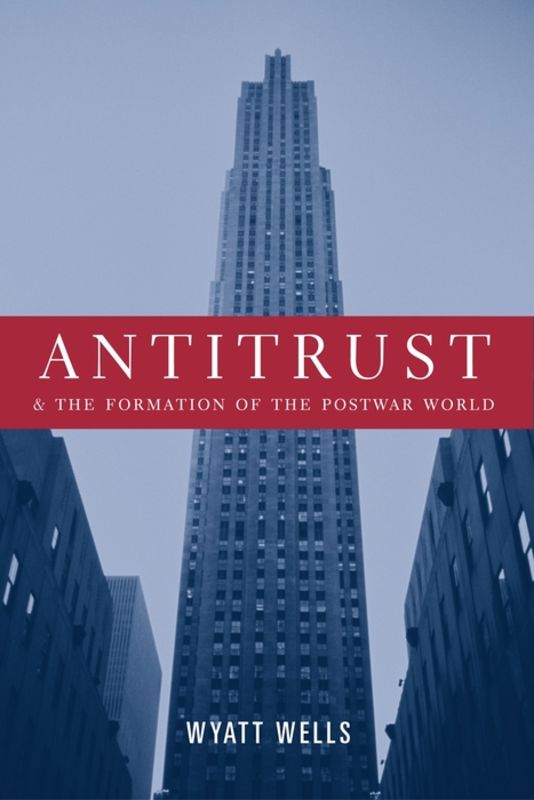
Antitrust and the Formation of the Postwar World
Today antitrust law shapes the policy of almost every large company, no matter where headquartered. But this wasn't always the case. Before World War II, the laws of most industrial countries tolerated and even encouraged cartels, whereas American statutes banned them. In the wake of World War II, the United States devoted considerable resources to building a liberal economic order, which Washington believed was necessary to preserving not only prosperity but also peace after the war. Antitrust was a cornerstone of that policy. This fascinating book shows how the United States sought to impose—and with what results—its antitrust policy on other nations, especially in Europe and Japan. Wyatt Wells chronicles how the attack on cartels and monopoly abroad affected everything from energy policy and trade negotiations to the occupation of Germany and Japan. He shows how a small group of zealots led by Thurman Arnold, who became head of the Justice Department's Antitrust Division in 1938, targeted cartels and large companies throughout the world: IG Farben of Germany, Mitsui and Mitsubishi of Japan, Imperial Chemical Industries of Britain, Philips of the Netherlands, DuPont and General Electric of the United States, and more. Wells brilliantly shows how subsequently, the architects of the postwar economy—notably Lucius Clay, John McCloy, William Clayton, Jean Monnet, and Ludwig Erhard—uncoupled political ideology from antitrust policy, transforming Arnold's effort into a means to promote business efficiency and encourage competition.
eBook

The Practice of Supervisory Rights in Hungarian Cartel Law with Special Attention to the Duties of the Minister and the Legal Director
Hungary introduced provisions on cartels with the enactment of Act XX of 1931. To protect good morals and public interests, the Act regulated the tools of state intervention and supervision. This legal field was the summarization of the proceedings of cartel supervisory authorities, in which not only executive state bodies but also judiciary organs took part. The paper focuses on the development of the Hungarian cartel law, with special attention to the practice of the courts and the aims of the State related to the supervisory power over the cartels before the codification of the Hungarian cartel law. The main aim of the study is to put an emphasis on the tasks of the responsible Minister and the legal director, mainly by analyzing the related primary sources. The purpose of this study is also to explain the tasks of the responsible Minister after the Cartel Act came into force, and the demonstration of the practice related to the proceedings. The main question is what the functions of the supervisory authorities related to the cartels were. In connection with the legal director, I would like to illustrate his task as a representative of state interests in the mainly cartel-related lawsuits.
Journal Article
The Antecedents of the Regulation of the Economic Competition Agreement in the First Part of the 20th Century in Hungary
The regulations of the economic competition agreement were introduced by the 20th Act of 1931 after the economic crisis attention to the cartel regulations in Europe in the interwar period. We can realize that the regulation of the unfair business completion has a long codification history which started in the period of the Dualism. Before the end of dualism the Hungary regulated some question related to the cartels special attention to the circulation of commodities. In my presentation, I aim to describe the Hungarian and European codification antecedents and steps (for example: the regulation of industry) of the first Hungarian Cartel Act. This codification process was very important in Hungarian economy and social life because the economic changes started processes in both the field of legal life and legal sciences, and as a result of this, a demand arose to legally codify any rules in connection to cartels. The foundations of these were found in private law, especially in the regulations of the commercial law, which could be further elaborated upon and lead to a development of the regulations on the annulment of contracts in connection to dishonourable business competition.
Journal Article

What Determines Cartel Success?
Following George Stigler (1964), many economists assume that incentive problems undermine attempts by firms to collude to raise prices and restrict output. But the potential profits from collusion can create a powerful incentive as well. Theory cannot tell us, a priori, which effect will dominate: whether or when cartels succeed is thus an empirical question. We examine a wide variety of empirical studies of cartels to answer the following questions: (1) Can cartels succeed? (2) If so, for how long? (3) What impact do cartels have? (4) What causes cartels to break up? We conclude that many cartels do survive, and that the distribution of duration is bimodal. While the average duration of cartels across a range of studies is about five years, many cartels break up very quickly (i.e., in less than a year). But there are many others that last between five and ten years, and some that last decades. Limited evidence suggests that cartels are able to increase prices and profits, to varying degrees. Cartels can also affect other non-price variables, including advertising, innovation, investment, barriers to entry, and concentration. Cartels break up occasionally because of cheating or lack of effective monitoring, but the biggest challenges cartels face are entry and adjustment of the collusive agreement in response to changing economic conditions. Cartels that develop organizational structures that allow them the flexibility to respond to these changing conditions are more likely to survive. Price wars that erupt are often the result of bargaining issues that arise in such circumstances. Sophisticated cartel organizations are also able to develop multipronged strategies to monitor one another to deter cheating and a variety of interventions to increase barriers to entry.
Journal Article

Necropolitics, Narcopolitics, and Femicide: Gendered Violence on the Mexico-U.S. Border
In 1993, a group of women shocked Ciudad Juárez, Chihuahua, with the news that dozens of girls and women had been murdered and dumped, like garbage, around the city during the year. As the numbers of murders grew over the years, and as the police forces proved unwilling and unable to find the perpetrators, the protestors became activists. They called the violence and its surrounding impunity “femicide,” and they demanded that the Mexican government, at the local, state, and federal levels, stop the violence and capture the perpetrators. Nearly two decades later, the city’s infamy as a place of femicide is giving way to another terrible reputation as a place of unprecedented drug violence. Since 2006, more than six thousand people have died in the city, as have more than twenty-eight thousand across the country, in relation to the violence associated with the restructuring of the cartels that control the production and distribution of illegal drugs. In response to the public outcry against the violence, the Mexican government has deployed thousands of troops to Ciudad Juárez as part of a military strategy to secure the state against the cartels.
In this essay, I argue that the politics over the meaning of the drug-related murders and femicide must be understood in relation to gendered violence and its use as a tool for securing the state. To that end, I examine the wars over the interpretation of death in northern Mexico through a feminist application of the concept of necropolitics as elaborated by the postcolonial scholar Achille Mbembe. I examine how the wars over the political meaning of death in relation both to femicide and to the events called “drug violence” unfold through a gendering of space, of violence, and of subjectivity. My objective is twofold: first, to demonstrate how the antifemicide movement illustrates the stakes for a democratic Mexican state and its citizens in a context where governing elites argue that the violence devastating Ciudad Juárez is a positive outcome of the government’s war against organized crime; and second, to show how a politics of gender is central to this kind of necropolitics.
Journal Article