
Catalogue Search | MBRL


Are you sure you want to remove the book from the shelf?

{{itemTitle}}
52
result(s) for
"Caste India Tamil Nadu"
Sort by:
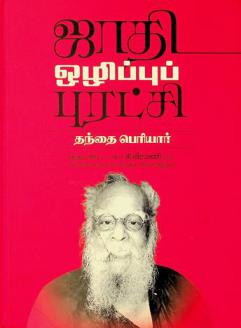
Jāti ol̲ippup puraṭci
Selected works of Tantai Periyār Ī. Ve. Rāmacāmi, 1878-1973, social reformer from Tamil Nadu, with special reference to caste in Tamil Nadu.

Castes of Mind
When thinking of India, it is hard not to think of caste. In academic and common parlance alike, caste has become a central symbol for India, marking it as fundamentally different from other places while expressing its essence. Nicholas Dirks argues that caste is, in fact, neither an unchanged survival of ancient India nor a single system that reflects a core cultural value. Rather than a basic expression of Indian tradition, caste is a modern phenomenon--the product of a concrete historical encounter between India and British colonial rule. Dirks does not contend that caste was invented by the British. But under British domination caste did become a single term capable of naming and above all subsuming India's diverse forms of social identity and organization.
Dirks traces the career of caste from the medieval kingdoms of southern India to the textual traces of early colonial archives; from the commentaries of an eighteenth-century Jesuit to the enumerative obsessions of the late-nineteenth-century census; from the ethnographic writings of colonial administrators to those of twentieth-century Indian scholars seeking to rescue ethnography from its colonial legacy. The book also surveys the rise of caste politics in the twentieth century, focusing in particular on the emergence of caste-based movements that have threatened nationalist consensus.
Castes of Mind is an ambitious book, written by an accomplished scholar with a rare mastery of centuries of Indian history and anthropology. It uses the idea of caste as the basis for a magisterial history of modern India. And in making a powerful case that the colonial past continues to haunt the Indian present, it makes an important contribution to current postcolonial theory and scholarship on contemporary Indian politics.
eBook

The saint in the banyan tree
The Saint in the Banyan Tree is a nuanced and historically persuasive exploration of Christianity's remarkable trajectory as a social and cultural force in southern India. Starting in the seventeenth century, when the religion was integrated into Tamil institutions of caste and popular religiosity, this study moves into the twentieth century, when Christianity became an unexpected source of radical transformation for the country's 'untouchables' (dalits). Mosse shows how caste was central to the way in which categories of 'religion' and 'culture' were formed and negotiated in missionary encounters, and how the social and semiotic possibilities of Christianity lead to a new politic of equal rights in South India. Skillfully combining archival research with anthropological fieldwork, this book examines the full cultural impact of Christianity on Indian religious, social and political life. Connecting historical ethnography to the preoccupations of priests and Jesuit social activists, Mosse throws new light on the contemporary nature of caste, conversion, religious synthesis, secularization, dalit politics, the inherent tensions of religious pluralism, and the struggle for recognition among subordinated people.
eBook

Tamil Folk Music as Dalit Liberation Theology
Zoe C. Sherinian shows how Christian Dalits (once known as untouchables or outcastes) in southern India have employed music to protest social oppression and as a vehicle of liberation. Her focus is on the life and theology of a charismatic composer and leader, Reverend J. Theophilus Appavoo, who drew on Tamil folk music to create a distinctive form of indigenized Christian music. Appavoo composed songs and liturgy infused with messages linking Christian theology with critiques of social inequality. Sherinian traces the history of Christian music in India and introduces us to a community of Tamil Dalit Christian villagers, seminary students, activists, and theologians who have been inspired by Appavoo's music to work for social justice. Multimedia components available online include video and audio recordings of musical performances, religious services, and community rituals.
eBook

Making Merit: The Indian Institutes of Technology and the Social Life of Caste
The politics of meritocracy at the Indian Institutes of Technology illuminates the social life of caste in contemporary India. I argue that the IIT graduate's status depends on the transformation of privilege into merit, or the conversion of caste capital into modern capital. Analysis of this process calls for a relational approach to merit. My ethnographic research on the southeastern state of Tamilnadu, and on IIT Madras located in the state capital of Chennai, illuminates claims to merit, not simply as the transformation of capital but also as responses to subaltern assertion. Analyzing meritocracy in relation to subaltern politics allows us to see the contextual specificity of such claims: at one moment, they are articulated through the disavowal of caste, at another, through caste affiliation. This marking and unmarking of caste suggests a rethinking of meritocracy, typically assumed to be a modernist ideal that disclaims social embeddedness and disdains the particularisms of caste and race. I show instead that claims to collective belonging and to merit are eminently commensurable, and become more so when subaltern assertion forces privilege into the foreground. Rather than the progressive erasure of ascribed identities in favor of putatively universal ones, we are witnessing the re-articulation of caste as an explicit basis for merit and the generation of newly consolidated forms of upper-casteness.
Journal Article


MARRIAGE, VIOLENCE, AND CHOICE: Understanding Dalit Women's Agency in Rural Tamil Nadu
The literature on Dalit women largely deals with issues of violence and oppression based on intersections of class, caste, and gender. Women's bodies, sexuality, and reproductive choices are linked to the ideological hegemony of the caste—gender nexus in India, with marriage and sexual relations playing crucial roles in maintaining caste boundaries. Often, the ways in which women manipulate their multiple, interlinked identities as women, Dalits, workers, and homemakers to resist control over their bodies (labor and sexuality), negotiate conjugal loyalty and love, and construct a sense of selfhood is missed in the analyses. Based on research in rural Tamil Nadu, I analyze Dalit women's narratives that reflect multiple concerns and dilemmas about marital choice and violence, generating in the process a deeper understanding of agency, voice, and gender relations, as fluid, dynamic, and intersecting in response to changing experiences, positionalities, and subjectivities.
Journal Article