
Catalogue Search | MBRL


Are you sure you want to remove the book from the shelf?

{{itemTitle}}
91
result(s) for
"Castles Europe."
Sort by:

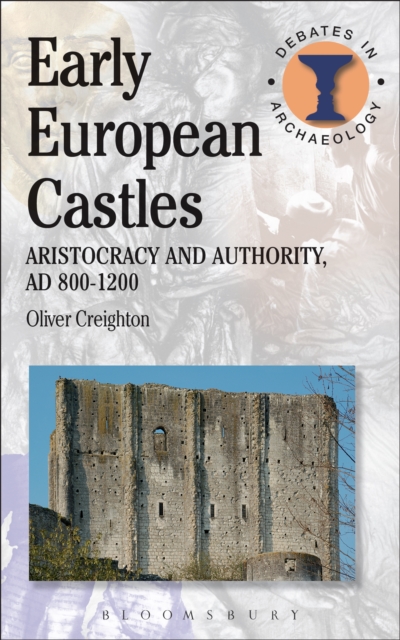
Early European castles : aristocracy and authority, AD 800-1200
Medieval castles were, alongside the great cathedrals, the most recognisable buildings of the medieval world. Closely associated with concepts of justice, lordship and authority as well as military might, castles came to encapsulate the period's very essence.
Looking at above and below-ground evidence and examining a wide variety of sites - from towering donjons to earth and timber castles - in different parts of western Europe, this book explores the relationship between early castle building and the emergence of a new aristocracy and investigates the impact of authority on the organisation of the landscape.
A particular focus is on the social context of early private fortifications: Europe's earliest castles came to embody a new and radically different form of power – an aristocratic authority that was highly personal in nature, glaringly visible in its presence, and enforceable through violence, both threatened and real. The volume reassesses traditional models of castle origins; examines aspects of elite lifestyle in and around these structures, including pastimes and diet; considers medieval visual experiences of sites and their settings; and explores some future directions for research.
eBook

Castles : their history and evolution in medieval Britain
Beginning with their introduction in the eleventh century, and ending with their widespread abandonment in the seventeenth, Marc Morris explores many of the country's most famous castles, as well as some spectacular lesser-known examples.
Book
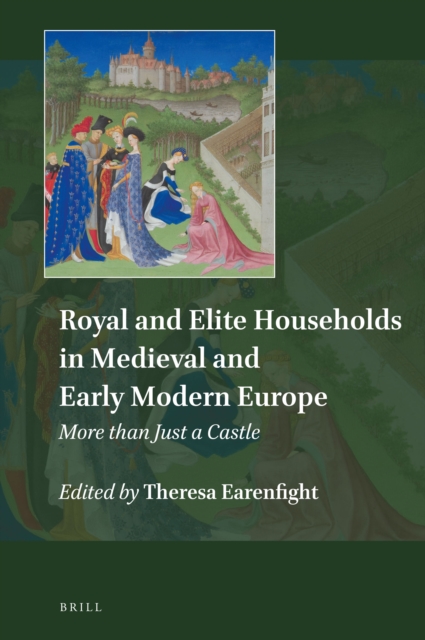
Royal and Elite Households \u2028in Medieval and Early \u2028Modern Europe
The authors bring fresh approaches to the subject of royal and noble households in medieval and early modern Europe with a focus on the nuclear and extended royal family, their household attendants, noblemen and noblewomen as courtiers, and physicians.
eBook


Seats of Power in Europe during the Hundred Years War
The Hundred Years’ War between England and France is a story of an epic conflict between two nations whose destinies became inextricably entwined throughout the later Middle Ages. During that time the balance of architectural power moved from religious to secular domination, the Gothic form continued to grow and the palace-fortress was in the ascendancy. Seats of Power in Europe is a major new study of the residences of the crowned heads and the royal ducal families of the countries involved in the Hundred Years’ War. Though they were the leading protagonists and therefore responsible for the course of the war, do their residences reflect an entirely defensive purpose, a social function, or the personality of their builders? As well as the castles of England and France it also looks at rulers residences in other European countries who supported one of the protagonists. They include Scotland, Castile, Aragon, Navarre, Portugal, the Low Countries, the imperial territories of Bohemia, and the papacy in Avignon and then Rome. The study concentrates on sixty properties extending from the castles at Windsor and Denilworth to those at Saumur and Rambures, and from the palaces at Avignon and Seville to the manor-houses at Germolles and Launay. A number of subsidiary or associated properties are also considered in more broad-based sections. Each region and its residences are prefaced by supporting historical and architectural surveys to help position the properties against the contemporary military, financial, and aesthetic backgrounds. Extensively illustrated in full color with over 120 photographs and over 70 plans this is an attractive and accessible overview of how architecture both shaped and was influenced by events during this tumultuous period in the history of Europe. Essential reading for students of architecture, architectural historians, historians and those interested in Medieval Europe. The Hundred Years’ War between England and France is a story of an epic conflict between two nations whose destinies became inextricably entwined throughout the later Middle Ages. During that time the balance of architectural power moved from religious to secular domination, the Gothic form continued to grow and the palace-fortress was in the ascendancy. Seats of Power in Europe is a major new study of the residences of the crowned heads and the royal ducal families of the countries involved in the Hundred Years’ War. Though they were the leading protagonists and therefore responsible for the course of the war, do their residences reflect an entirely defensive purpose, a social function, or the personality of their builders? As well as the castles of England and France it also looks at rulers residences in other European countries who supported one of the protagonists. They include Scotland, Castile, Aragon, Navarre, Portugal, the Low Countries, the imperial territories of Bohemia, and the papacy in Avignon and then Rome. The study concentrates on sixty properties extending from the castles at Windsor and Denilworth to those at Saumur and Rambures, and from the palaces at Avignon and Seville to the manor-houses at Germolles and Launay. A number of subsidiary or associated properties are also considered in more broad-based sections. Each region and its residences are prefaced by supporting historical and architectural surveys to help position the properties against the contemporary military, financial, and aesthetic backgrounds. Extensively illustrated in full color with over 120 photographs and over 70 plans this is an attractive and accessible overview of how architecture both shaped and was influenced by events during this tumultuous period in the history of Europe. Essential reading for students of architecture, architectural historians, historians and those interested in Medieval Europe.
eBook
Architecture and elite culture in the united provinces, england and ireland, 1500-1700
This study aims to elucidate concepts of castle in the Netherlands, England and Ireland in both past en present times. The first part of the book examines current, respectively, academic, national and personal appropriations of 'castle'; the second part moves into the past, juxtaposing elite culture and the spatial organisation of 16th and 17th century domestic architecture.
eBook

The castle : a history
A vibrant history of the castle in Britain, from the early Middle Ages to the present day The castle has long had a pivotal place in British life, associated with lordship, landholding, and military might, and today it remains a powerful symbol of history. But castles have never been merely impressive fortresses-they were hubs of life, activity, and imagination. John Goodall weaves together the history of the British castle across the span of a millennium, from the eleventh to the twenty-first century, through the voices of those who witnessed it. Drawing on chronicles, poems, letters, and novels, including the work of figures like Gawain Poet, Walter Scott, Evelyn Waugh, and P. G. Wodehouse, Goodall explores the importance of the castle in our culture and society. From the medieval period to Civil War engagements, right up to modern manifestations in Harry Potter, Goodall reveals that the castle has always been put to different uses, and to this day continues to serve as a source of inspiration.
eBook

Fertility by Birth Order among the Descendants of Immigrants in Selected European Countries
This study investigates the childbearing patterns of the descendants of immigrants in six European countries, with a focus on women whose parents arrived in Europe from high-fertility countries. While the fertility levels of immigrants to Europe have been examined in the recent literature, the childbearing patterns among their descendants have received little attention. Using longitudinal data and applying Poisson regression models, the study shows that many descendants of immigrants have first birth levels that are similar to the native population in their countries of origin; however, first birth levels are slightly elevated among women of Pakistani and Bangladeshi origin in the UK and among women of Turkish descent in France and Belgium. Transition rates to a second child vary less across ethnic groups; only women of Pakistani and Bangladeshi origin in the UK have elevated second birth levels. Most women with immigrant family background in the UK, France, and Belgium show significantly higher third birth levels than natives in those countries. The inclusion of women's level of education in the analysis has little effect on fertility differences across the ethnic groups. Overall, the childbearing behavior of the second generation falls in between the fertility pathways experienced by their parents' generation and the respective native populations. The analysis supports the idea that both the mainstream society and the minority subculture shape the childbearing patterns of the descendants of immigrants in Europe. Fertility levels of the descendants of immigrants from high-fertility countries are expected to decline further in the third generation, but a significant intra-group heterogeneity is likely to persist.
Journal Article
Castles and colonists
Castles and colonists is the first book to examine life in the leading province of Elizabeth I's nascent empire. Klinglehofer shows how an Ireland of colonising English farmers and displaced Irish 'savages' are ruled by an imported Protestant elite from their fortified manors and medieval castles.Richly illustrated, it displays how a generation of English 'adventurers' including such influential intellectual and political figures as Spenser and Ralegh, tried to create a new kind of England, one that gave full opportunity to their Renaissance tastes and ambitions.Based on decades of research, Castles and colonisers details how archaelogy had revealed the traces of a short-lived, but significant culture which has been, until now, eclipsed in ideological conflicts between Tudor queens, Hapsburg hegemony and native Irish traditions,
eBook