
Catalogue Search | MBRL


Are you sure you want to remove the book from the shelf?

{{itemTitle}}
46
result(s) for
"Castrati"
Sort by:


The castrato
The Castratois a nuanced exploration of why innumerable boys were castrated for singing between the mid-sixteenth and late-nineteenth centuries. It shows that the entire foundation of Western classical singing, culminating in bel canto, was birthed from an unlikely and historically unique set of desires, public and private, aesthetic, economic, and political. In Italy, castration for singing was understood through the lens of Catholic blood sacrifice as expressed in idioms of offering and renunciation and, paradoxically, in satire, verbal abuse, and even the symbolism of the castrato's comic cousin Pulcinella. Sacrifice in turn was inseparable from the system of patriarchy-involving teachers, patrons, colleagues, and relatives-whereby castrated males were produced not as nonmen, as often thought nowadays, but as idealized males. Yet what captivated audiences and composers-from Cavalli and Pergolesi to Handel, Mozart, and Rossini-were the extraordinary capacities of castrato voices, a phenomenon ultimately unsettled by Enlightenment morality. Although the castrati failed to survive, their musicality and vocality have persisted long past their literal demise.
eBook

Formation and Development of the Italian Vocal School from 16th to 19th Centuries
The article is devoted to the development and formation of the Italian vocal schools in the era of the New Age. The most important aspects of the development of the Italian vocal school are the domination of castrate singers in the 18th century and their gradual ousting in the era of the romantic opera formation. During the 20th century, the internationalization of Italian opera and vocal teaching methods take place. The study is based on a complex of historical methods. The materials are of interest to researchers of vocal technology and cultural history.
El artículo está dedicado al desarrollo y formación de las escuelas vocales italianas en la era de la
Nueva Era. Los aspectos más importantes del desarrollo de la escuela vocal italiana son el dominio
de los cantantes castrados en el siglo XVIII y su gradual derrocamiento en la era de la formación
de la ópera romántica. Durante el siglo XX, se produce la internacionalización de la ópera italiana
y los métodos de enseñanza vocal. El estudio se basa en un complejo de métodos históricos. Los
materiales son de interés para los investigadores de tecnología vocal e historia cultural.
Journal Article
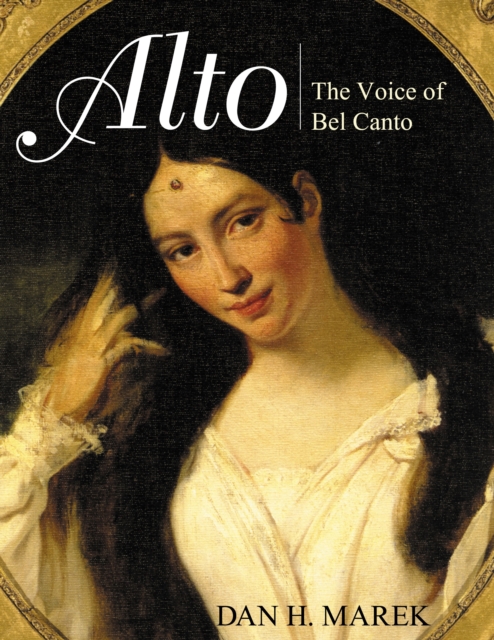
Alto
Everyone is familiar with the words diva or prima donna, which have come to mean a (usually) outrageous operatic soprano, but there was a time when the star of the show was more often a contralto, or a soprano singing in today's mezzo-soprano range. This performer was referred to as an alto. In the 17th and 18th centuries, the male and female leading roles were likely to be sung by emasculated males, the alto castrati, although there were many great female altos during this period as well. The music for these fantastic artists, written by such composers as Porpora, Vinci, Hasse, and even Handel, has been largely forgotten. At the beginning of the 19th century, as the castrati died out, their roles were often assumed by female altos referred to as musici. New repertoire continued to be written for them by Rossini and others, but gradually, this musical tradition and technique was lost. Now, however, because of the talent and industry of such gifted artists as Marilyn Horne, Cecilia Bartoli, and Joyce DiDonato, and the sudden ease with which the performance of these forgotten works can be obtained, there is a resurgence of interest in the performance and preservation of this lost art. Alto: The Voice of Bel Canto examines the careers of nearly 320 great alto singers, including the great castrati, from the dawn of opera in 1597 to the present. The music of the composers who wrote for the alto voice is discussed along with musical examples and suggestions for listening. The exploration of the greatest altos’ careers and techniques offers inspiration for aspiring young singers as well as absorbing reading for the music lover who wants to know more about the fascinating world of opera.
eBook

Ex Concordia Discors
In March 1558 Pope Paul IV ordered his College of Singers to consider two Spanish sopranos, then in Naples. Called to Rome for an audition, they were accepted according to the normal procedure (a vote). Two Italian members, however, aggressively abstained from participating. For this they would have been severely punished without they avoided through the intervention of their patron, the papal nephew Cardinal Carlo Carafa. In 1559 Paul IV demanded that the abstainers be dismissed, but their colleagues persuaded him to allow them to remain. Also in 1559 three other papal singers suffered when Cardinal Carafa was disgraced and banished by Paul IV. In 1562 the most recalcitrant singer in the original affair resigned from the choir for reasons that defy explanation. Though minor in itself, this curious tempest in a teapot opens a window into larger issues concerning the power relationship of popes and cardinals to the papal singers and shows the real dangers that could ensue from being a member of the household of a cardinal. Moreover, it exposes national tensions within the choir, shows the singers caught up in the political repercussions of the last spasms of the short and disastrous pontificate of Paul IV, and even gives a glimpse into their possibly aberrant personalities. Cardinal Carlo Carafa is also shown to have had a serious interest in the papal choir and individual papal singers for reasons that have yet to be elucidated and may not have been entirely musical.
Journal Article
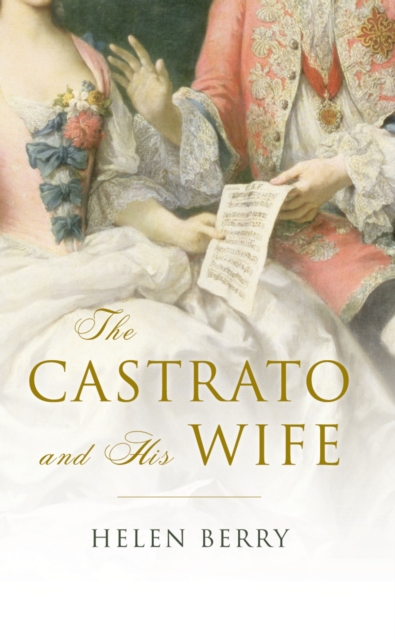
The castrato and his wife
The tale of Giusto Ferdinando Tenducci, 18th century castrato, celebrity, and heart-throb, and his elopement and love affair with his teenage pupil Doroethea Maunsell, a story that opens up a new history of attitudes towards sex and celebrity in Georgian Britain, and explores questions about the meaning of marriage that resonate in our own time.
eBook

Castrati singers: surgery for religion and art
The act of castration was practiced from ancient times. In countries of Middle and Far East, castration was often done to provide eunuchs as guardians of the harems. In Europe and especially in Italy, it was carried out to preserve the male voice unbroken into adult life. From 16th century till the end of 18th century, castrati singers dominated opera with their supernatural voices. Boys were castrated mainly before the age of 9 years and when they grew up they had feminine characteristics, such as smooth, hairless bodies, breasts, infantile penis. The training procedure to become a castrato singer was very intense and lasted up to ten years. The most common surgical technique was either to sever the spermatic cords or crush the testis with the fingers. The voice of a castrato was the outcome of a larynx the size of a child's combined with the lung volume of an adult male. The castrati singers became superstars who dominated opera, singing both male and female roles for more than 200 years. Castrated for art, the beauty, range and flexibility of their voices raised them to mythical status.
Journal Article

The Castrato Singer Francesco Ceccarelli
Francesco Ceccarelli (1752–1814), the castrato singer from Foligno, had a notable career in Italy and abroad. In his early career he sung opera in Perugia Castello, Venice and Verona, but after 1776 he abandoned an operatic career to devote himself to sacred music and chamber concerts. From 1777 to 1788 he was a member of the Salzburg court chapel, and at that time collaborated with the Mozart family. Later on he sung at the court of Mainz (1788–1792), but then returned to Italy for a second and intense theater seasons: Naples (1793–1795), Venice (1795), Florence (1795, 1797), Ferrara (1796, 1798), Mantua (1796), Livorno (1798), Padua (1798) and Trieste (1799). From February 1800 to his death he kept position ofKammersängecontralto at the court of Dresden.
Recently restored portrait of the singer at the Raccolte Comunali di Palazzo Trinci in Foligno—originating from the collection of a descendant of Ceccarelli, Monsignor Michele Faloci Pulignani who donated it to the town of Foligno in 1936—has been identified as the work by the same painter who made the 1780– 1781 portrait of the Mozart family, traditionally attributed to Johann Nepomuk Della Croce (1736–1819). Letters of the Mozart family, in particular those of 12 and 20 April 1778, show that some portraits of Ceccarelli were made in the Mozart family home, even though within the context of a game.
Journal Article

Stacy Ann Muniz graduate studies recital document
The purpose of this recital document is to explore the content to be sung at the author's master's recital. Chapter one, Sea Pictures Op. 37 by Edward Elgar provides some biographical information, on the composer, then switches focus towards a better understanding of the theoretical aspects concerning the song cycle. Chapter two is an in depth biographical sketch of Francesco Cavalli, a very important and sometimes overlooked composer of Venetian opera. In chapter three, the author discusses the rise and fall of the da capo aria, exploring the question from a historical perspective rather than the theoretical viewpoint which is typically used. Finally, in chapter four, The Transfer of Castrati Roles to Mezzo-Soprano, the social issues surrounding the casting of and writing music for women opera performers is discussed.
Dissertation