
Catalogue Search | MBRL


Are you sure you want to remove the book from the shelf?

{{itemTitle}}
107
result(s) for
"Castro, Fidel, 1926-2016"
Sort by:
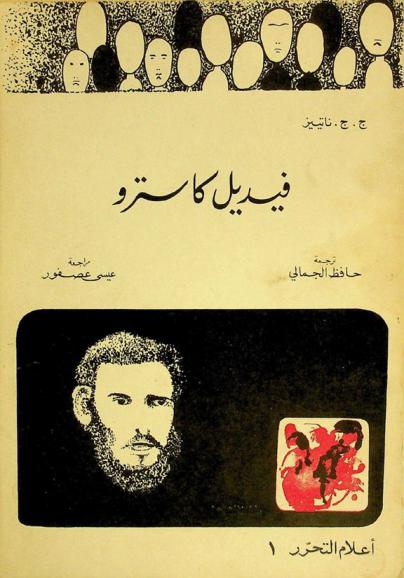

Fidel in the Cuban Socialist Revolution
The book makes accessible a selection of speeches and television appearances by Fidel Castro during the first two years of the Cuban Revolution, allowing for a fresh analysis of his ideological evolution towards socialism.
eBook


The armageddon letters : Kennedy, Khrushchev, Castro in the Cuban missile crisis
In October, 1962, the Cuban missile crisis brought human civilization to the brink of destruction. On the 50th anniversary of the most dangerous confrontation of the nuclear era, two of the leading experts on the crisis recreate the drama of those tumultuous days as experienced by the leaders of the three countries directly involved: U.S. President John F. Kennedy, Soviet Premier Nikita Khrushchev, and Cuban President Fidel Castro. Organized around the letters exchanged among the leaders as the crisis developed and augmented with many personal details of the circumstances under which they were written, considered, and received, Blight and Lang poignantly document the rapidly shifting physical and psychological realities faced in Washington, Moscow, and Havana. The result is a revolving stage that allows the reader to experience the Cuban missile crisis as never before—through the eyes of each leader as they move through the crisis. The Armageddon Letters: Kennedy, Khrushchev, Castro in the Cuban Missile Crisis transports the reader back to October 1962, telling a story as gripping as any fictional apocalyptic novel.
eBook
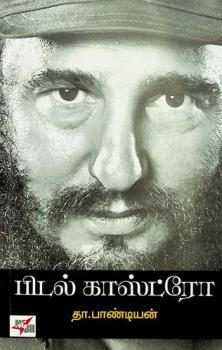
Piṭal Kāsṭrō = Pedal Castro
Biography of Fidel Castro, born 1926, revolutionary and former president of Cuba.

Fidel's Ethics of Violence
Fidel Castro's most original contribution to revolutionary and radical thought has been his development of an explicit ethical position on one of the most controversial issues of our time: violence. This book explores the evolution of Castro's political thinking - and in particular how he philosophically reconciles violence, political power and morality.
This book makes a timely intervention into the question of Castro's historical role and contribution. The author argues that Castro's doctrine of armed struggle is the logical development of his idea of the ethical liberation fighter. At its core is an unremitting emphasis on the ethical use of violence.
eBook


Celia Sanchez
Fidel Castro was powerless, in prison, when the Cuban Revolution was launched by a tiny woman named Celia Sánchez. A fearless and brilliant organizer and recruiter, she created, nurtured, and led the insurgency that ousted the U.S.-backed dictator Fulge.
eBook

The abyss : nuclear crisis Cuba 1962
\"In The Abyss, Max Hastings turns his focus to one of the most terrifying events of the mid-twentieth century--the thirteen days in October 1962 when the world stood on the brink of nuclear war. Hastings looks at the conflict with fresh eyes, focusing on the people at the heart of the crisis--America President John F. Kennedy, Soviet First Secretary Nikita Khrushchev, Cuban Prime Minister Fidel Castro, and a host of their advisors. Combining in-depth research with Hasting's well-honed insights, The Abyss is a human history that unfolds on a wide, colorful canvas. As the action moves back and forth from Moscow to Washington, DC, to Havana, Hastings seeks to explain, as much as to describe, the attitudes and conduct of the Soviets, Cubans, and Americans, and to recreate the tension and heightened fears of countless innocent bystanders whose lives hung in the balance. Reflecting on the outcome of these events, he reveals how the aftermath of this momentous crisis continues to reverberate today\"--provided by publisher.
BOOK

Inside the Cuban Revolution
Sweig shatters the mythology surrounding the Cuban Revolution in a compelling revisionist history that reconsiders the revolutionary roles of Castro and Guevara and restores to a central position the leadership of the Llano. Granted unprecedented access to the classified records of Castro's 26th of July Movement's underground operatives--the only scholar inside or outside of Cuba allowed access to the complete collection in the Cuban Council of State's Office of Historic Affairs--she details the debates between Castro's mountain-based guerrilla movement and the urban revolutionaries in Havana, Santiago, and other cities.
eBook