
Catalogue Search | MBRL


Are you sure you want to remove the book from the shelf?

{{itemTitle}}
1,473
result(s) for
"Catalonia"
Sort by:

A people's history of Catalonia
\"Catalonia's national consciousness has deep roots. A People's History of Catalonia tells this small country's history, from below, in all its richness and complexity. Catalonia's struggles for freedom have, for centuries, been violently resisted; and its language and rights, suppressed. Since the nineteenth century, the fight for national sovereignty has often intertwined with working-class mobilisation for social justice. Barcelona became known as the Rose of Fire. In 1936 Catalonia saw one of history's most profound workers' revolutions. From the peasant revolts of the 15th century and the siege of Barcelona in 1714, through the explosive workers' movement led by anarchists, the defeat in the Spanish Civil War, to the anti-Franco resistance in the grim years that followed, the author tells a compelling story whose ending has yet to be written.\"-- Provided by publisher.
Book

The Fruit of Her Hands
In the thriving urban economies of late thirteenth-century
Catalonia, Jewish and Christian women labored to support their
families and their communities. The Fruit of Her Hands
examines how gender, socioeconomic status, and religious identity
shaped how these women lived and worked.
Sarah Ifft Decker draws on thousands of notarial contracts as
well as legal codes, urban ordinances, and Hebrew responsa
literature to explore the lived experiences of Jewish and Christian
women in the cities of Barcelona, Girona, and Vic between 1250 and
1350. Relying on an expanded definition of women's work that
includes the management of household resources as well as wage
labor and artisanal production, this study highlights the crucial
contributions women made both to their families and to urban
economies. Christian women, Ifft Decker finds, were deeply embedded
in urban economic life in ways that challenge traditional
dichotomies between women in northern and Mediterranean Europe. And
while Jewish women typically played a less active role than their
Christian counterparts, Ifft Decker shows how, in moments of
communal change and crisis, they could and did assume prominent
roles in urban economies.
Through its attention to the distinct experiences of Jewish and
Christian women, The Fruit of Her Hands advances our
understanding of Jewish acculturation in the Iberian Peninsula and
the shared experiences of women of different faiths. It will be
welcomed by specialists in gender studies and religious studies as
well as students and scholars of medieval Iberia.
eBook


Multilingualism and Gendered Immigrant Identity
This book examines the intersectionality of gendered, religious identity among Muslim women in Catalonia, and illustrates how this identity is brokered through language use in a multilingual and diasporic context. Drawing on a mixed methods study of 1st and 2nd generation immigrant women, this book also examines how acculturation is a transgenerational process reflected in linguistic behavior. Through the use of questionnaire and interview data, the author constructs a story about informants' experiences navigating life vis-à-vis language use; specifically through the use of Spanish, Catalan and native/heritage languages. This book offers a unique lens through which we can further our understanding of the role of language in the acculturation process in Catalonia. It adds to the ongoing discussion about language and migration in Catalonia and provides a valuable contribution to debates about immigrant women's language learning and use.
eBook


Catalonia's Human Towers
The building of human towers (
castells ) is a centuries-old
traditional sport where hundreds of men, women, and children gather
in Catalan squares to create breathtaking edifices through a feat
of collective athleticism. The result is a great spectacle of
effort and overcoming, tension and release.
Catalonia's Human Towers is an ethnographic look at the
thriving castells practice-a symbol of Catalan cultural heritage
and identity amid debates around national autonomy and secession
from Spain. While the main function of building castells is to grow
community through a low-cost, intergenerational, and inclusive
leisure activity, Mariann Vaczi reveals how this unique sport also
provides a social base, image, and vocabulary for the independence
movement.
Highlighting the intersection of folklore, performance, and
sport, Catalonia's Human Towers captures the subtle
processes by which the body becomes politicized and ideology
becomes embodied, with all the desires, risks and precarities of
collective constructions.
eBook


The Victors and the Vanquished
This is a revisionary study of Muslims living under Christian rule during the Spanish 'reconquest'. It looks beyond the obvious religious distinctions and delves into the subtleties of identity in the thirteenth-century Crown of Aragon, uncovering a social dynamic in which sectarian differences comprise only one of the many factors in the causal complex of political, economic and cultural reactions. Beginning with the final stage of independent Muslim rule in the Ebro valley region, the book traces the transformation of Islamic society into mudéjar society under Christian domination. This was a case of social evolution in which Muslims, far from being passive victims of foreign colonisation, took an active part in shaping their institutions and experiences as subjects of the Infidel. Using a diverse range of methodological approaches, this book challenges widely held assumptions concerning Christian-Muslim relations in the Middle Ages, and minority-majority relations in general.
eBook
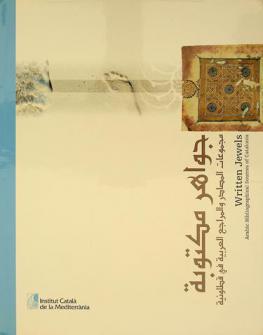

Constitutional culture, independence, and rights : insights from Quebec, Scotland, and Catalonia
In Constitutional Culture, Independence, and Rights , Javier García Oliva and Helen Hall coin the term constitutional culture to encapsulate the collective rules and expectations that govern the collective life within a jurisdiction. Significantly, these shared norms have both legal and social elements, including matters as diverse as standards of parenting, the modus operandi of police officers, and taboos around sexuality. Using Quebec, Scotland, and Catalonia as case studies, the book delves into what these constitutional battles mean for the rights, identity, and needs of everyday people, and it powerfully demonstrates why the hypothetical future independence of these regions would have far-reaching practical consequences, beyond the realm of political structures and academic theory.
The book does not present a magic bullet to resolve debates around independence – this is not its purpose, and the text in fact demonstrates why there is no objectively optimal approach in any or all contexts. Instead, it seeks to shed light on aspects of these situations often overlooked in discussions around the fate of nations, and it addresses what the consequences of constitutional paradigm shifts might be for individuals. Constitutional culture is a complex web of interconnected understandings and behaviours, and the vibrations from shaking or cutting a fundamental strand will be felt throughout the structure.
eBook