
Catalogue Search | MBRL


Are you sure you want to remove the book from the shelf?

{{itemTitle}}
11,798
result(s) for
"Catholic Church -- History"
Sort by:
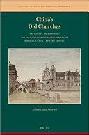
China's old churches : the history, architecture, and legacy of Catholic sacred structures in Beijing, Tianjin, and Hebei Province
\"China's Old Churches, by Alan Sweeten, examines the history of Catholicism (1600 to the present) as reflected by the location, style, and details of sacred structures in three crucial north China areas. Examined are the most famous and important churches in the urban settings of Beijing and Tianjin as well as lesser-known ones in rural Hebei Province. Missionaries built Western-looking churches to make a broad religious statement important to themselves and Chinese worshippers. Non-Catholics, however, tended to see churches as socio-politically foreign and invasive. The physical-visual impact of church structures is significant. Today, restored old and new churches are still mostly of Western style, serving a growing number of Catholics who actively support a Marian movement\"-- Provided by publisher.
Book

Migrant Hearts and the Atlantic Return: Transnationalism and the Roman Catholic Church
Migrant Hearts and the Atlantic Return examines contemporary migration in the context of a Roman Catholic Church eager to both comprehend and act upon the movements of peoples. Combining extensive fieldwork with lay and religious Latin American migrants in Rome and analysis of the Catholic Church's historical desires and anxieties around conversion since the period of colonization, Napolitano sketches the dynamics of a return to a faith's putative center. Against a Eurocentric notion of Catholic identity, Napolitano shows how the Americas reorient Europe. Napolitano examines both popular and institutional Catholicism in the celebrations of the Virgin of Guadalupe and El Senor de los Milagros, papal encyclicals, the Latin American Catholic Mission, and the order of the Legionaries of Christ. Tracing the affective contours of documented and undocumented immigrants' experiences and the Church's multiple postures toward transnational migration, she shows how different ways of being Catholic inform constructions of gender, labor, and sexuality whose fault lines intersect across contemporary Europe.
eBook


Indigenous Sacraments
Indigenous Sacraments provides the first study of
Indigenous perceptions of the Christian sacraments at the fringes
of colonial Spanish America, particularly in the missions
established by the Jesuits in northwestern Mexico, central southern
Chile, and the Gran Chaco. After Jesuit missionaries arrived in
these regions between the end of the sixteenth and the early
seventeenth centuries, their sacraments came to control every rite
of passage, from birth to reaching adulthood to the formation of
new families to death. Through the administration of the
sacraments, missionaries intended to replace extant Indigenous
habits and beliefs with Christian values. The disruptions triggered
by such processes raised multiple local reactions, from initial
curiosity and incomprehension to rejection, partial acceptance, and
ritual imitation. Locals debated the newly introduced rituals and
both violently rejected them and developed their own versions,
becoming active participants in the sacraments' diffusion. Oriol
Ambrogio Gali draws on a range of diverse sources to explore the
changing attitudes toward the sacraments and to highlight the
cultural and religious evolution of the Indigenous groups living at
the fringes of Spanish America. By exploring local perceptions of
the Christian sacraments, Ambrogio Gali shows that Indigenous
peoples were far from static recipients of Christianity in the
Americas.
eBook


Memorializing the Unsung
By the time the Capuchins arrived in the seventeenth century, Kongo had been Catholic for nearly two hundred years. The European mission could not be conversion, then, but reinforcement; the Capuchins sought to establish the sacraments and a line to Rome in a lay-led church already suffused with an enduring, creative, and complex theological culture. In Memorializing the Unsung,ElochukwuUzukwu uses the framework of this “ancient” Kongo Catholicism to explore European dependence on enslaved Kongo Catholics and the unconscionable Capuchin and Spiritan participation in the slave trade at large—a practice denounced by the lone voices of Capuchin Epifanio de Moirans and Spiritan Alexandre Monnet. Reconstructing the church that missionaries and Kongo Catholics built together on the foundations of local religion, Memorializing the Unsung contrasts the dignity denied the Kongo Catholics with the freedom they nonetheless performed. Uzukwu is particularly deft in tracing the agency of Kongo elites and laypeople from the fifteenth century through the nineteenth, carefully evaluating their deliberate engagements with southern Europeans, the role of the maestri (translator-catechists) in guiding the faithful, and the ultimate development of a unique theological vocabulary endorsed by the Kikongo catechism. Without the support and creativity of these unsung lay Catholics across west-central and eastern Africa, Uzukwu shows, the European missions in the region would have failed. Even while enslaved, the Kongo Slaves of the Church and the eastern African Slaves of the Mission served as mediators, co-creators, and reinventors of their world.
eBook


The Sleep of Behemoth
InThe Sleep of Behemoth, Jehangir Yezdi Malegam explores the emergence of conflicting concepts of peace in western Europe during the High Middle Ages. Ever since the Early Church, Christian thinkers had conceived of their peace separate from the peace of the world, guarded by the sacraments and shared only grudgingly with powers and principalities. To kingdoms and communities they had allowed attenuated versions of this peace, modes of accommodation and domination that had tranquility as the goal. After 1000, reformers in the papal curia and monks and canons in the intellectual circles of northern France began to reimagine the Church as an engine of true peace, whose task it was eventually to absorb all peoples through progressive acts of revolutionary peacemaking. Peace as they envisioned it became a mandate for reform through conflict, coercion, and insurrection. And the pursuit of mere tranquility appeared dangerous, and even diabolical. As Malegam shows, within western Christendom's major centers of intellectual activity and political thought, the clergy competed over the meaning and monopolization of the term \"peace.\" contrasting it with what one canon lawyer called the \"sleep of Behemoth,\" a diabolical \"false\" peace of lassitude and complacency, one that produced unsuitable forms of community and friendship that must be overturned at all costs. Out of this contest over the meaning and ownership of true peace, Malegam concludes, medieval thinkers developed theologies that shaped secular political theory in the later Middle Ages.The Sleep of Behemothtraces this radical experiment in redefining the meaning of peace from the papal courts of Rome and the schools of Laon, Liege, and Paris to its gradual spread across the continent and its impact on such developments as the rise of papal monarchism; the growth of urban, communal self-government; and the emergence of secular and mystical scholasticism.
eBook

Chant, liturgy, and the inheritance of Rome : essays in honour of Joseph Dyer
This volume of nineteen essays takes a cross-disciplinary approach to one of the most celebrated and vexing questions about plainsong and liturgy in the Middle Ages: how to understand the influence of Rome?--Publisher description.
Book

Good Catholics
Good Catholics tells the story of the remarkable individuals who have engaged in a nearly fifty-year struggle to assert the moral legitimacy of a pro-choice position in the Catholic Church, as well as the concurrent efforts of the Catholic hierarchy to suppress abortion dissent and to translate Catholic doctrine on sexuality into law. Miller recounts a dramatic but largely untold history of protest and persecution, which demonstrates the profound and surprising influence that the conflict over abortion in the Catholic Church has had not only on the church but also on the very fabric of U.S. politics. Good Catholics addresses many of today’s hot-button questions about the separation of church and state, including what concessions society should make in public policy to matters of religious doctrine, such as the Catholic ban on contraception. Good Catholics is a Gold Medalist (Women’s Issues) in the 2015 IPPY awards, an award presented by the Independent Publishers Book Association to recognize excellence in independent book publishing.
eBook