
Catalogue Search | MBRL


Are you sure you want to remove the book from the shelf?

{{itemTitle}}
27
result(s) for
"Catholic Church -- Missions -- United States -- History"
Sort by:


The Imperial Church
Through a fascinating discussion of religion's role in the rhetoric of American civilizing empire, The Imperial Church undertakes an exploration of how Catholic mission histories served as a useful reference for Americans narrating US settler colonialism on the North American continent and seeking to extend military, political, and cultural power around the world. Katherine D. Moran traces historical celebrations of Catholic missionary histories in the upper Midwest, Southern California, and the US colonial Philippines to demonstrate the improbable centrality of the Catholic missions to ostensibly Protestant imperial endeavors. Moran shows that, as the United States built its continental and global dominion and an empire of production and commerce in the Gilded Age and Progressive Era, Protestant and Catholic Americans began to celebrate Catholic imperial pasts. She demonstrates that American Protestants joined their Catholic compatriots in speaking with admiration about historical Catholic missionaries: the Jesuit Jacques Marquette in the Midwest, the Franciscan Junípero Serra in Southern California, and the Spanish friars in the Philippines. Comparing them favorably to the Puritans, Pilgrims, and the American Revolutionary generation, commemorators drew these missionaries into a cross-confessional pantheon of US national and imperial founding fathers. In the process, they cast Catholic missionaries as gentle and effective agents of conquest, uplift, and economic growth, arguing that they could serve as both origins and models for an American civilizing empire. The Imperial Church connects Catholic history and the history of US empire by demonstrating that the religious dimensions of American imperial rhetoric have been as cross-confessional as the imperial nation itself.
eBook
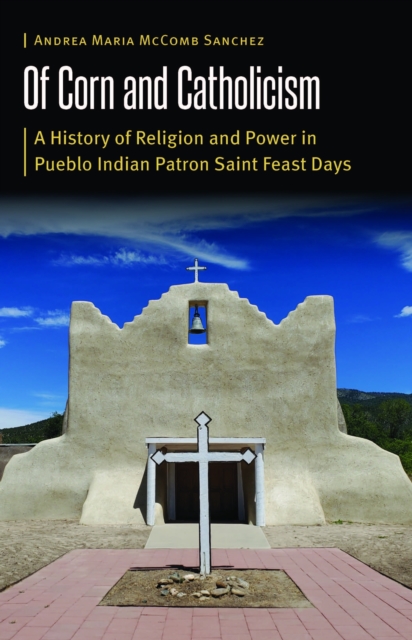
Of Corn and Catholicism
In
Of Corn and Catholicism Andrea Maria McComb Sanchez
examines the development of the patron saint feast days among
Eastern Pueblo Indians of New Mexico from the seventeenth century
to the late nineteenth century. Focusing on the ways Pueblo
religion intertwined with Spanish Catholicism, McComb Sanchez
explores feast days as sites of religious resistance,
accommodation, and appropriation. McComb Sanchez introduces the
term \"bounded incorporation\" to conceptualize how Eastern Pueblo
people kept boundaries flexible: as they incorporated aspects of
Catholicism, they changed Catholicism as well, making it part of
their traditional religious lifeway. McComb Sanchez uses archival
and published primary sources, anthropological records, and her
qualitative fieldwork to discuss how Pueblo religion was kept
secret and safe during the violence of seventeenth-century
Spanish colonialism in New Mexico; how Eastern Pueblos developed
strategies of resistance and accommodation, in addition to
secrecy, to deal with missionaries and Catholicism in the
eighteenth and early nineteenth centuries; how patron saint feast
days emerged as a way of incorporating a foreign religion on the
Pueblos' own terms; and how, by the later nineteenth century,
these feast days played a significant role in both Pueblo and
Hispano communities through the Pueblos' own initiative.
eBook

Native Alienation
Challenges the romantic portrayal of Spanish
missions Sites of slavery and spiritual conquest, the
California missions played a central role in the brutal subjugation
of the region's Indigenous peoples. Mainstream California history,
however, still largely presents a romanticized portrait of the
creation of the twenty-one Spanish missions between San Diego and
Sonoma in the late eighteenth and early nineteenth centuries.
Providing a corrective to this benign historiography, Charles A.
Sepulveda reconstructs the violence toward Native people as well
the resistance and refusals of his ancestors and other Native
people during and after the Spanish genocide. The conquest enforced
the attempted spiritual possession of Native souls and the physical
position of Native bodies and the land. At the same time, it
strengthened the Spanish view of California's Indigenous people as
disposable. Sepulveda demonstrates how enslavement was a key method
of conquest, putting to rest the myth of the Spanish as benevolent
and beneficial. Centering the experiences of Native peoples,
Sepulveda brings to light the gendered dimensions of the conquest
and genocide. His fuller history confronts the erasure of Indian
individuality and resistance and historicizes the relationship
between enslavement, dispossession, and environmental degradation.
He also illuminates the mission system's central role in destroying
Indigenous people's relationships to the land while examining the
practice's centuries-long impact on the lives of Native people. A
groundbreaking reconsideration, Native Alienation
transforms our understanding of California Indian history.
eBook
Nearest East : American millennialism and mission to the Middle East
Long before oil interests shaped American interaction with the Middle East, the US had a strong influence on the late Ottoman and post-Ottoman region. Covering the period from approximately 1800 to the 1970s, Kieser's book tells the story of this intimate, identity-building relationship between the US and the Near East.
eBook
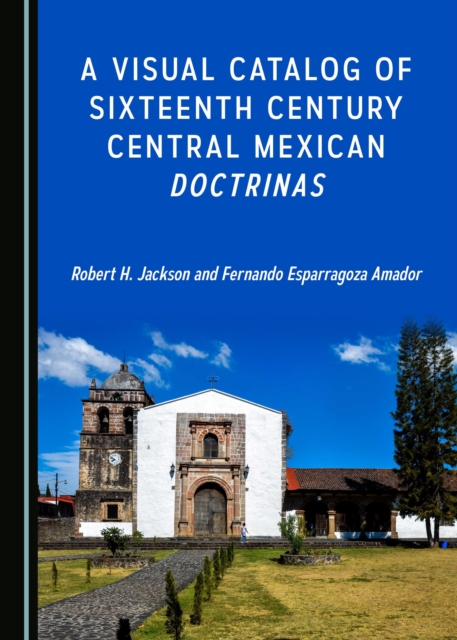
A Visual Catalog of Sixteenth Century Central Mexican Doctrinas
The Spanish conquest of central Mexico in 1521 set in motion an evangelization campaign to convert the large indigenous populations to Catholicism. Franciscans, Dominicans, and Augustinians participated in the first stages of this campaign. The missionaries established doctrinas (missions) in many indigenous communities, and, during the sixteenth century, directed the construction of new sacred complexes, often on the site of pre-Hispanic temples. Many of the convent complexes still survive in various states of conservation. This Visual Catalog offers historical data regarding the convent complexes, as well as an extensive collection of photographs of the surviving buildings, murals, and design elements, and documents the Franciscan doctrinas. In the 1580s, Fray Antonio de Ciudad Real, O.F.M. accompanied the Comisario General Fray Alonso Ponce, O.F.M. on an inspection of the Franciscan installations in central Mexico and Central America. The book reproduces his descriptions of the Franciscan missions, and is accompanied by photographs of the convent complexes. It also documents the Dominican and Augustinian doctrinas, and discusses selected Jesuit colegios and missions in Mexico. The Jesuits first arrived in Mexico in 1572, and did not participate in the first evangelization campaign. They were active in urban missions and education, and also established missions on the far northern frontier of Mexico.
eBook
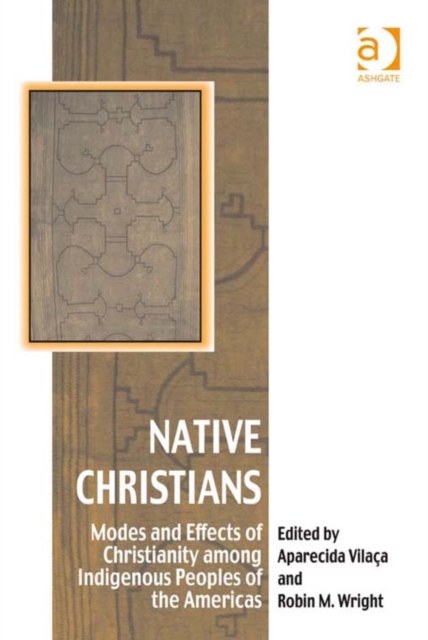
Native Christians
Native Christians reflects on the modes and effects of Christianity among indigenous peoples of the Americas drawing on comparative analysis of ethnographic and historical cases. Christianity in this region has been part of the process of conquest and domination, through the association usually made between civilizing and converting. While Catholic missions have emphasized the 'civilizing' process, teaching the Indians the skills which they were expected to exercise within the context of a new societal model, the Protestants have centered their work on promoting a deep internal change, or 'conversion', based on the recognition of God's existence. Various ethnologists and scholars of indigenous societies have focused their interest on understanding the nature of the transformations produced by the adoption of Christianity. The contributors in this volume take native thought as the starting point, looking at the need to relativize these transformations. Each author examines different ethnographic cases throughout the Americas, both historical and contemporary, enabling the reader to understand the indigenous points of view in the processes of adoption and transformation of new practices, objects, ideas and values.
eBook
Encyclopedia of Christianity in the United States
From the founding fathers through the present, Christianity has exercised powerful influence in the United States from its role in shaping politics and social institutions to its hand in inspiring art and culture. The Encyclopedia of Christianity in the United States outlines the myriad roles Christianity has played and continues to play. This masterful five-volume reference work includes biographies of all major figures in the Christian church in the U.S., influential religious documents and Supreme Court decisions, information on theology and theologians, denominations, faith-based organizations, immigration, art from decorative arts and film to music and literature, evangelism and crusades, the significant role of women, racial issues, civil religion, and more.
eBook
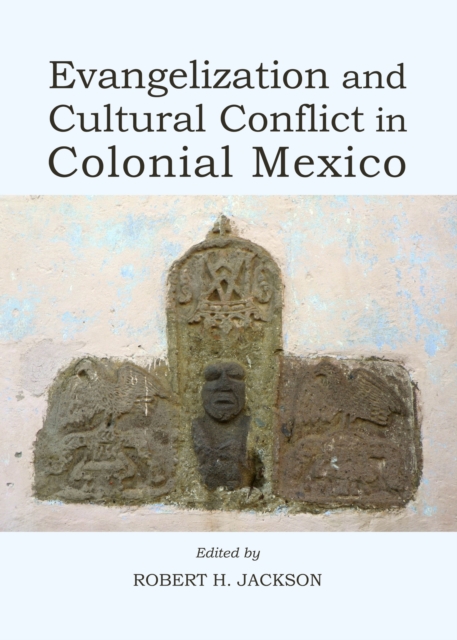
Evangelization and Cultural Conflict in Colonial Mexico
In a study published in the mid-twentieth century, French historian Robert Ricard postulated that the evangelization and conversion of the native populations of Mexico had been rapid and relatively easy. However, different forms of evidence show that the so-called \"spiritual conquest\" was anything but easy or rapid, and, in fact, natives continued to practice their traditional beliefs alongside Catholicism. Within several decades of initiating the so-called \"spiritual conquest,\" the campaign.
eBook