
Catalogue Search | MBRL


Are you sure you want to remove the book from the shelf?

{{itemTitle}}
19
result(s) for
"Catholic Church -- United States -- Historiography"
Sort by:

The Imperial Church
Through a fascinating discussion of religion's role in the rhetoric of American civilizing empire, The Imperial Church undertakes an exploration of how Catholic mission histories served as a useful reference for Americans narrating US settler colonialism on the North American continent and seeking to extend military, political, and cultural power around the world. Katherine D. Moran traces historical celebrations of Catholic missionary histories in the upper Midwest, Southern California, and the US colonial Philippines to demonstrate the improbable centrality of the Catholic missions to ostensibly Protestant imperial endeavors. Moran shows that, as the United States built its continental and global dominion and an empire of production and commerce in the Gilded Age and Progressive Era, Protestant and Catholic Americans began to celebrate Catholic imperial pasts. She demonstrates that American Protestants joined their Catholic compatriots in speaking with admiration about historical Catholic missionaries: the Jesuit Jacques Marquette in the Midwest, the Franciscan Junípero Serra in Southern California, and the Spanish friars in the Philippines. Comparing them favorably to the Puritans, Pilgrims, and the American Revolutionary generation, commemorators drew these missionaries into a cross-confessional pantheon of US national and imperial founding fathers. In the process, they cast Catholic missionaries as gentle and effective agents of conquest, uplift, and economic growth, arguing that they could serve as both origins and models for an American civilizing empire. The Imperial Church connects Catholic history and the history of US empire by demonstrating that the religious dimensions of American imperial rhetoric have been as cross-confessional as the imperial nation itself.
eBook
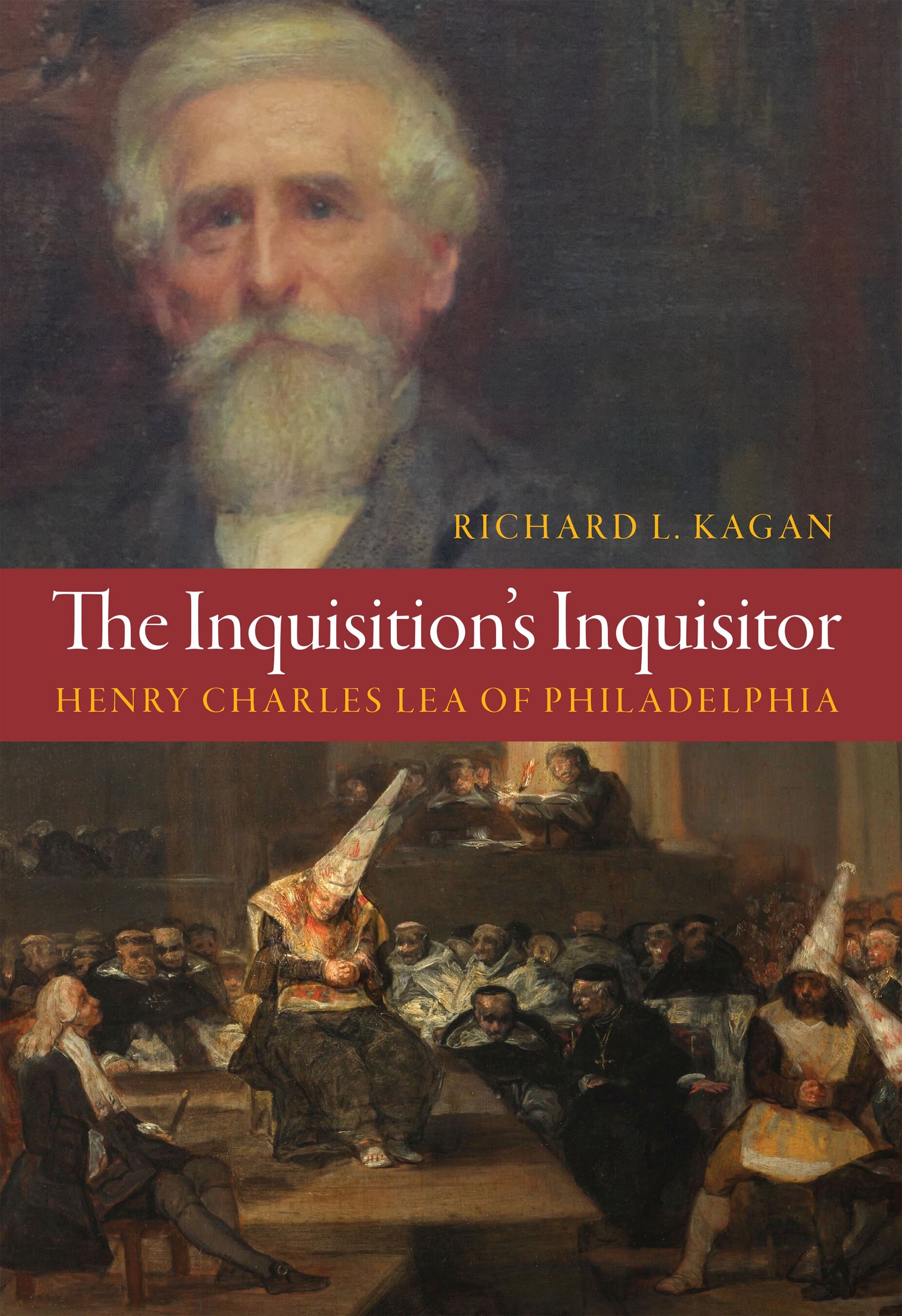
The Inquisition's Inquisitor
The first comprehensive biography of Philadelphia's Henry C. Lea (1825–1909): historian, publisher, political activist, and reformer Writing in 1868, the Philadelphia publisher-cum-historian Henry Charles Lea informed a friend, \"I am trying to collect the materials for a history of the Inquisition.\" The collecting of these materials—books, manuscripts, and copies of thousands of pages of documents housed in musty European archives and libraries—would occupy Lea (1825–1909) for the remainder of his life. It also led to publication of A History of the Inquisition of the Middle Ages (1884–87) and his acknowledged masterpiece, A History of the Inquisition of Spain (1906–7). Regarded as classics, these path-breaking books inaugurated better understanding of the history of an institution whose aims and methods troubled Lea and remain subjects of heated debate. The first biography of Lea since 1931, The Inquisition's Inquisitor offers the most comprehensive review to date of his writing on the history of the Catholic Church. Though Lea is generally regarded as a leading practitioner of \"scientific\" history, Richard L. Kagan examines the extent to which Lea's religious convictions compromised the ostensibly objective character of his work. Lea's extensive surviving correspondence also enables Kagan to examine other aspects of Lea's long and productive career as one of Philadelphia's most prominent citizens. Lea appears here a young literary critic; a businessman who skillfully transformed his family's publishing firm into the country's leading producer of medical books; a dogged political reformer; and a philanthropist whose largesse benefitted many of Philadelphia's cultural institutions. Newly discovered sources also allow for insights into Lea's private life, notably his controversial infatuation with his first cousin and future wife, Anna C. Jaudon, and the periodic breakdowns that required abandonment of his beloved \"intellectual pursuits.\" The Inquisition's Inquisitor concludes with a survey of Lea's legacy with respect to current understanding of the Inquisition and to Philadelphia, where reminders of his accomplishments include an eponymous library at the University of Pennsylvania and public elementary school in nearby West Philadelphia.
eBook


Catholics in the American Century
Over the course of the twentieth century, Catholics, who make up a quarter of the population of the United States, made significant contributions to American culture, politics, and society. They built powerful political machines in Chicago, Boston, and New York; led influential labor unions; created the largest private school system in the nation; and established a vast network of hospitals, orphanages, and charitable organizations. Yet in both scholarly and popular works of history, the distinctive presence and agency of Catholics as Catholics is almost entirely absent.
In this book, R. Scott Appleby and Kathleen Sprows Cummings bring together American historians of race, politics, social theory, labor, and gender to address this lacuna, detailing in cogent and wide-ranging essays how Catholics negotiated gender relations, raised children, thought about war and peace, navigated the workplace and the marketplace, and imagined their place in the national myth of origins and ends. A long overdue corrective,Catholics in the American Centuryrestores Catholicism to its rightful place in the American story.
eBook

Fears and Fascinations
This innovative book charts what has been a largely unexplored literary landscape, looking at the work of such diverse writers as the gens de couleur libre poets of antebellum New Orleans, Kate Chopin, Mark Twain, Carson McCullers, Margaret Mitchell, Allen Tate, Caroline Gordon, Flannery O'Connor, Walker Percy, and John Kennedy Toole. Haddox shows that Catholicism and its Church have always been a presence, albeit in different ways, in the southern cultural tradition. For some, Catholicism has been associated with miscegenation and with the political aspirations of African-Americans; for others, it has served as the model for the feudal and patriarchal society that some southern whites sought to establish; for still others, it has presented a gorgeous aesthetic spectacle associated with decadence and homoeroticism; and for still others, it has marked a quotidian, do-it-yourself lifestyleattractive for its lack of concern with southern anxieties about honor. By focusing on the shifting and contradictory ways Catholicism has signified within southern literature and culture, Fears and Fascinations contributes to a more nuanced understanding of American and southern literary and cultural history.Thomas F. Haddox is Assistant Professor of English at the University of Tennessee, Knoxville. He has published articles in American Literature, Mosaic, Modern Language Quarterly, Southern Quarterly, Mississippi Quarterly, and Walt Whitman Quarterly Review.
eBook


Globalization and Catholicity: The Historiography of a Recent Tri-lateral Dialogue
(After all, the main requirement for an after-dinner speech is that both the audience and the speaker must remain awake! I shall try to honor my half of this mutual commitment, and I pray that you can do the same!) This trilateral ecumenical dialogue of which I was privileged to be a part spanned three years, from fall of 2006 to the fall of 2008, and its results, consisting of some twenty-one papers and related documents, are soon to be published from Bern, Switzerland, as a special issue of the Internationale Kirchliche Zeitschrift, which is the scholarly journal of the Old Catholic Churches related to the see of Utrecht with whom the Episcopal Church is in full communion. The discussion then returned to the Good Shepherd Statement, which ended the second round, by underlining the ethical dimension of the Eucharist, that all eat from the one loaf and drink from the one cup, whereby an alternative understanding of reality is offered that confronts \"global economic, social, and cultural power and tyranny with the all-encompassing spiritual power of God's church.\"
Journal Article

Remapping \Irish America\: Circuits, Places, Performances
Jenkins discusses how themes such as circuit, place, and performance may fit alongside others such as diaspora and network within attempts to consider the lives of the American Irish in spatial as well as historical terms. The necessarily selective set of works were taken from a range of North American locations and extending occasionally to Ireland, highlighted other familiar themes such as collective memory, contestations of identity, and the routines and practices of everyday life, and at various points suggested their potential for comparative inquiry with other segments of the \"global Irish.\"
Journal Article

Holocaust Historiography: The Role of the Cold War
U. S. cold-war interests have had a significant impact on historical writings concerning the roles of various groups during the World War II destruction of European Jewry. These writings focus, for example, on the Catholic Church's actions in saving children, rather than on the antisemitic pronouncements of Church leaders and their indifference to the killing of Jews during and immediately after the war. Holocaust historiography understates the aid given to Jews by the Soviet Union. It also minimizes the continuation of antisemitic acts on the part of Polish organizations, including the Home Army. Finally, the mythology surrounding Raoul Wallenberg dovetails nicely with cold-war politics and the desire of sections of the ultraorthodox Jewish community to forget their own disastrous actions.
Journal Article