
Catalogue Search | MBRL


Are you sure you want to remove the book from the shelf?

{{itemTitle}}
200
result(s) for
"Catholic Church Fiction."
Sort by:

The bishop's man : a novel
Father Duncan MacAskill, already troubled by years of being the bishop's \"hatchet man\", is sent to a parish church near where he grew up, only to find the memories of the past and new temptations setting him on a possibly disastrous path.
Book

The Woman Priest
\"In providing a modern translation . . . Sheila Delany sheds light on a text that illustrates the complexity of Enlightenment attitudes toward religion.\" — Reading Religion
\"My God! Pardon me if I have dared to make sacred things serve a profane love; but it is you who have put passion into our hearts; they are not crimes—I feel this in the purity of my intentions.\" —Agatha, writing to Zoé
In pre-revolutionary Paris, a young woman falls for a handsome young priest. To be near him, she dresses as a man, enters his seminary, and is invited to become a fully ordained Catholic priest—a career forbidden to women then as now. Sylvain Maréchal's epistolary novella offers a biting rebuke to religious institutions and a hypocritical society; its views on love, marriage, class, and virtue remain relevant today. The book ends in La Nouvelle France, which became part of British-run Canada during Maréchal's lifetime. With thorough notes and introduction by Sheila Delany, this first translation of Maréchal's novella, La femme abbé, brings a little-known but revelatory text to the attention of readers interested in French history and literature, history of the novel, women's studies, and religious studies.
\"While the contents of The Woman Priest make for a good story (drag, drama, and death—what more can you ask for?), the astonishing complexity of the novella seems to lie not necessarily in the general plot line, but rather in the context in which the author wrote the book—as brilliantly explained in Delany's introduction to her translation.\" — Canadian Literature
eBook


A Killing for Christ
Praise for the original 1968 edition:\"A Killing for Christ is a fast-paced, topical thriller...Hamill's prose is stylishly punchy...I would guess that Hamill admires Hemingway, Jimmy Breslin, and Mickey Spillane--not always in that order.\"--New York Times\"The Helen Macinnes touch...the Hitchcock air.\"--Philadelphia Inquirer\"The style and substance of this first novel owes much to hardboiled, gutsy, private-eye fiction and to a general submersion into obscenity and violence.\"--Kirkus ReviewsA secret agent out of John le Carré...a spoiled priest-hero out of Graham Greene...a high-voltage novel of suspense that is Pete Hamill's own. The man in priest's garb gets out of the elevator at the top floor, leaving the gate ajar. He removes the rifle from under his habit and opens the breech. It's loaded. He closes it and steps to the edge of the roof. St. Peter's Square is spread out before him like a great, colorful lake. There are more people than he has ever seen before. There are priests and monsignors all in royal purple, sitting on all sides of an altar.Now the target arrives. The man on top of the building sights down the rifle at the small figure below. His finger is ready on the trigger, ready to gun down His Holiness, the Vicar of Christ...
eBook

The woman priest : a translation of Sylvain Maréchal's novella, La femme abbé
\"In pre-revolutionary Paris, a young woman falls for a handsome young priest. To be near him, she dresses as a man, enters his seminary, and is invited to become a fully ordained Catholic priest, a career forbidden to women then as now. Sylvain Maréchal's epistolary novella offers a biting rebuke to religious institutions and a hypocritical society; its views on love, marriage, class, and virtue remain relevant today. The book ends in la Nouvelle France, which had become part of Canada during Maréchal's lifetime. With thorough notes and introduction by Sheila Delany, this first translation of Maréchal's novella, La femme abbé, brings a little-known but revelatory text to the attention of readers interested in French history and literature, history of the novel, women's studies, and religious studies.\"-- Provided by publisher.
BOOK

The Shamrock and the Cross
In The Shamrock and the Cross: Irish American Novelists Shape American Catholicism, Eileen P. Sullivan traces changes in nineteenth-century American Catholic culture through a study of Catholic popular literature. Analyzing more than thirty novels spanning the period from the 1830s to the 1870s, Sullivan elucidates the ways in which Irish immigration, which transformed the American Catholic population and its institutions, also changed what it meant to be a Catholic in America. In the 1830s and 1840s, most Catholic fiction was written by American-born converts from Protestant denominations; after 1850, most was written by Irish immigrants or their children, who created characters and plots that mirrored immigrants’ lives. The post-1850 novelists portrayed Catholics as a community of people bound together by shared ethnicity, ritual, and loyalty to their priests rather than by shared theological or moral beliefs. Their novels focused on poor and working-class characters; the reasons they left their homeland; how they fared in the American job market; and where they stood on issues such as slavery, abolition, and women’s rights. In developing their plots, these later novelists took positions on capitalism and on race and gender, providing the first alternative to the reigning domestic ideal of women. Far more conscious of American anti-Catholicism than the earlier Catholic novelists, they stressed the dangers of assimilation and the importance of separate institutions supporting a separate culture. Given the influence of the Irish in church institutions, the type of Catholicism they favored became the gold standard for all American Catholics, shaping their consciousness until well into the next century.
eBook
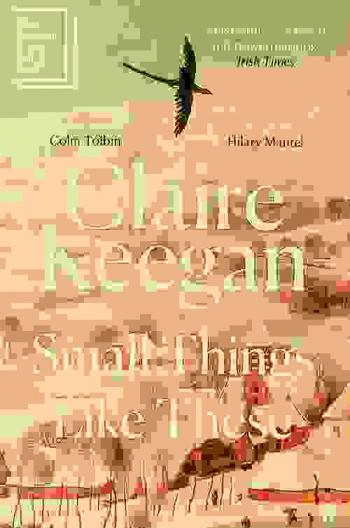
Small things like these
\"It is 1985 in a small Irish town. During the weeks leading up to Christmas, Bill Furlong, a coal merchant and family man faces into his busiest season. Early one morning, while delivering an order to the local convent, Bill makes a discovery which forces him to confront both his past and the complicit silences of a town controlled by the church. Already a bestseller in France and certain to be read worldwide for generations to come, Small Things Like These is a deeply affecting story of hope, quiet heroism, and empathy from one of our most critically lauded and iconic writers\"-- Provided by publisher.
Catholic literature and film
Catholic Literature and Film: Incarnational Love and Suffering is meant to be considered as a work of literary criticism, not film adaptation studies. In it, the author explores six literary works dealing with Catholic themes and the film versions of these works. The discussion of the films is at the service of analyzing the texts. Underlying all the discussions is an incarnational, sacramental view of the texts, which links to my interpretation of the film versions of them. Catholic and actually any Christian interpretation of literature or film or any other art form is rooted in an iconic and sacramental understanding of imagery as a means of conveying the sacred. Catholic spirituality lends itself to this sort of approach, as it is deeply rooted in the ability to see sacred things through physical means. A key sub-theme is romantic love in connection with salvation, which Charles Williams, one of the “Inklings” (the group of British writers, including J.R. R. Tolkien and C. S. Lewis, who met and discussed literature and theology), calls “the theology of romantic love,” as well as the sub-themes of redemptive suffering, and grace. My interest in the book is not an analysis of cinematography, per se, but on the films as vehicles for religious ideas. What makes this approach unique is that it doesn’t deal with only faith and film, as Peter Frazer does very well in his book Images of the Passion: The Sacramental Mode in Film, for example, it also goes beyond the realm of strict literary criticism in its tackling of how religiously oriented works of literature are affected by the transformation into film.
eBook

The fifth gospel : a novel
\"A lost gospel, a contentious relic, and a dying pope's final wish converge to send two brothers--both Vatican priests--on an intellectual quest to untangle Christianity's greatest historical mystery\"--Dust jacket flap.
Book

Catholicism and American Borders in the Gothic Literary Imagination
In Catholicism and American Borders in the Gothic Literary Imagination, Farrell O'Gorman presents the first study of the recurrent role of Catholicism in a Gothic tradition that is essential to the literature of the United States. In this tradition, Catholicism is depicted as threatening to break down borders separating American citizens-or some representative American-from a larger world beyond. While earlier studies of Catholicism in the American literary imagination have tended to highlight the faith's historical association with Europe, O'Gorman stresses how that imagination often responds to a Catholicism associated with Latin America and the Caribbean. On a deeper level, O'Gorman demonstrates how the Gothic tradition he traces here builds on and ultimately transforms the persistent image in modern Anglophone literature of Catholicism as \"a religion without a country; indeed, a religion inimical to nationhood.\" O'Gorman focuses on the work of J. Hector St. John de Crèvecœur, Herman Melville, Kate Chopin, William Faulkner, Flannery O'Connor, Walker Percy, Cormac McCarthy, and selected contemporary writers including Toni Morrison. These authors, representing historical periods from the early republic to the present day, have distinct experiences of borders within and around their nation and hemisphere, itself an ever-emergent \"America.\" As O'Gorman carefully documents, they also have distinct experiences of Catholicism and distinct ways of imagining the faith, often shaped at least in part within the Church itself. In their narratives, Catholicism plays a complicated and profound role that ultimately challenges longstanding notions of American exceptionalism and individual autonomy. This analysis contributes not only to discourse regarding Gothic literature and nationalism but also to a broader ongoing dialogue regarding religion, secularism, and American literature.
eBook