
Catalogue Search | MBRL


Are you sure you want to remove the book from the shelf?

{{itemTitle}}
204
result(s) for
"Catholic schools Fiction."
Sort by:

The red blazer girls : the ring of Rocamadour
Catholic-schooled seventh-graders Sophie, Margaret, Rebecca, and Leigh Ann help an elderly neighbor solve a puzzle her father left for her estranged daughter twenty years ago.
Book

Pseudomorphosis of schools system and the fiction of its regulatory processes: A study of educational narratives
The inconsistencies between agents of the educational system, where it reigns tensions and disjointed mechanisms that express failures of multidisciplinary action, make schools behave like pseudomorphic systems. This article examines interactions between autonomy and control, resorting to a qualitative study with a quantitative approach to schools' strategic documents and inspectorate reports using NVivo. It provides a multiperspective cross-analysis of school narratives regarding (i) principals' vision, (ii) school strategic orientation, and (iii) internal and external evaluation reports. This article exposes how schools demand an organised, intentional, and planned way of using self-knowledge to enhance teaching and learning. It uncovers that innovation is an undervalued facet in the school organisation and a marginal element of the school evaluation. Additionally, it reveals system inconsistencies regarding external evaluation and school organisation. The difficulty of school change asserts that educational systems need to deepen interconnections to prevent schools from keeping a traditional functional structure masked by modern educational discourses, meaning pseudomorphic guidance.
Journal Article

The Red Blazer Girls : the vanishing violin
Seventh-graders Sophie, Margaret, Rebecca, and Leigh Ann follow a trail of cryptic clues to locate a rare violin, catch the person sneaking into St. Veronica's School for late-night cleaning and redecorating, and outsmart a conniving classmate.
BOOK

Reading beyond belief: a framework for interpreting family lived religion in realistic fictional picturebooks
Purpose This study aims to support teachers introducing books depicting minoritized religious cultural events, holidays and traditions in their classrooms using a four-part interpretive framework. Design/methodology/approach This study introduces and enacts a lived religion approach for interpreting realistic fictional children’s picturebooks with religious cultural dimensions, through literary interpretation of one picturebook, The Beautiful Lady: Our Lady of Guadalupe, illustrated by Steve Johnson and Lou Fancher and written by Pat Mora (2012). Findings This framework reveals the diverse ways that religious community insiders may communicate and express their religious practices and belongings in realistic fictional children’s picturebook stories, while also highlighting the role of the reader as an interlocutor who inevitably brings their own experiences with religion into narrative interpretation. Originality/value The authors propose a lived religion framework, involving four modes of paying attention to religious cultural identity markers in realistic fictional children’s literature, as an alternative to a more belief-centric model.
Journal Article
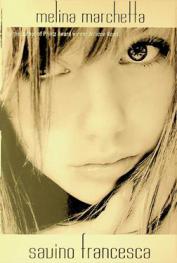
Saving Francesca
Sixteen-year-old Francesca could use her outspoken mother's help with the problems of being one of a handful of girls at a parochial school that has just turned co-ed, but her mother has suddenly become severely depressed.
Book

“Catholicism Is Getting to Be the Style”: White Women and the Making of Catholic Culture at the Catholic Summer School of America, 1892–1914
This article presents a new account of the Catholic Summer School of America (CSSA), founded in 1892 as the “Catholic Chautauqua.” Long relegated to the footnotes of book history and Catholic studies, the Summer School and its reading circle antecedents are here reclaimed for the study of women and American religion. As a Catholic institution, the Summer School was directed by clergy and laymen; men's names fill the published histories of the site as a religious and educational retreat. I argue, however, that it was Summer School women who nurtured a complementary vision of middle-class respectability and intimate association among a white Catholic elite that promoted theirs as the aspirational and ascendant U.S. Catholic “style” at the turn of the new century. Loosened from their parish boundaries, these summer Catholics traveled north to New York's Adirondack region and converged on the lakefront, lecture hall, and ballroom, extending their social networks, and creating an exclusive space of belonging that distinguished themselves from the diverse “immigrant church” at home. With close readings of the traces that Summer School visitors left behind in visual and textual sources—including photographs, postcards, local newspaper reports, and previously overlooked fiction and nonfiction by Catholic women writers—I draw attention to the Summer School during its first decades as a critical site for studying an upwardly mobile white Catholic leisure class concerned with its social and cultural reproduction.
Journal Article

The mistaken masterpiece
Sophie and her friends, who call themselves The Red Blazer Girls, embark on solving a case involving mistaken identities, switched paintings, and some priceless family heirlooms.
BOOK
Tolkien’s Allegory: Using Peter Jackson’s Vision of Fellowship to Illuminate Male Adolescent Catholic Education
With many of the Catholic student population disengaged from regular ritual experiences their working vocabulary of the prayers and knowledge of the Church is limited. A beneficial bridge for many of these disconnected students, specifically male adolescents has been the use of storytelling in connection to Catholic themes to lay the foundations of ritual and deeper concepts through a more familiar setting. Through media literary, multi-modal instruction and Scripture exegesis adolescents can begin to recognize, understand, and feel a connection with the severity of the sacrifice of the Apostles in following Jesus of Nazareth. This article will offer some insights that have proven to be beneficial to help male adolescents to engage the complicated and foreign concepts and topics of the new curriculum framework, in association with Peter Jackson’s vision of Tolkien’s Fellowship of the Ring.
Journal Article

The secret cellar
When Sophie finds a secret message in the antique fountain pen she bought for her father, she and her friends become involved in a treasure hunt devised by the pen's previous owner, whose house is full of puzzles that protect a hidden treasure.
BOOK

Learning to Read My English Teachers
I had a troubled relationship with high school English. I was that kid in class who was like, This is nonsense, why are we reading these books? In fact, from sophomore year, when I stopped reading Pride and Prejudice halfway through and just wrote my essay using the CliffsNotes, I don't think I ever read another novel that was assigned to us in English class. For their part, my English teachers always recognized that I had verbal facility and interest in the subject, and they seemed to regard me as a project. Oftentimes this wasn't pleasant! I got the impression that they treated me more harshly or subjected me to more scrutiny simply because I was one of the students they hoped they might actually reach--somebody who could actually develop a relationship with literature. In contrast, the English teachers I liked best were the ones who were slightly out of their depth: the teachers the students bullied. If a teacher ever cried or lost their cool, I instantly warmed to them.
Journal Article