
Catalogue Search | MBRL


Are you sure you want to remove the book from the shelf?

{{itemTitle}}
77
result(s) for
"Catholics -- United States -- History -- 19th century"
Sort by:

Devotion to the adopted country : U.S. immigrant volunteers in the Mexican War
\"[This book] looks at efforts of America's Democratic Party and Catholic leadership to use the service of immigrant volunteers in the U.S.-Mexican War as a weapon against nativism and anti-Catholicism\"--Jacket.
Book

The Harp and the Eagle
On the eve of the Civil War, the Irish were one of America's largest ethnic groups, and approximately 150,000 fought for the Union. Analyzing letters and diaries written by soldiers and civilians; military, church, and diplomatic records; and community newspapers, Susannah Ural Bruce significantly expands the story of Irish-American Catholics in the Civil War, and reveals a complex picture of those who fought for the Union.While the population was diverse, many Irish Americans had dual loyalties to the U.S. and Ireland, which influenced their decisions to volunteer, fight, or end their military service. When the Union cause supported their interests in Ireland and America, large numbers of Irish Americans enlisted. However, as the war progressed, the Emancipation Proclamation, federal draft, and sharp rise in casualties caused Irish Americans to question - and sometimes abandon - the war effort because they viewed such changes as detrimental to their families and futures in America and Ireland.By recognizing these competing and often fluid loyalties, The Harp and the Eagle sheds new light on the relationship between Irish-American volunteers and the Union Army, and how the Irish made sense of both the Civil War and their loyalty to the United States.
eBook
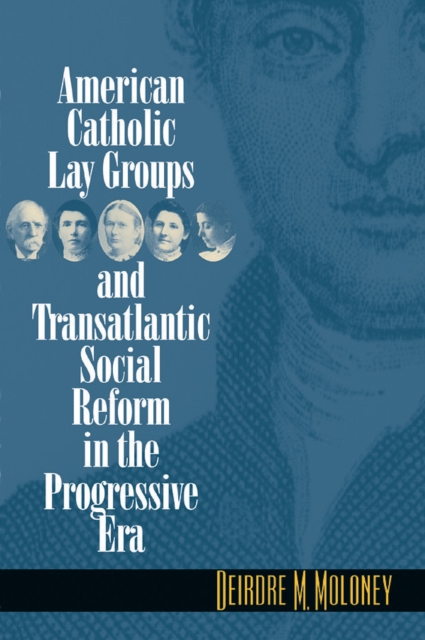
American Catholic lay groups and transatlantic social reform in the progressive era
Tracing the development of social reform movements among American Catholics from 1880 to 1925, Deirdre Moloney reveals how Catholic gender ideologies, emerging middle-class values, and ethnic identities shaped the goals and activities of lay activists. Rather than simply appropriate American reform models, ethnic Catholics (particularly Irish and German Catholics) drew extensively on European traditions as they worked to establish settlement houses, promote temperance, and aid immigrants and the poor. Catholics also differed significantly from their Protestant counterparts in defining which reform efforts were appropriate for women. For example, while women played a major role in the Protestant temperance movement beginning in the mid-nineteenth century, Catholic temperance remained primarily a male movement in America. Gradually, however, women began to carve out a significant role in Catholic charitable and reform efforts. The first work to highlight the wide-ranging contributions of the Catholic laity to Progressive-era reform, the book shows how lay groups competed with Protestant reformers and at times even challenged members of the Catholic hierarchy. It also explores the tension that existed between the desire to demonstrate the compatibility of Catholicism with American values and the wish to preserve the distinctiveness of Catholic life.
eBook
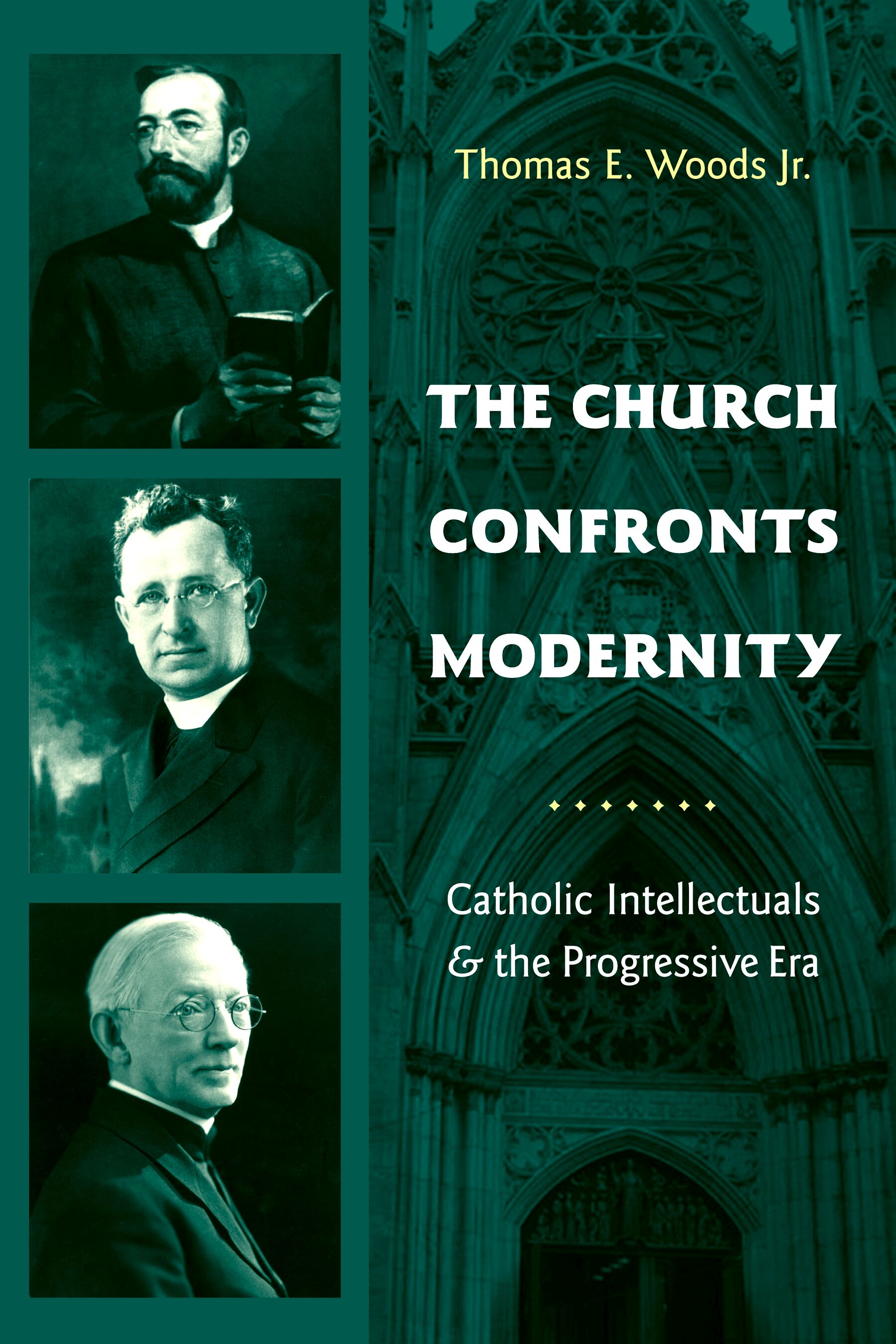
The Church Confronts Modernity
As the twentieth century opened, American intellectuals grew increasingly sympathetic to Pragmatism and empirical methods in the social sciences. The Progressive program as a whole—in the form of Pragmatism, education, modern sociology, and nationalism—seemed to be in agreement on one thing: everything was in flux. The dogma and \"absolute truth\" of the Church were archaisms, unsuited to modern American citizenship and at odds with the new public philosophy being forged by such intellectuals as John Dewey, William James, and the New Republic magazine. Catholics saw this new public philosophy as at least partly an attack on them. Focusing on the Catholic intellectual critique of modernity during the period immediately before and after the turn of the twentieth century, this provocative and original book examines how the Catholic Church attempted to retain its identity in an age of pluralism. It shows a Church fundamentally united on major issues—quite unlike the present-day Catholic Church, which has been the site of a low-intensity civil war since the close of the Second Vatican Council in 1965. Defenders of the faith opposed James, Dewey, and other representatives of Pragmatism as it played out in ethics, education, and nationalism. Their goals were to found an economic and political philosophy based on natural law, to appropriate what good they could find in Progressivism to the benefit of the Church, and to make America a Catholic country. The Church Confronts Modernity explores how the decidedly nonpluralistic institution of Christianity responded to an increasingly pluralistic intellectual environment. In a culture whose chief value was pluralism, they insisted on the uniqueness of the Church and the need for making value judgments based on what they considered a sound philosophy of humanity. In neither capitulating to the new creed nor retreating into a self-righteous isolation, American Catholic intellectuals thus laid the groundwork for a half-century of intellectual vitality.
eBook


Devotion to the Adopted Country
In Devotion to the Adopted Country , Tyler V.Johnson looks at the efforts of America's Democratic Party and Catholic leadership to use the service of immigrant volunteers in the U.S.-Mexican War as a weapon against nativism and anti-Catholicism.
eBook

Devotion to the adopted country : U.S. immigrant volunteers in the Mexican War
In Devotion to the Adopted Country, Tyler V. Johnson looks at the efforts of America's Democratic Party and Catholic leadership to use the service of immigrant volunteers in the U.S.–Mexican War as a weapon against nativism and anti-Catholicism. Each chapter focuses on one of the five major events or issues that arose during the war, finishing with how the Catholic and immigrant community remembered the war during the nativist resurgence of the 1850s and in the outbreak of the Civil War. Johnson's book uncovers a new social aspect to military history by connecting the war to the larger social, political, and religious threads of antebellum history. Having grown used to the repeated attacks of nativists upon the fidelity and competency of the German and Irish immigrants flooding into the United States, Democratic and Catholic newspapers vigorously defended the adopted citizens they valued as constituents and congregants. These efforts frequently consisted of arguments extolling the American virtues of the recent arrivals, pointing to their hard work, love of liberty, and willingness to sacrifice for their adopted country. However, immigrants sometimes undermined this portrayal by prioritizing their ethnic and/or religious identities over their identities as new U.S. citizens. Even opportunities seemingly tailor-made for the defenders of Catholicism and the nation's adopted citizens could go awry. When the supposedly well-disciplined Irish volunteers from Savannah brawled with soldiers from another Georgia company on a Rio Grande steamboat, the fight threatened to confirm the worst stereotypes of the nation's new Irish citizens. In addition, although the Jesuits John McElroy and Anthony Rey gained admirers in the army and in the rest of the country for their untiring care for wounded and sick soldiers in northern Mexico, anti-Catholic activists denounced them for taking advantage of vulnerable young men to win converts for the Church. Using the letters and personal papers of soldiers, the diaries and correspondence of Fathers McElroy and Rey, Catholic and Democratic newspapers, and military records, Johnson illuminates the lives and actions of Catholic and immigrant volunteers and the debates over their participation in the war. Shedding light on this understudied and misunderstood facet of the war with Mexico, Devotion to the Adopted Country adds to the scholarship on immigration and religion in antebellum America, illustrating the contentious and controversial process by which immigrants and their supporters tried to carve out a place in U.S. society.
eBook

Catholicism and the Shaping of Nineteenth-Century America
Offers a series of fresh perspectives on America's encounter with Catholicism in the nineteenth-century. While religious and immigration historians have construed this history in univocal terms, Jon Gjerde bridges sectarian divides by presenting Protestants and Catholics in conversation with each other. In so doing, Gjerde reveals the ways in which America's encounter with Catholicism was much more than a story about American nativism. Nineteenth-century religious debates raised questions about the fundamental underpinnings of the American state and society: the shape of the antebellum market economy, gender roles in the American family, and the place of slavery were only a few of the issues engaged by Protestants and Catholics in a lively and enduring dialectic. While the question of the place of Catholics in America was left unresolved, the very debates surrounding this question generated multiple conceptions of American pluralism and American national identity.
eBook


Roads to Rome
The mixture of hostility and fascination with which native-born Protestants viewed the \"foreign\" practices of the \"immigrant\" church is the focus of Jenny Franchot's cultural, literary, and religious history of Protestant attitudes toward Roman Catholicism in nineteenth-century America. Franchot analyzes the effects of religious attitudes on historical ideas about America's origins and destiny. She then focuses on the popular tales of convent incarceration, with their Protestant \"maidens\" and lecherous, tyrannical Church superiors. Religious captivity narratives, like those of Indian captivity, were part of the ethnically, theologically, and sexually charged discourse of Protestant nativism. Discussions of Stowe, Longfellow, Hawthorne, and Lowell-writers who sympathized with \"Romanism\" and used its imaginative properties in their fiction-further demonstrate the profound influence of religious forces on American national character. This title is part of UC Press's Voices Revived program, which commemorates University of California Press's mission to seek out and cultivate the brightest minds and give them voice, reach, and impact. Drawing on a backlist dating to 1893, Voices Revived makes high-quality, peer-reviewed scholarship accessible once again using print-on-demand technology. This title was originally published in 1994.
eBook