
Catalogue Search | MBRL


Are you sure you want to remove the book from the shelf?

{{itemTitle}}
333,887
result(s) for
"Catholics."
Sort by:


American Catholic Hospitals
InAmerican Catholic Hospitals, Barbra Mann Wall chronicles changes in Catholic hospitals during the twentieth century, many of which are emblematic of trends in the American healthcare system.
Wall explores the Church's struggle to safeguard its religious values. As hospital leaders reacted to increased political, economic, and societal secularization, they extended their religious principles in the areas of universal health care and adherence to the Ethical and Religious Values in Catholic Hospitals, leading to tensions between the Church, government, and society. The book also examines the power of women--as administrators, Catholic sisters wielded significant authority--as well as the gender disparity in these institutions which came to be run, for the most part, by men. Wall also situates these critical transformations within the context of the changing Church policy during the 1960s. She undertakes unprecedented analyses of the gendered politics of post-Second Vatican Council Catholic hospitals, as well as the effect of social movements on the practice of medicine.
eBook
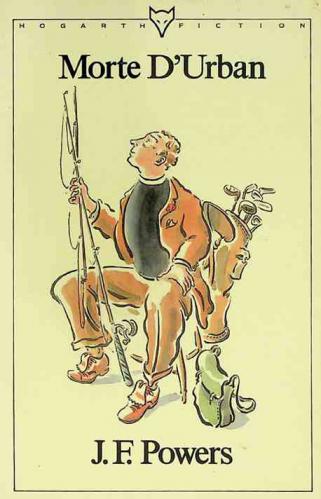
Morte d'Urban
\"Father Urban is a man of the cloth who is also a man of the world. Charming, with an expansive vision of the spiritual life and a high tolerance for moral ambiguity, Urban enjoys a national reputation as a speaker on the religious circuit and has big plans for the future. But then the provincial head of his dowdy religious order banishes him to a retreat house in the Minnesota hinterlands.\"--Page 4 of cover.


Migrant Hearts and the Atlantic Return: Transnationalism and the Roman Catholic Church
Migrant Hearts and the Atlantic Return examines contemporary migration in the context of a Roman Catholic Church eager to both comprehend and act upon the movements of peoples. Combining extensive fieldwork with lay and religious Latin American migrants in Rome and analysis of the Catholic Church's historical desires and anxieties around conversion since the period of colonization, Napolitano sketches the dynamics of a return to a faith's putative center. Against a Eurocentric notion of Catholic identity, Napolitano shows how the Americas reorient Europe. Napolitano examines both popular and institutional Catholicism in the celebrations of the Virgin of Guadalupe and El Senor de los Milagros, papal encyclicals, the Latin American Catholic Mission, and the order of the Legionaries of Christ. Tracing the affective contours of documented and undocumented immigrants' experiences and the Church's multiple postures toward transnational migration, she shows how different ways of being Catholic inform constructions of gender, labor, and sexuality whose fault lines intersect across contemporary Europe.
eBook


All Good Books Are Catholic Books
Until the close of the Second Vatican Council in 1965, the stance of the Roman Catholic Church toward the social, cultural, economic, and political developments of the twentieth century was largely antagonistic. Naturally opposed to secularization, skeptical of capitalist markets indifferent to questions of justice, confused and appalled by new forms of high and low culture, and resistant to the social and economic freedom of women-in all of these ways the Catholic Church set itself up as a thoroughly anti-modern institution. Yet, in and through the period from World War I to Vatican II, the Church did engage with, react to, and even accommodate various aspects of modernity. InAll Good Books Are Catholic Books, Una M. Cadegan shows how the Church's official position on literary culture developed over this crucial period.
The Catholic Church in the United States maintained an Index of Prohibited Books and the National Legion of Decency (founded in 1933) lobbied Hollywood to edit or ban movies, pulp magazines, and comic books that were morally suspect. These regulations posed an obstacle for the self-understanding of Catholic American readers, writers, and scholars. But as Cadegan finds, Catholics developed a rationale by which they could both respect the laws of the Church as it sought to protect the integrity of doctrine and also engage the culture of artistic and commercial freedom in which they operated as Americans. Catholic literary figures including Flannery O'Connor and Thomas Merton are important to Cadegan's argument, particularly as their careers and the reception of their work demonstrate shifts in the relationship between Catholicism and literary culture. Cadegan trains her attention on American critics, editors, and university professors and administrators who mediated the relationship among the Church, parishioners, and the culture at large.
eBook

