
Catalogue Search | MBRL


Are you sure you want to remove the book from the shelf?

{{itemTitle}}
1,360
result(s) for
"Cats - urine"
Sort by:

Evaluating the impact of polypropylene-based cat litter on urinalysis reliability in feline patients
Urinalysis is a fundamental diagnostic tool in veterinary medicine used to detect urinary tract diseases and systemic conditions. This study assessed the impact of polypropylene-based urine collection litter on the reliability of urinalysis results in cats. Urine samples from fifty feline patients were divided into native and litter-exposed aliquots and analyzed using dipstick testing, refractometry and sediment examination. Significant decreases in leukocyte counts and inconsistencies in ketone and glucose measurements were observed following litter exposure, while protein, pH and red blood cell counts remained unchanged. Sediment analysis revealed increased background contamination in litter-treated samples. These results indicate that while polypropylene-based litter facilitates urine collection, it may affect the accuracy of selected urinalysis parameters and should therefore be used primarily for preliminary diagnostic assessment.
Journal Article
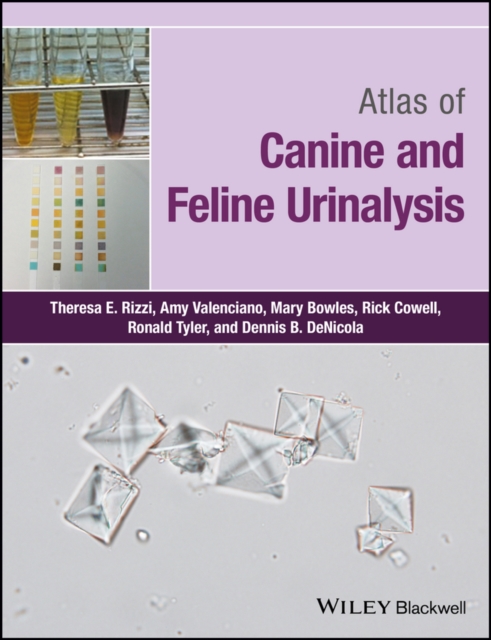
Atlas of Canine and Feline Urinalysis
Atlas of Canine and Feline Urinalysis Atlas of Canine and Feline Urinalysis offers an image-based reference for performing canine and feline urinalyses. Hundreds of full-color images depict techniques, physical characteristics, urine chemistry, and microscopic characteristics of urine sediment in dogs and cats. Written by leading experts, this highly illustrated resource acts as an aid to accurately identifying cytological features and interpreting both chemical and sediment findings. Logically organized for easy navigation, the book covers urine collection and specimen handling, initial assessment, urine chemistry, and microscopic findings, including casts, crystals, cells, organisms, and artifacts. Atlas of Canine and Feline Urinalysis is an important diagnostic tool for veterinary undergraduate and graduate students, veterinary technicians, general practitioners, veterinary clinical pathologists, and specialists in other disciplines. Key features * Presents hundreds of full-color images for reference and picture-matching while using urinalysis as a diagnostic tool * Provides a complete guide to properly performing a urinalysis exam in the veterinary practice * Emphasizes collection techniques, physical assessment, urine chemistry, and the microscopic sediment exam * Covers casts, crystals, cells, organisms, and artefacts * Offers a practical, visual resource for incorporating urinalysis into the clinic
eBook

Facile Preparation of Hydrophobic Coatings Using Modified ZnO/Silica Composite Nanoparticles
Collecting urine samples from cats is a significant challenge for veterinarians due to their instinctive behavior to bury waste. The introduction of superhydrophobic cat soil, which prevents urine absorption, offers an innovative solution. This not only simplifies the diagnostic process for veterinarians but also significantly reduces stress for pets and their owners. In this study, we synthesized a hydrophobic coating using zinc oxide/silica composite nanoparticles (ZnO/SiO
2
CNPs) modified with perfluorodecyltrichlorosilane (FDTS) compounds for various surfaces such as soil, sand, stone, and glass. Tetraethoxysilane (TEOS) and zinc acetate dihydrate were used as precursors, while FDTS was employed for surface modification. The prepared ZnO/SiO
2
composite sol was sprayed onto different coatings, and the resulting hydrophobicity was confirmed by water contact angles, with an average angle of 110.3° for cat soil. Structural and morphological features of the synthesized ZnO/SiO
2
CNPs were analyzed using XRD, FTIR, EDX, and FESEM techniques. The chemical resistance of the coated stone was tested in acidic and neutral environments, showing better hydrophobicity in the neutral condition. The study highlights the potential of this composite to enhance agricultural practices in arid regions, facilitate pet urine collection in veterinary medicine, and offer various environmental benefits.
Graphical Abstract
Journal Article

Comparison of the performance of the IDEXX SediVue Dx® with manual microscopy for the detection of cells and 2 crystal types in canine and feline urine
Abstract
Background
Microscopic evaluation of urine is inconsistently performed in veterinary clinics. The IDEXX SediVue Dx® Urine Sediment Analyzer (SediVue) recently was introduced for automated analysis of canine and feline urine and may facilitate performance of urinalyses in practice.
Objective
Compare the performance of the SediVue with manual microscopy for detecting clinically relevant numbers of cells and 2 crystal types.
Samples
Five-hundred thirty urine samples (82% canine, 18% feline).
Methods
For SediVue analysis (software versions [SW] 1.0.0.0 and 1.0.1.3), uncentrifuged urine was pipetted into a cartridge. Images were captured and processed using a convolutional neural network algorithm. For manual microscopy, urine was centrifuged to obtain sediment. To determine sensitivity and specificity of the SediVue compared with manual microscopy, thresholds were set at ≥5/high power field (hpf) for red blood cells (RBC) and white blood cells (WBC) and ≥1/hpf for squamous epithelial cells (sqEPI), non-squamous epithelial cells (nsEPI), struvite crystals (STR), and calcium oxalate dihydrate crystals (CaOx Di).
Results
The sensitivity of the SediVue (SW1.0.1.3) was 85%-90% for the detection of RBC, WBC, and STR; 75% for CaOx Di; 71% for nsEPI; and 33% for sqEPI. Specificity was 99% for sqEPI and CaOx Di; 87%-90% for RBC, WBC, and nsEPI; and 84% for STR. Compared to SW1.0.0.0, SW1.0.1.3 had increased sensitivity but decreased specificity. Performance was similar for canine versus feline and fresh versus stored urine samples.
Conclusions and Clinical Importance
The SediVue exhibits good agreement with manual microscopy for the detection of most formed elements evaluated, but improvement is needed for epithelial cells.
Journal Article
Urinary iodine clearance after iodinated contrast administration to healthy cats
Abstract
Background
Exogenous iodine interferes with the uptake of radioactive iodine (131I) by the thyroid gland. This has potential implications for the treatment of cats with hyperthyroidism that have recently undergone computed tomography (CT) with IV administration of iodinated contrast medium (ICM).
Hypothesis
To determine the time to normalize urinary iodine clearance after administration of ICM. We hypothesized that it would require 4 weeks for urinary iodine concentration (UIC) to decrease to baseline after IV administration of ICM.
Animals
Ten healthy adult neutered male cats.
Methods
All cats were sedated and received Iopamidol at a dose of 2 mL/kg (600 mg/kg). Urinary iodine and creatinine concentrations were measured before administration of Iopamidol and on days 1, 2, 3, 7, 10 and weeks 2 to 6 after administration. The urinary iodine-to-creatinine ratio (UICR) was calculated. Outcome variables were modeled using a linear mixed-effects model.
Results
Urinary iodine concentration increased 37- to 884-fold on Day 1 after ICM injection and returned to baseline during Week 2. Compared with baseline, UIC was significantly increased for Days 1 to 7 (all P < .001); UC was significantly lower for Days 1 to 10 (all P < .03); and UICR was significantly increased from Days 1 to 10 (all P < .001, except Day 10 P = .05).
Conclusions
Urinary clearance of iodine after IV administration of ICM requires 10 days to return to baseline in healthy cats. A 2-week interval between the iodinated contrast study and 131I treatment could be appropriate but needs to be confirmed in hyperthyroid cats.
Journal Article

Impact of Increasing Dietary Calcium Levels on Calcium Excretion and Vitamin D Metabolites in the Blood of Healthy Adult Cats
Dietary calcium (Ca) concentrations might affect regulatory pathways within the Ca and vitamin D metabolism and consequently excretory mechanisms. Considering large variations in Ca concentrations of feline diets, the physiological impact on Ca homeostasis has not been evaluated to date. In the present study, diets with increasing concentrations of dicalcium phosphate were offered to ten healthy adult cats (Ca/phosphorus (P): 6.23/6.02, 7.77/7.56, 15.0/12.7, 19.0/17.3, 22.2/19.9, 24.3/21.6 g/kg dry matter). Each feeding period was divided into a 10-day adaptation and an 8-day sampling period in order to collect urine and faeces. On the last day of each feeding period, blood samples were taken.
Urinary Ca concentrations remained unaffected, but faecal Ca concentrations increased (P < 0.001) with increasing dietary Ca levels. No effect on whole and intact parathyroid hormone levels, fibroblast growth factor 23 and calcitriol concentrations in the blood of the cats were observed. However, the calcitriol precursors 25(OH)D2 and 25(OH)D3, which are considered the most useful indicators for the vitamin D status, decreased with higher dietary Ca levels (P = 0.013 and P = 0.033). Increasing dietary levels of dicalcium phosphate revealed an acidifying effect on urinary fasting pH (6.02) and postprandial pH (6.01) (P < 0.001), possibly mediated by an increase of urinary phosphorus (P) concentrations (P < 0.001).
In conclusion, calcitriol precursors were linearly affected by increasing dietary Ca concentrations. The increase in faecal Ca excretion indicates that Ca homeostasis of cats is mainly regulated in the intestine and not by the kidneys. Long-term studies should investigate the physiological relevance of the acidifying effect observed when feeding diets high in Ca and P.
Journal Article

Influence of protein concentration and quality in a canned diet on urine composition, apparent nutrient digestibility and energy supply in adult cats
Background
Protein concentration and quality in cat food can vary considerably, and the impact on feline urine composition and nutrient supply is of high practical relevance. In the present study, 6 canned diets with varying protein concentrations and qualities were fed to 10 healthy adult cats. Protein quality in the diet differed depending on the amount of collagen-rich ingredients. Hydroxyproline concentrations were 2.56–4.45 g/kg dry matter in the high quality and 3.76–9.44 g/kg dry matter in the low quality diets. Protein levels were 36.2, 43.3 and 54.9% in the high quality and 36.7, 45.0 and 56.1% in the low quality groups. Each diet was fed for 6 weeks, using a randomized cross-over design. In the last 2 weeks of each feeding period, urine and faeces of the cats were collected.
Results
Renal calcium (Ca), oxalate (Ox) and citrate excretion were unaffected by the dietary protein concentration, possibly mediated by a high urine volume (24.2–34.2 ml/kg bodyweight (BW)/day) in all groups. However, renal Ox excretion was lower when the high quality diets were fed (
P
= 0.013). Urinary relative supersaturation (RSS) with calcium oxalate (CaOx) was low in general, but reduced in the high quality groups (
P
= 0.031). Urinary RSS values for magnesium ammonium phosphate (MAP) were high (2.64–5.00) among all groups. Apparent digestibility of crude protein and most minerals was unaffected by the different diets. Feed intake was higher in the low quality groups (
P
= 0.026), but BW of the cats did not differ depending on dietary protein quality. BW of the cats increased with increasing dietary protein concentrations (
P
= 0.003).
Conclusion
In conclusion, a high protein canned diet might not be a specific risk factor for CaOx urolith formation in cats. In contrast, all diets resulted in high RSS MAP values, which might be critical concerning MAP crystallization. Protein quality had a minor, but significant impact on urine composition, necessitating further research on this subject. A lower energy supply when feeding a low protein quality can be assumed. Changes in BW were only small and require a careful interpretation.
Journal Article
Alterations in gut-derived uremic toxins before the onset of azotemic chronic kidney disease in cats
Abstract
Background
Although gut-derived uremic toxins are increased in azotemic chronic kidney disease (CKD) in cats and implicated in disease progression, it remains unclear if augmented formation or retention of these toxins is associated with the development of renal azotemia.
Objectives
Assess the association between gut-derived toxins (ie, indoxyl-sulfate, p-cresyl-sulfate, and trimethylamine-N-oxide [TMAO]) and the onset of azotemic CKD in cats.
Animals
Forty-eight client-owned cats.
Methods
Nested case-control study, comparing serum and urine gut-derived uremic toxin abundance at 6-month intervals between initially healthy cats that developed azotemic CKD (n = 22) and a control group (n = 26) that remained healthy, using a targeted metabolomic approach.
Results
Cats in the CKD group had significantly higher serum indoxyl-sulfate (mean [SD], 1.44 [1.06] vs 0.83 [0.46]; P = .02) and TMAO (mean [SD], 1.82 [1.80] vs 1.60 [0.62]; P = .01) abundance 6 months before the detection of azotemic CKD. Furthermore, logistic regression analysis indicated that indoxyl-sulfate (odds ratio [OR]: 3.2; 95% confidence interval [CI]: 1.2-9.0; P = .04) and TMAO (OR: 3.9; 95% CI: 1.4-11; P = .03) were predictors for the onset of azotemia 6 months before diagnosis. However, renal function biomarkers creatinine, symmetric dimethylarginine, and urinary specific gravity were significantly correlated with indoxyl-sulfate and TMAO abundance, causing a loss in predictive significance after correction for these factors.
Conclusions
Impaired gut-derived uremic toxin handling is apparent at least 6 months before the diagnosis of azotemia, likely reflecting an already ongoing decrease in GFR, tubular function, or both. A direct causal relationship between gut-derived uremic toxicity and the initiation of CKD in cats is still lacking.
Journal Article

The effect of prandial state on urine ammonia-to-creatinine ratio in cats with and without chronic kidney disease
Abstract
Background
Impaired ammonia excretion plays a role in the pathogenesis of metabolic acidosis in chronic kidney disease (CKD) and could have prognostic value. Evaluation involves measurement of ammonia excretion as urine ammonia-to-creatinine ratio (UACR).
Hypothesis/Objectives
To investigate the effect of unfed vs fed state on UACR in cats with and without CKD. We hypothesized that UACR is greater in the fed state, and this effect would be blunted in cats with CKD.
Animals
Cats with stable International Renal Interest Society (IRIS) stages I-IV CKD (n = 13) and healthy cats (n = 10).
Methods
Randomized, prospective cross-over study. CBC, serum biochemistry, T4, and urinalysis were performed in all cats to confirm health status. Urine was collected at 2 visits approximately 1 week apart; once unfed, and once 2-3 hours post meal. Urinary ammonia and creatinine concentrations were measured using commercially available assays and used to calculate UACR.
Results
Urine ammonia-to-creatinine ratio was significantly lower in fed (median = 0.77, range 0.11-6.59) vs unfed state (median 2.55, range 0.49-9.58) in cats with CKD (P = .01), but not in healthy cats (fed median 4.305, range 0.19-11.54; unfed median 4.98, range 0.65-10.81; P = .49).
Conclusions and Clinical Importance
Prandial state affects UACR in cats with CKD, which suggests it should be kept consistent in longitudinal sampling.
Journal Article
Evaluation of oxidative stress in dogs and cats with chronic kidney disease
Abstract
Background
Oxidative stress is a potential contributor to chronic kidney disease (CKD) progression but has not been evaluated in dogs and cats with CKD.
Hypothesis
Oxidative stress is higher in animals with CKD compared with healthy controls and decreases with the advancing CKD stage. The aim of this study was to determine the presence and intensity of oxidative stress in dogs and cats at different CKD stages.
Animals
Sixty dogs and 30 cats with naturally acquired CKD; 10 dogs and 14 cats, healthy controls.
Methods
Analytical cross-sectional study. Oxidative stress was evaluated by measuring the urinary concentration of F2-isoprostane (uF2-IsoPs) normalized to urinary creatinine.
Results
Urinary F2-isoprostanes normalized to urinary creatinine of healthy dogs and of dogs with CKD Stages 1 to 4 was 3.3 ng/mg, 4.7 ng/mg (range, 1.0-73.4), 2.4 ng/mg (range, 0.4-7.8), 0.52 ng/mg (range, 0.01-2.9), and 0.37 ng/mg (range, 0.01-0.6), respectively. Urinary F2-isoprostanes differed among CKD stages (P < .001), but not compared with controls. uF2-IsoPs of healthy cats and cats with CKD Stages 1 to 4 was 0.68 ng/mg (range, 0.2-1.4), 0.97 ng/mg (range, 0.4-1.8), 0.6 ng/mg (range, 0.002-2.0), 0.94 ng/mg (range, 0.3-2.3), and 0.2 ng/mg (range, 0.01-0.4). Urinary F2-isoprostanes differed among stages (P = .05) but not compared with healthy controls.
Conclusion and Clinical Importance
Oxidative stress might be present in dogs and cats with CKD. Its magnitude declines as the disease progresses, therefore, it should be considered a potential therapeutic target mostly at the early stages of the disease.
Journal Article