
Catalogue Search | MBRL


Are you sure you want to remove the book from the shelf?

{{itemTitle}}
22,079
result(s) for
"Cattle - physiology"
Sort by:
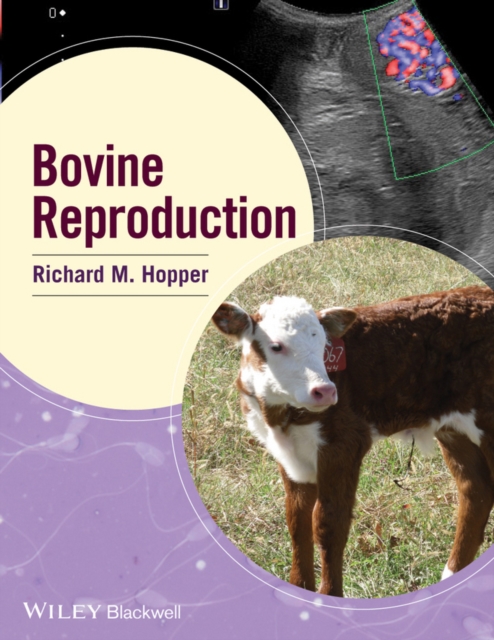
Bovine reproduction
Bovine Reproduction is a comprehensive, current reference providing information on all aspects of reproduction in the bull and cow. Offering fundamental knowledge on evaluating and restoring fertility in the bovine patient, the book also places information in the context of herd health where appropriate for a truly global view of bovine theriogenology. Printed in full color throughout, the book includes 83 chapters and more than 550 images, making it the most exhaustive reference available on this topic. Each section covers anatomy and physiology, breeding management, and reproductive surgery, as well as obstetrics and pregnancy wastage in the cow. Bovine Reproduction is a welcome resource for bovine practitioners, theriogenologists, and animal scientists, as well as veterinary students and residents with an interest in the cow.
eBook

Cell Biology Symposium: genetics of feed efficiency in dairy and beef cattle
Increasing food production for the growing human population off a constraining land base will require greater efficiency of production. Genetic improvement of feed efficiency in cattle, which is cumulative and permanent, is one likely vehicle to achieving efficiency gains. The objective of this review is to summarize genetic parameters for feed efficiency traits in dairy and beef cattle and also to address some of the misconceptions associated with feed efficiency in these sectors, as well as discuss the potential use of feed efficiency in breeding programs. A meta-analysis of up to 39 scientific publications in growing cattle clearly showed that genetic variation in feed efficiency exists with a pooled heritability for residual feed intake (RFI) and feed conversion efficiency of 0.33 ± 0.01 (range of 0.07 to 0.62) and 0.23 ± 0.01 (range of 0.06 to 0.46), respectively. Heritability estimates for feed efficiency in cows were lower; a meta-analysis of up to 11 estimates revealed heritability estimates for gross feed efficiency and RFI of 0.06 ± 0.010 and 0.04 ± 0.008, respectively. Meta-analysis of genetic correlations between feed intake, feed efficiency and other performance traits are presented, and selection index theory is used to calculate the proportion of genetic variation in feed intake that can be explained by easy to measure, and often already collected, data. A large proportion of the genetic variation in feed intake could be explained in both growing animals and lactating animals using up to 5 predictor traits, including BW, growth rate, milk yield, body composition, and linear type traits reflecting body size and muscularity. Knowledge of genetic merit for feed intake can be used, along with estimates of genetic merit for energy sinks, to calculate genetic merit for feed efficiency. Therefore, the marginal benefit of collecting actual feed intake data, using the genetic parameters used in this study, appears to be low. There is now sufficient information available to develop a road map on how best to direct research to ensure long-term food security for a growing human population. Gaps in knowledge are identified here, and possibilities to address these gaps are discussed.
Journal Article

Cattle domestication in the Near East was followed by hybridization with aurochs bulls in Europe
Domesticated cattle were one of the cornerstones of European Neolithisation and are thought to have been introduced to Europe from areas of aurochs domestication in the Near East. This is consistent with mitochondrial DNA (mtDNA) data, where a clear separation exists between modern European cattle and ancient specimens of British aurochsen. However, we show that Y chromosome haplotypes of north European cattle breeds are more similar to haplotypes from ancient specimens of European aurochsen, than to contemporary cattle breeds from southern Europe and the Near East. There is a sharp north-south gradient across Europe among modern cattle breeds in the frequencies of two distinct Y chromosome haplotypes; the northern haplotype is found in 20 out of 21 European aurochsen or early domestic cattle dated 9500-1000 BC. This indicates that local hybridization with male aurochsen has left a paternal imprint on the genetic composition of modern central and north European breeds. Surreptitious mating between aurochs bulls and domestic cows may have been hard to avoid, or may have occurred intentionally to improve the breeding stock. Rather than originating from a few geographical areas only, as indicated by mtDNA, our data suggest that the origin of domestic cattle may be far more complex than previously thought.
Journal Article

BOARD INVITED REVIEW: Post-transfer consequences of in vitro-produced embryos in cattle
In vitro embryo production (IVP) in cattle has gained worldwide interest in recent years, but the efficiency of using IVP embryos for calf production is far from optimal. This review will examine the pregnancy retention rates of IVP embryos and explore causes for pregnancy failures. Based on work completed over the past 25 yr, only 27% of cattle receiving IVP embryos will produce a live calf. Approximately 60% of these pregnancies fail during the first 6 wk of gestation. When compared with embryos generated by superovulation, pregnancy rates are 10% to 40% lower for cattle carrying IVP embryos, exemplifying that IVP embryos are consistently less competent than in vivo-generated embryos. Several abnormalities have been observed in the morphology of IVP conceptuses. After transfer, IVP embryos are less likely to undergo conceptus elongation, have reduced embryonic disk diameter, and have compromised yolk sac development. Marginal binucleate cell development, cotyledon development, and placental vascularization have also been documented, and these abnormalities are associated with altered fetal growth trajectories. Additionally, in vitro culture conditions increase the risk of large offspring syndrome. Further work is needed to decipher how the embryo culture environment alters post-transfer embryo development and survival. The risk of these neonatal disorders has been reduced by the use of serum-free synthetic oviductal fluid media formations and culture in low oxygen tension. However, alterations are still evident in IVP oocyte and embryo transcript abundances, timing of embryonic cleavage events and blastulation, incidence of aneuploidy, and embryonic methylation status. The inclusion of oviductal and uterine-derived embryokines in culture media is being examined as one way to improve the competency of IVP embryos. To conclude, the evidence presented herein clearly shows that bovine IVP systems still must be refined to make it an economical technology in cattle production systems. However, the current shortcomings do not negate its current value for certain embryo production needs and for investigating early embryonic development in cattle.
Journal Article

An inhibitor persistently decreased enteric methane emission from dairy cows with no negative effect on milk production
A quarter of all anthropogenic methane emissions in the United States are from enteric fermentation, primarily from ruminant livestock. This study was undertaken to test the effect of a methane inhibitor, 3-nitrooxypropanol (3NOP), on enteric methane emission in lactating Holstein cows. An experiment was conducted using 48 cows in a randomized block design with a 2-wk covariate period and a 12-wk data collection period. Feed intake, milk production, and fiber digestibility were not affected by the inhibitor. Milk protein and lactose yields were increased by 3NOP. Rumen methane emission was linearly decreased by 3NOP, averaging about 30% lower than the control. Methane emission per unit of feed dry matter intake or per unit of energy-corrected milk were also about 30% less for the 3NOP-treated cows. On average, the body weight gain of 3NOP-treated cows was 80% greater than control cows during the 12-wk experiment. The experiment demonstrated that the methane inhibitor 3NOP, applied at 40 to 80 mg/kg feed dry matter, decreased methane emissions from high-producing dairy cows by 30% and increased body weight gain without negatively affecting feed intake or milk production and composition. The inhibitory effect persisted over 12 wk of treatment, thus offering an effective methane mitigation practice for the livestock industries.
Journal Article

Ecosystem structure, function, and composition in rangelands are negatively affected by livestock grazing
Reports of positive or neutral effects of grazing on plant species richness have prompted calls for livestock grazing to be used as a tool for managing land for conservation. Grazing effects, however, are likely to vary among different response variables, types, and intensity of grazing, and across abiotic conditions. We aimed to examine how grazing affects ecosystem structure, function, and composition. We compiled a database of 7615 records reporting an effect of grazing by sheep and cattle on 278 biotic and abiotic response variables for published studies across Australia. Using these data, we derived three ecosystem measures based on structure, function, and composition, which were compared against six contrasts of grazing pressure, ranging from low to heavy, two different herbivores (sheep, cattle), and across three different climatic zones. Grazing reduced structure (by 35%), function (24%), and composition (10%). Structure and function (but not composition) declined more when grazed by sheep and cattle together than sheep alone. Grazing reduced plant biomass (40%), animal richness (15%), and plant and animal abundance, and plant and litter cover (25%), but had no effect on plant richness nor soil function. The negative effects of grazing on plant biomass, plant cover, and soil function were more pronounced in drier environments. Grazing effects on plant and animal richness and composition were constant, or even declined, with increasing aridity. Our study represents a comprehensive continental assessment of the implications of grazing for managing Australian rangelands. Grazing effects were largely negative, even at very low levels of grazing. Overall, our results suggest that livestock grazing in Australia is unlikely to produce positive outcomes for ecosystem structure, function, and composition or even as a blanket conservation tool unless reduction in specific response variables is an explicit management objective.
Journal Article

Review: welfare of dairy cows in continuously housed and pasture-based production systems
There is increasing interest in the use of continuous housing systems for dairy cows, with various reasons put forward to advocate such systems. However, the welfare of dairy cows is typically perceived to be better within pasture-based systems, although such judgements are often not scientifically based. The aim of this review was to interrogate the existing scientific literature to compare the welfare, including health, of dairy cows in continuously housed and pasture-based systems. Although summarising existing work, knowledge gaps and directions for future research are also identified. The scope of the review is broad, examining relevant topics under three main headings; health, behaviour and physiology. Regarding health, cows on pasture-based systems had lower levels of lameness, hoof pathologies, hock lesions, mastitis, uterine disease and mortality compared with cows on continuously housed systems. Pasture access also had benefits for dairy cow behaviour, in terms of grazing, improved lying/resting times and lower levels of aggression. Moreover, when given the choice between pasture and indoor housing, cows showed an overall preference for pasture, particularly at night. However, the review highlighted the need for a deeper understanding of cow preference and behaviour. Potential areas for concern within pasture-based systems included physiological indicators of more severe negative energy balance, and in some situations, the potential for compromised welfare with exposure to unpredictable weather conditions. In summary, the results from this review highlight that there remain considerable animal welfare benefits from incorporating pasture access into dairy production systems.
Journal Article

Invited review: Body condition score and its association with dairy cow productivity, health, and welfare
The body condition score (BCS) of a dairy cow is an assessment of the proportion of body fat that it possesses, and it is recognized by animal scientists and producers as being an important factor in dairy cattle management. The scale used to measure BCS differs between countries, but low values always reflect emaciation and high values equate to obesity. The intercalving profile of BCS is a mirror image of the milk lactation profile. Cows lose condition for 50 to 100 d postcalving, because of homeorhetic changes that occur in the somatotropic axis and the sensitivity of peripheral tissues to insulin, and the upregulation of lipolytic pathways in adipose tissue. Management and feeding have little effect on early postcalving BCS loss (wk 1 to 4 postcalving) until the natural period of insulin resistance has passed and the somatotropic axis has recoupled. There is evidence, however, that management and diet can influence the timing of recoupling of the somatotropic axis and the sensitivity of peripheral tissues to insulin, and gene expression differences in adipose tissue 30 d in milk confirm an effect of energy intake on lipogenic enzymes. The BCS in which a cow calves, nadir BCS, and the amount of BCS she loses postcalving are associated with milk production, reproduction, and health. Body condition score may also be a valid indicator of animal welfare, but further research is required to determine the effect of BCS and BCS change on how a cow “feels.” Although the actual strength of the association may vary, there is relative consistency in the associations among calving and nadir BCS, and BCS change on milk production, postpartum anestrous, the likelihood of a successful pregnancy and days open, the risk of uterine infection, and the risk of metabolic disorders. For many production and health variables, the association with BCS is nonlinear, with an optimum calving BCS of 3.0 to 3.25 (5-point scale); lower calving BCS is associated with reduced production and reproduction, whereas calving BCS ≥3.5 (5-point scale) is associated with a reduction in early lactation dry matter intake and milk production and an increased risk of metabolic disorders. Ongoing research into the automation of body condition scoring suggests that it is a likely candidate to be incorporated into decision support systems in the near future to aid producers in making operational and tactical decisions.
Journal Article
Heritability and genetic correlations of feed intake, body weight gain, residual gain, and residual feed intake of beef cattle as heifers and cows
Abstract
The cow herd consumes approximately 70% of the annual feed resources. To date, most genetic evaluations of feed intake in beef cattle have been made in growing animals and little information is available for mature cows. Genetic evaluations in mature cows have predominately been confined to lactating dairy cows and the relationship between feed intake as growing heifers and mature cows has not been addressed. It was the purpose of this study to estimate the heritability of feed intake when measured as growing heifers and mature cows and determine the genetic correlation between these measurements. Individual feed intake and BW gain were measured on 687 heifers and 622 5-yr-old cows. The heritability of average daily DMI (ADDMI) estimated in heifers was 0.84 ± 0.12 and 0.53 ± 0.12 in cows. The heritability of ADG estimated in heifers was 0.53 ± 0.12 and 0.34 ± 0.11 in cows. The genetic correlation between heifer and cow ADDMI was 0.84 ± 0.09. The genetic correlation between heifer and cow ADG was 0.73 ± 019. Heritability of residual feed intake in heifers was 0.25 ± 0.11 and 0.16 ± 0.10 in cows. Heritability for residual gain in heifers was 0.21 ± 0.11 and 0.14 ± 0.10 in cows. Feed intake and ADG are heritable and genetically correlated between heifers and cows. Selection for decreased feed intake and ADG in growing animals will probably have the same directional effects on mature cows.
Journal Article
Influence of bull age, ejaculate number, and season of collection on semen production and sperm motility parameters in Holstein Friesian bulls in a commercial artificial insemination centre
Abstract
In the current era of genomic selection, there is an increased demand to collect semen from genomically selected sires at a young age. The objective of this study was to assess the effect of bull age, ejaculate number, and season of collection on semen production (ejaculate volume, sperm concentration, and total sperm number; TSN) and sperm motility (prefreeze and post-thaw total and gross motility) parameters in Holstein Friesian bulls in a commercial artificial insemination (AI) center. The study involved the interrogation of a large dataset collected over a 4-yr period, (n = 8,983 ejaculates; n = 176 Holstein Friesian bulls aged between 9 mo and 8 yr). Bulls aged less than 1 yr had the poorest semen production and sperm motility values for all parameters assessed compared with bulls older than 1 yr (P < 0.01). First ejaculates had greater semen production and greater prefreeze motility values than second consecutive ejaculates (P < 0.01), but despite this, there was no difference in post-thaw motility. When subsequent ejaculates were collected from bulls aged less than 1 yr, semen production and sperm motility did not differ compared with mature bulls. Semen collected in winter was poorest in terms of sperm concentration and TSN, but best in terms of post-thaw motility (P < 0.01). In conclusion, second ejaculates can be collected, particularly from bulls aged less than 1 yr, without a significant decrease in post-thaw sperm motility, thus may be a useful strategy to increase semen availability from young genomically selected AI bulls in high demand.
Journal Article