
Catalogue Search | MBRL


Are you sure you want to remove the book from the shelf?

{{itemTitle}}
3,179
result(s) for
"Cattle History."
Sort by:


The cattle of the sun
Though Greece is traditionally seen as an agrarian society, cattle were essential to Greek communal life, through religious sacrifice and dietary consumption. Cattle were also pivotal in mythology: gods and heroes stole cattle, expected sacrifices of cattle, and punished those who failed to provide them. The Cattle of the Sun ranges over a wealth of sources, both textual and archaeological, to explore why these animals mattered to the Greeks, how they came to be a key element in Greek thought and behavior, and how the Greeks exploited the symbolic value of cattle as a way of structuring social and economic relations.
eBook

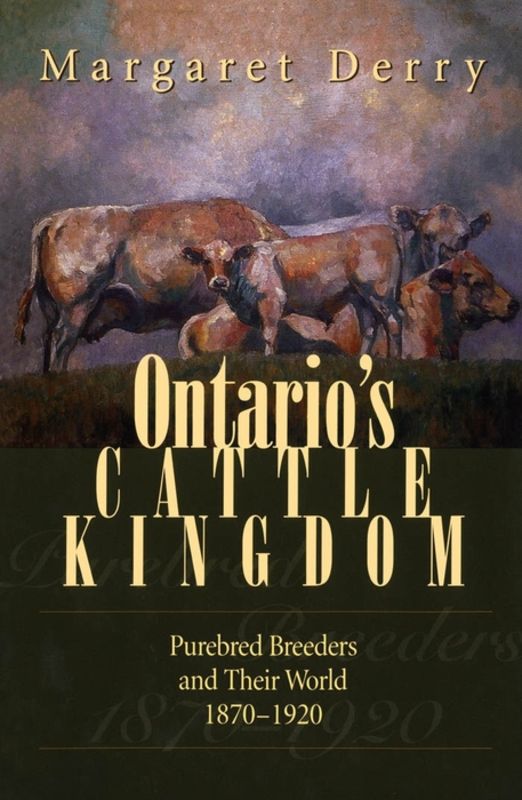
Ontario's cattle kingdom
The story of the purebred cattle breeders? world includes nineteenth-century medical opinions and strategies for disease control, the evolution of cattle associations, and the development of state regulation.
eBook


Cattle in the Backlands
Brazil has the second-largest cattle herd in the world and is a major exporter of beef. While ranching in the Amazon-and its destructive environmental consequences-receives attention from both the media and scholars, the states of Mato Grosso and Mato Grosso do Sul actually host the most cattle. A significant beef producer in Brazil beginning in the late nineteenth century, the region served as a laboratory for raising cattle in the tropics, where temperate zone ranching practices do not work. Mato Grosso ranchers and cowboys transformed ranching's relationship with the environment, including the introduction of an exotic cattle breed-the Zebu-that now dominates Latin American tropical ranching.
Cattle in the Backlandspresents a comprehensive history of ranching in Mato Grosso. Using extensive primary sources, Robert W. Wilcox explores three key aspects: the economic transformation of a remote frontier region through modern technical inputs; the resulting social changes, especially in labor structures and land tenure; and environmental factors, including the long-term impact of ranching on ecosystems, which, he contends, was not as detrimental as might be assumed. Wilcox demonstrates that ranching practices in Mato Grosso set the parameters for tropical beef production in Brazil and throughout Latin America. As the region was incorporated into national and international economic structures, its ranching industry experienced the entry of foreign investment, the introduction of capitalized processing facilities, and nascent discussions of ecological impacts-developments that later affected many sectors of the Brazilian economy.
eBook

Pastoral Australia
Pastoral Australia tells the story of the expansion of Australia's pastoral industry,how it drove European settlement and involved Aboriginal people in the new settlersociety. The rural life that once saw Australia 'ride on the sheep's back' is no longer whatdefines us, yet it is largely our history as a pastoral nation that has endured inheritage places and which is embedded in our self-image as Australians. The challenges of sustaining a pastoral industry in Australia make a compellingstory of their own. Developing livestock breeds able to prosper in the Australianenvironment was an ongoing challenge, as was getting wool and meat to market. Many stock routes, wool stores, abattoirs, wharf facilities, railways, roads, and riverand ocean transport systems that were developed to link the pastoral interior withthe urban and market infrastructure still survive. Windmills, fences, homesteads,shearing sheds, bores, stock yards, travelling stock routes, bush roads andrailheads all changed the look of the country. These features of our landscape forman important part of our heritage. They are symbols of a pastoral Australia, and ofthe foundations of our national identity, which will endure long into the future.
eBook

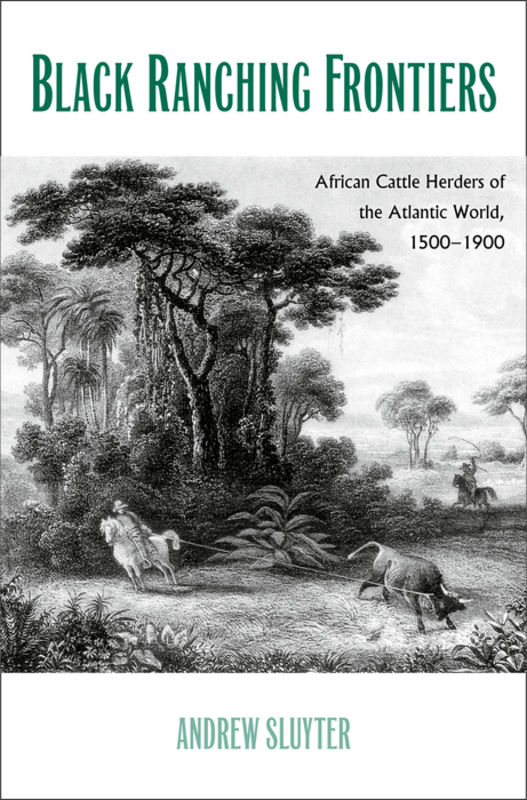
Black Ranching Frontiers
In this groundbreaking book Andrew Sluyter demonstrates for the first time that Africans played significant creative roles in establishing open-range cattle ranching in the Americas. In so doing, he provides a new way of looking at and studying the history of land, labor, property, and commerce in the Atlantic world.
Sluyter shows that Africans' ideas and creativity helped to establish a production system so fundamental to the environmental and social relations of the American colonies that the consequences persist to the present. He examines various methods of cattle production, compares these methods to those used in Europe and the Americas, and traces the networks of actors that linked that Atlantic world. The use of archival documents, material culture items, and ecological relationships between landscape elements make this book a methodologically and substantively original contribution to Atlantic, African-American, and agricultural history.
eBook