
Catalogue Search | MBRL


Are you sure you want to remove the book from the shelf?

{{itemTitle}}
2,005
result(s) for
"Caucasus."
Sort by:


State Building and Conflict Resolution in the Caucasus
Taking history and culture of the Caucasus as starting point, state building and conflict resolution processes in the North and South Caucasus are analysed from an international legal and political perspective. Development of the rule of law is here central.
eBook


The Caucasus : an introduction
The Caucasus is an updated version of an essential guide that has introduced thousands of readers to a complex and fascinating region. Thomas de Waal gives a brief and stimulating portrait of Armenia, Azerbaijan, Georgia, their multi-layered history, seemingly intractable conflicts and complex politics.
eBook

Years of blood : a history of the Armenian-Muslim clashes in the Caucasus, 1905-1906
Presented for the first time in English, Mammad Said Ordubadi's Years of Blood: A History of the Armenian-Azerbaijani Clashes in the Caucasus, 1905-1906, provides detailed reports of the tragic events of those dramatic years. Written during the aftershock and completed in 1908, the book was not published until 1911, but immediately impressed for its use of local correspondents. Later, however, it was removed from public view as it did not comply with official ideology. Ordubadi was a celebrated historical researcher, journalist, novelist and librettist, but assessments of his writings made no mention of Years of Blood. Written in his native Azerbaijani in the Arabic script in use at that time, one of the principal sources on the Armenian-Muslim conflicts of 1905-1906 has remained obscured from scholarship until now. In view of the still unresolved Nagorno-Karabagh war between Armenia and Azerbaijan, this English translation of historical record is timely; for Ordubadi notes in his book a situation that continues today: 'Along with the Russian and Caucasian press, European and American publications speak heatedly and exhibit the closest interest in these events and their causes. We should also know that the articles published in the foreign press are full of contradictions and differences.'
Book

Bitter Choices
Russia's attempt to consolidate its authority in the North
Caucasus has exerted a terrible price on both sides since the
mid-nineteenth century. Michael Khodarkovsky tells a concise and
compelling history of the mountainous region between the Black and
Caspian seas during the centuries of Russia's long conquest
(1500-1850s). The history of the region unfolds against the
background of one man's life story, Semën Atarshchikov (1807-1845).
Torn between his Chechen identity and his duties as a lieutenant
and translator in the Russian army, Atarshchikov defected, not once
but twice, to join the mountaineers against the invading Russian
troops. His was the experience more typical of Russia's
empire-building in the borderlands than the better known stories of
the audacious kidnappers and valiant battles. It is a history of
the North Caucasus as seen from both sides of the conflict, which
continues to make this region Russia's most violent and vulnerable
frontier.
Russia's attempt to consolidate its authority in the North
Caucasus has exerted a terrible price on both sides since the
mid-nineteenth century. Michael Khodarkovsky's book tells the story
of a single man with multiple allegiances and provides a concise
and compelling history of the mountainous region between the Black
and Caspian seas. After forays beginning in the late 1500s, Russia
tenuously conquered the peoples of the region in the 1850s; the
campaign was defined by a cruelty on both sides that established a
pattern repeated in our own time, particularly in Chechnya.
At the center of Khodarkovsky's sweeping account is Semen
Atarshchikov (1807-1845). His father was a Chechen translator in
the Russian army, and Atarshchikov grew up with roots in both
Russian and Chechen cultures. His facility with local languages
earned him quick promotion in the Russian army. Atarshchikov
enjoyed the confidence of his superiors, yet he saw the violence
that the Russians inflicted on the native population and was torn
between his duties as a Russian officer and his affinity with the
highlanders. Twice he deserted the army to join the highlanders in
raids against his former colleagues. In the end he was betrayed by
a compatriot who sought to gain favor with the Russians by killing
the infamous Atarshchikov.
Khodarkovsky places Atarshchikov's life in a rich context: we
learn a great deal about the region's geography, its peoples, their
history, and their conflicts with both the Russians and one
another. Khodarkovsky reveals disputes among the Russian commanders
and the policies they advocated; some argued for humane approaches
but always lost out to those who preferred more violent means. Like
Hadji Murat-the hero of Tolstoy's last great work-Atarshchikov
moved back and forth between Russian and local allegiances; his
biography is the story of the North Caucasus, one as relevant today
as in the nineteenth century.
eBook


Development In Central Asia and the Caucasus
Michael Barr explores the complex and covert networks of power at work in one of the world's most prosperous countries – the city-state of Singapore. He argues that the contemporary networks of power are a deliberate project initiated and managed by Lee Kuan Yew – former prime minister and Singapore's 'founding father' – designed to empower himself and his family. Barr identifies the crucial institutions of power - including the country's sovereign wealth funds, and the government-linked companies – together with five critical features that form the key to understanding the nature of the networks. He provides an assessment of possible shifts of power within the elite in the wake of Lee Kuan Yew's son, Lee Hsien Loong, assuming power, and considers the possibility of a more fundamental democratic shift in Singapore's political system.
eBook

Sacred Places, Emerging Spaces
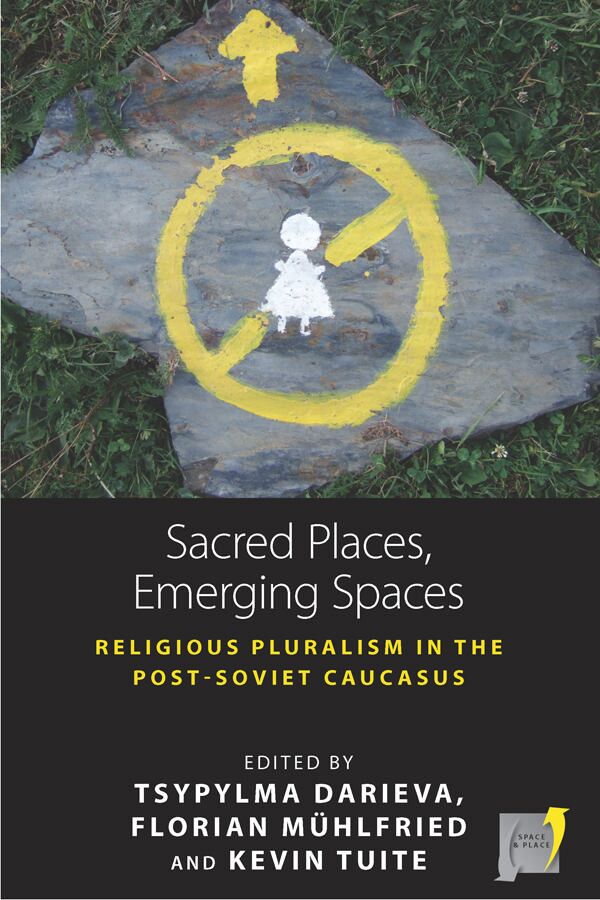
Though long-associated with violence, the Caucasus is a region rich with religious conviviality. Based on fresh ethnographies in Georgia, Armenia, Azerbaijan, and the Russian Federation, Sacred Places, Emerging Spaces discusses vanishing and emerging sacred places in the multi-ethnic and multi-religious post-Soviet Caucasus. In exploring the effects of de-secularization, growing institutional control over hybrid sacred sites, and attempts to review social boundaries between the religious and the secular, these essays give way to an emergent Caucasus viewed from the ground up: dynamic, continually remaking itself, within shifting and indefinite frontiers.
eBook