
Catalogue Search | MBRL


Are you sure you want to remove the book from the shelf?

{{itemTitle}}
2,457
result(s) for
"Cedar"
Sort by:

16 Lighthouse Road
Family court judge Olivia Lockhart becomes front page news when she refuses to grant a divorce to a naval officer and his wife after the death of their baby, and discovers the lives of her family and friends to be increasingly complex.
Book
Northern White-Cedar
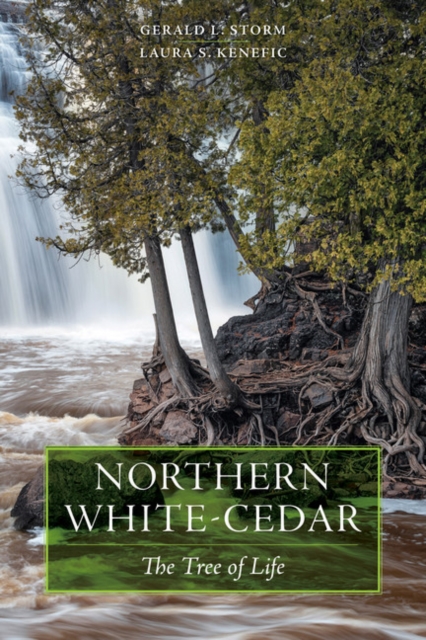
If trees had personalities, the northern white-cedar would be an introvert. It is unassuming, tending to be small in stature with narrow crowns. It is patient, growing slowly beneath the canopy of larger trees. It is fragile, with weak wood prone to decay when living. But just as people have hidden depths, so too does the northern white-cedar. It is persistent, growing quickly to take advantage of canopy openings when they occur. It is tenacious, living for centuries or even a millennium. It is resilient, thriving even with a high proportion of rotten wood, and resourceful, finding places to live where other trees don’t prosper. It is constantly reinventing itself with branches that grow roots when resting on the moist ground. And people have long valued the tree. Native Americans used its lightweight, rot-resistant wood to make woven bags, floor coverings, arrow shafts, and canoe ribs. They extracted medicine from the leaves and bark to treat a variety of illnesses. A Haudenosaunee decoction of northern white-cedar is credited with saving the French explorer Jacques Cartier’s crew from scurvy, and the French dubbed it l’arbre de vie: the tree of life. This tree similarly gives life to many creatures in North American forests, while providing fence posts, log homes, and shingles to people. But the northern white-cedar’s future is uncertain. Here scientists Gerald L. Storm and Laura S. Kenefic describe the threats to this modest yet essential member of its ecosystem and call on all of us to unite to help it to thrive.
eBook

92 Pacific Boulevard
Sheriff Troy David had hoped to marry Faith Beckwith, but she's ended the relationship because of misunderstandings--inadvertently caused by Troy's daughter. However, Troy has plenty to keep himself occupied, like the unidentified remains found in a cave outside of town.
Book

The spatial sensitivity of the spectral diversity–biodiversity relationship
Remote sensing has been used to detect plant biodiversity in a range of ecosystems based on the varying spectral properties of different species or functional groups. However, the most appropriate spatial resolution necessary to detect diversity remains unclear. At coarse resolution, differences among spectral patterns may be too weak to detect. In contrast, at fine resolution, redundant information may be introduced. To explore the effect of spatial resolution, we studied the scale dependence of spectral diversity in a prairie ecosystem experiment at Cedar Creek Ecosystem Science Reserve, Minnesota, USA. Our study involved a scaling exercise comparing synthetic pixels resampled from high-resolution images within manipulated diversity treatments. Hyperspectral data were collected using several instruments on both ground and airborne platforms. We used the coefficient of variation (CV) of spectral reflectance in space as the indicator of spectral diversity and then compared CV at different scales ranging from 1 mm² to 1 m² to conventional biodiversity metrics, including species richness, Shannon’s index, Simpson’s index, phylogenetic species variation, and phylogenetic species evenness. In this study, higher species richness plots generally had higher CV. CV showed higher correlations with Shannon’s index and Simpson’s index than did species richness alone, indicating evenness contributed to the spectral diversity. Correlations with species richness and Simpson’s index were generally higher than with phylogenetic species variation and evenness measured at comparable spatial scales, indicating weaker relationships between spectral diversity and phylogenetic diversity metrics than with species diversity metrics. High resolution imaging spectrometer data (1 mm² pixels) showed the highest sensitivity to diversity level. With decreasing spatial resolution, the difference in CV between diversity levels decreased and greatly reduced the optical detectability of biodiversity. The optimal pixel size for distinguishing α diversity in these prairie plots appeared to be around 1 mm to 10 cm, a spatial scale similar to the size of an individual herbaceous plant. These results indicate a strong scale-dependence of the spectral diversity-biodiversity relationships, with spectral diversity best able to detect a combination of species richness and evenness, and more weakly detecting phylogenetic diversity. These findings can be used to guide airborne studies of biodiversity and develop more effective large-scale biodiversity sampling methods.
Journal Article

8 Sandpiper Way
Cedar Cove is shocked after Pastor Dave Flemming is accused of stealing jewelry. His wife, Emily, doesn't know what to believe, especially since Dave is being so evasive. Then she finds an earring in his pocket. Could he have stolen it--or is he having an affair?
Book

Analyzing of usability of tree-rings as biomonitors for monitoring heavy metal accumulation in the atmosphere in urban area: a case study of cedar tree (Cedrus sp.)
It is important to monitor the heavy metal pollution in order to identify risk zones and to determine the change in the heavy metal concentration of the atmosphere within the process. For this, it is necessary to carry out measurements for many years; however, this is not possible. Especially from past to present, one of the most effective methods to determine the changes of heavy metal concentrations in the atmosphere is to use the annual tree rings as biomonitors. Perennial plants growing in our country create annual rings, and it is possible to gain information regarding the changes of heavy metal concentrations in that region by determining the heavy metal concentrations in these rings. In this study, it was aimed to determine the annual changes of Pb, Co, and Fe elements’ concentrations in these sections by determining the annual rings on the logs taken from the main stem of the cedar tree (
Cedrus
sp.), which was cut by the end of 2016, in December, 2016, in Kastamonu province. Within the scope of the study, the element concentrations were also determined in the inner and outer bark. As a result of the study, it was found that the heavy metal values in the organelles taken from the road-facing part, especially the heavy metal concentrations in the outer bark were higher than the metal concentrations in the inward-facing part, and that the concentrations changed significantly on organelle and year basis.
Journal Article

Silver linings
\"Set in Cedar Cove's charming Rose Harbor Inn, Debbie Macomber's captivating new novel follows innkeeper Jo Marie and two new guests as they seek healing and comfort, revealing that every cloud has a silver lining, even when it seems difficult to find. Since opening the Rose Harbor Inn, Jo Marie Rose has grown close to her handyman, Mark Taylor. Jo Marie and Mark are good friends--and are becoming something more--yet he still won't reveal anything about his past. When Mark tells her that he's moving out of town, Jo Marie is baffled. Just when she is starting to open herself up again to love, she feels once more that she is losing the man she cares about. And as she discovers the secret behind Mark's decision to leave, she welcomes two visitors also seeking their own answers. Best friends Kellie Crenshaw and Katie Gilroy have returned to Cedar Cove for their ten-year high school reunion, looking to face down old hurts and find a sense of closure. Kellie, known as Coco, wants to finally confront the boy who callously broke her heart. Katie, however, wishes to reconnect with her old boyfriend, James--the man she still loves and the one who got away. As Katie hopes for a second chance, Coco discovers that people can change--and both look to the exciting possibilities ahead. Heartwarming and uplifting, Silver Linings is a beautiful novel of letting go of the past and embracing the unexpected\"-- Provided by publisher.
Book

Structural and functional analyses reveal promiscuous and species specific use of ephrin receptors by Cedar virus
Cedar virus (CedV) is a bat-borne henipavirus related to Nipah virus (NiV) and Hendra virus (HeV), zoonotic agents of fatal human disease. CedV receptor-binding protein (G) shares only ∼30% sequence identity with those of NiV and HeV, although they can all use ephrin-B2 as an entry receptor. We demonstrate that CedV also enters cells through additional B- and A-class ephrins (ephrin-B1, ephrin-A2, and ephrin-A5) and report the crystal structure of the CedV G ectodomain alone and in complex with ephrin-B1 or ephrin-B2. The CedV G receptor-binding site is structurally distinct from other henipaviruses, underlying its capability to accommodate additional ephrin receptors. We also show that CedV can enter cells through mouse ephrin-A1 but not human ephrin-A1, which differ by 1 residue in the key contact region. This is evidence of species specific ephrin receptor usage by a henipavirus, and implicates additional ephrin receptors in potential zoonotic transmission.
Journal Article

One fatal mistake
\"Her son accidentally killed a man. They cover it up. Then, everything goes wrong. When eighteen-year-old Joshua Mayo takes a man's life in a horrible accident, he leaves the scene and the body without reporting the crime to the police. He hopes to put the awful night behind him, and move on with his life. But, of course, he ends up telling his mother Karen what happened. Karen has raised Joshua on her own in Cedar Rapids, Iowa--and she thought they'd finally made it. He was doing well in school and was only months from starting college. After hearing his dark confession, she's forced to make a choice no parent should have to make, one that draws them both into a web of deceit that will change their lives forever--if they make it out alive..\"-- Provided by publisher.
Book

Aged Lignocellulose Fibers of Cedar Wood (9th and 12th Century): Structural Investigation Using FTIR-Deconvolution Spectroscopy, X-Ray Diffraction (XRD), Crystallinity Indices, and Morphological SEM Analyses
The characterization of lignocellulosic biomass present in archaeological wood is crucial for understanding the degradation processes affecting wooden artifacts. The lignocellulosic fractions in both the external and internal parts of Moroccan archaeological cedar wood (9th, 12th, and 21st centuries) were characterized using infrared spectroscopy (FTIR-ATR deconvolution mode), X-ray diffraction (XRD), and SEM analysis. The XRD demonstrates a significant reduction in the crystallinity index of cellulose from recent to aging samples. This finding is corroborated by the FTIR analysis, which shows a significant reduction in the area profiles of the C-H crystalline cellulosic bands (1374, 1315, and 1265 cm−1) and C-O-C (1150–1000 cm−1). The alterations in the lignin fraction of aging samples (from the 9th and 12th centuries) were demonstrated by a reduction in the intensity of the bands at 1271 and 1232 cm−1 (Car-O) and the formation of new compounds, such as quinones and/or diaryl carbonyl structures, within the 1700–1550 cm−1 range. The SEM images of cedar wood samples from the 9th and 12th centuries reveal voids, indicating that the entire cell wall component has been removed, a characteristic feature of simultaneous white rot fungi. In addition, horizontal “scratches” were noted, indicating possible bacterial activity.
Journal Article