
Catalogue Search | MBRL


Are you sure you want to remove the book from the shelf?

{{itemTitle}}
1,549
result(s) for
"Celts"
Sort by:

The historical atlas of the Celtic world
This historical atlas charts the Celts from their origins in the Bronze Age to their present-day diaspora, with colour maps supported by text and illustrations. It deals separately with continental, Atlantic and modern Celts.
Book


The ancient Celts
Fierce warriors and skilled craftsmen, the Celts were famous throughout the Ancient Mediterranean World. They were the archetypal barbarians from the north and were feared by both Greeks and Romans. For two and a half thousand years they have continued to fascinate those who have come into contact with them, yet their origins have remained a mystery and even today are the subject of heated debate among historians and archaeologists. Barry Cunliffe's classic study of the ancient Celtic world was first published in 1997. Since then huge advances have taken place in our knowledge: new finds, new ways of using DNA records to understand Celtic origins, new ideas about the proto-urban nature of early chieftains' strongholds, All these developments are part of this fully updated , and completely redesigned edition. Cunliffe explores the archaeological reality of these bold warriors and skilled craftsmen of barbarian Europe who inspired fear in both the Greeks and the Romans. He investigates the texts of the classical writers and contrasts their view of the Celts with current archaeological findings. Tracing the emergence of chiefdoms and the fifth- to third-century migrations as far as Bosnia and the Czech Republic, he assesses the disparity between the traditional story and the most recent historical and archaeological evidence on the Celts. Other aspects of Celtic identity such as the cultural diversity of the tribes, their social and religious systems, art, language and law, are also examined. From the picture that emerges, we are - crucially - able to distinguish between the original Celts, and those tribes which were 'Celtized', giving us an invaluable insight into the true identity of this ancient people.
Book
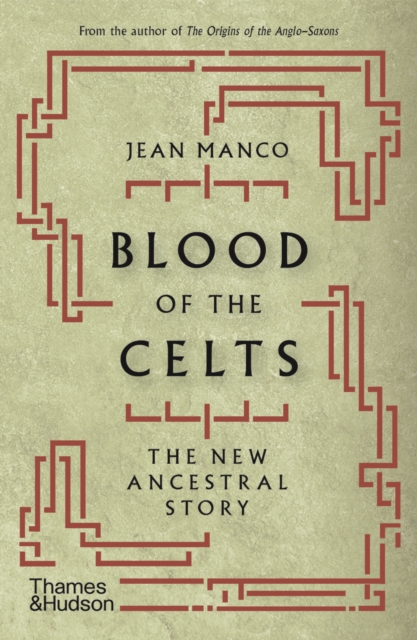
Blood of the Celts
The heritage of the Celts turns up from Portugal to Romania, from Scotland to Spain. Yet debate continues about who exactly were the Celts, where ultimately they came from, and whether the modern Celtic-speakers of the British Isles and Brittany are related to the Continental Celts we know from ancient history. So a fresh approach is needed.Blood of the Celts meets this challenge, pulling together evidence from genetics, archaeology, history and linguistics in an accessible and illuminating way, taking the reader on a voyage of discovery from the origins of the ancient Celts to the modern Celtic Revival, with some startling results.
eBook


Myth and History in Celtic and Scandinavian Traditions
Myth and History in Celtic and Scandinavian Traditions explores the traditions of two fascinating and contiguous cultures in north-western Europe. History regularly brought these two peoples into contact, most prominently with the Viking invasion of Ireland. In the famous Second Battle of Moytura, gods such as Lug, Balor, and the Dagda participated in the conflict that distinguished this invasion. Pseudohistory, which consists of both secular and ecclesiastical fictions, arose in this nexus of peoples and myth and spilled over into other contexts such as chronological annals. Scandinavian gods such as Odin, Balder, Thor, and Loki feature in the Edda of Snorri Sturluson and the history of the Danes by Saxo Grammaticus. This volume explores such written works alongside archaeological evidence from earlier periods through fresh approaches that challenge entrenched views.
eBook

Beasts and Monsters
Greek - The Riddle of the Sphinx; Cheyenne Indian - The Incredible Spotted Egg; English-The Dragon and Saint George; Celtic - The Washer at the Ford; Greek - The Gorgon's Head.
Journal Article

The coming of the Celts, AD 1860 : Celtic nationalism in Ireland and Wales
\"Who are the Celts, and what does it mean to be Celtic? In this book, Caoimhín De Barra focuses on nationalists in Ireland and Wales between 1860 and 1925, a time period when people in these countries came to identify themselves as Celts. De Barra chooses to examine Ireland and Wales because, of the six so-called Celtic nations, these two were the furthest apart in terms of their linguistic, religious, and socioeconomic differences. The Coming of the Celts, AD 1860 is divided into three parts. The first concentrates on the emergence of a sense of Celtic identity and the ways in which political and cultural nationalists in both countries borrowed ideas from one another in promoting this sense of identity. The second part follows the efforts to create a more formal relationship between the Celtic countries through the Pan-Celtic movement; the subsequent successes and failures of this movement in Ireland and Wales are compared and contrasted. Finally, the book discusses the public juxtaposition of Welsh and Irish nationalisms during the Irish Revolution.\"--Provided by publisher.
Book
