
Catalogue Search | MBRL


Are you sure you want to remove the book from the shelf?

{{itemTitle}}
30
result(s) for
"Censer"
Sort by:

A simple and affordable protocol to assess censer seed dispersal: First confirmation of the mechanism in the genus Solanum
Premise The censer seed dispersal mechanism, whereby mature fruits are retained on plants and seeds dispersed by mechanical shaking, is among the most specialized wind‐aided seed dispersal strategies employed by the flowering plants. An efficient, affordable, and easily repeatable protocol for determining whether a species uses this unusual mechanism of seed dispersal is lacking. Our focal species, Solanum tudununggae, is one of just two Solanum species (in a fleshy‐fruited genus of ca. 1200 species) hypothesized to use this dispersal mechanism as a means to move seeds farther from parent plants than would gravity alone. Methods and Results Live greenhouse plants were systematically shaken using a hand pulling technique. The proportion of seeds released and the distance of their movement were recorded and assessed using tools such as organza bags, bed sheets, a smartphone, ImageJ software, and a set of simple calculations. The results from this mentored undergraduate research project demonstrate that the protocol effectively identifies the use of the censer mechanism in S. tudununggae and quantifies its seed dispersal effectiveness. Conclusions The findings indicate that this protocol has confirmed experimentally, for the first time, the presence and effectiveness of the censer mechanism in the large and economically important genus Solanum. We believe that this protocol is useful for other taxa with similarly elongated and flexible growth habits.
Journal Article

South Korea's Medical Tourism Competitiveness and Future Strategy: Focused on Cancer Treatment: A Review
Background: Medical tourism is a leading industry of South Korea. Since the transition from the latest health pandemic to endemic, foreign patients have been on a rapid increase. The Korean government regards medical tourism as a major national industry and pursues medical, legal, and policy strategies with the goal of attracting 700,000 foreign patients by 2027. Methods: Examining objective data and statistics as well as academic articles, we investigated the strengths and advantages, which might persuade foreign medical tourists to visit South Korea by performing a comparative analysis with high-income or medically advanced countries among Organization for Economic Co-operation and Development (OECD) and other competing Asian countries. Results: Cancer is one of the leading causes of death in the world. Compared with other advanced countries and Asian competitors in cancer treatment, South Korea shows excellent result of major cancers treatments, accessibility to hospitals and medical professionals, and competitiveness in terms of surgery and treatment costs. Conclusion: South Korea has excellent competitiveness both in price and in cancer treatment with the outstanding results of cancer mortality rates and 5-year survival rates. The achievement of Korea's cancer treatments is due to accurate diagnosis with the advantage of PET-CT, 64-sllice CT, 3.0 TESLA MRI, etc., and the use of cutting-edge equipment, such as CyberKnife and Da Vince robotic surgery. Besides, the Korean central and local governments actively support for the promotion of Korea's medical tourism industry, such as issuance of visas for foreigners, the hospital certification system, and medical tourism convergence cluster project.
Journal Article


A view of ancient aroma culture through Museum-collected aroma utensils
Aroma fumigation is one of the traditional Chinese fumigating therapies. Moreover, the aroma culture is a combination of traditional Chinese medicine culture with Confucian and folk cultures. As historical marks, medical relics such as aroma utensils, herbs, and books can reflect the development and prosperity of aroma culture in history.
Journal Article

A New Approach to Teaching Emotional Design
Emotional design focuses on providing intended users with a positive emotional experience. Thus far, the concept of emotional design has primarily been restricted to the fields of research and industry. Most professionals using emotional design slowly acquired the required skills by experience and without direct education. Teaching emotional design to design students has been overlooked due to its difficulty. This research introduces a new approach to teaching emotional design, which aims to prevent negative influences from being added to the products created by design students. A systematic method is introduced to make it easier for inexperienced design students to grasp emotional design. Students are first taught proper methods of data collection to determine users’ emotional requirements. Students are then taught how to summarize the data, as well as develop feasibility testing strategies to obtain promising ideas. The proposed teaching approach for emotional design has been proven efficient in the case study course conducted in this research. Graduate-level design students learned how to design products according to users’ emotional requirements. The students successfully produced several designs that clearly provided positive user experiences.
Journal Article

Earthenware in private worship. Examples from Serdica
The paper presents 10 clay censers and thymiateria found in Serdica, present-day Sofia, Bulgaria, during archaeological excavations 2010-2012. All items were found in private houses which presumes their use in domestic cult rituals. According to their formal features the incense burners belong to two main types: burners with pierced walls on a flat base and ribbed conical bowls on a hollow pedestal. The clay thymiateria have different forms: with cylindrical shaft, with prismatic shaft and in the shape of a pine-cone. From chronological point of view the finds cover the entire period from the late 1st c. AD to the middle of the 3rd c. AD. Together with other items of religious practices (terracotta figurines, votive plates etc.) found in the excavated buildings they provide an opportunity to cast some light on the private cult activities and to suggest a probable location of the domestic worship places. In addition, the finds in question are good examples for the continuity of the tradition to use specific pottery items in private cult practices.
Journal Article
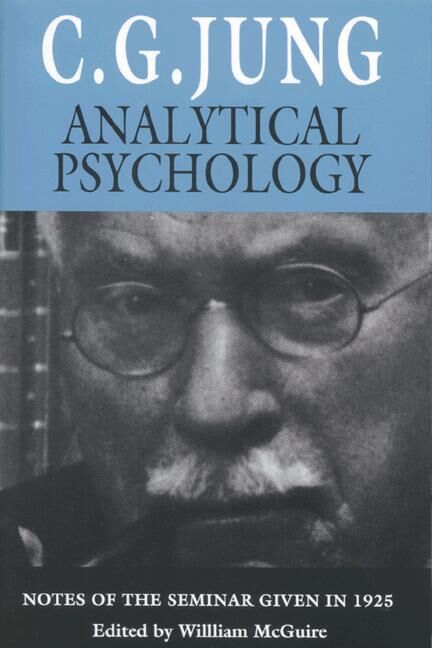
Analytical Psychology
For C. G. Jung, 1925 was a watershed year. He turned fifty, visited the Pueblo Indians of New Mexico and the tribesmen of East Africa, published his first book on the principles of analytical psychology meant for the lay public, and gave the first of his formal seminars in English. The seminar, conducted in weekly meetings during the spring and summer, began with a notably personal account of the development of his thinking from 1896 up to his break with Freud in 1912. It moved on to discussions of the basic tenets of analytical psychology--the collective unconscious, typology, the archetypes, and the anima/animus theory. In the elucidation of that theory, Jung analyzed in detail the symbolism in Rider Haggard's She and other novels. Besides these literary paradigms, he made use of case material, examples in the fine arts, and diagrams.
eBook


The plum in the golden vase or, Chin P’ing Mei, volume four
This is the fourth and penultimate volume in David Roy's celebrated translation of one of the most famous and important novels in Chinese literature.The Plum in the Golden Vaseor,Chin P'ing Meiis an anonymous sixteenth-century work that focuses on the domestic life of Hsi-men Ch'ing, a corrupt, upwardly mobile merchant in a provincial town, who maintains a harem of six wives and concubines. The novel, known primarily for its erotic realism, is also a landmark in the development of the narrative art form--not only from a specifically Chinese perspective but in a world-historical context.
Written during the second half of the sixteenth century and first published in 1618, ThePlum in the Golden Vaseis noted for its surprisingly modern technique. With the possible exception ofThe Tale of Genji(ca. 1010) andDon Quixote(1605, 1615), there is no earlier work of prose fiction of equal sophistication in world literature. Although its importance in the history of Chinese narrative has long been recognized, the technical virtuosity of the author, which is more reminiscent of the Dickens ofBleak House, the Joyce ofUlysses, or the Nabokov ofLolitathan anything in earlier Chinese fiction, has not yet received adequate recognition. This is partly because all of the existing European translations are either abridged or based on an inferior recension of the text. This complete and annotated translation aims to faithfully represent and elucidate all the rhetorical features of the original in its most authentic form and thereby enable the Western reader to appreciate this Chinese masterpiece at its true worth.
eBook

Introduction to Jungian Psychology
In 1925, while transcribing and painting in his Red Book, C. G. Jung presented a series of seminars in English in which he spoke for the first time in public about his early spiritualistic experiences, his encounter with Freud, the genesis of his psychology, and the self-experimentation he called his \"confrontation with the unconscious,\" describing in detail a number of pivotal dreams and fantasies. He then presented an introductory overview of his ideas about psychological typology and the archetypes of the collective unconscious, illustrated with case material and discussions concerning contemporary art. He focused particularly on the contra-sexual elements of the personality, the anima and the animus, which he discussed with the participants through psychological analyses of popular novels, such as Rider Haggard's She. The notes from these seminars form the only reliable published autobiographical account by Jung and the clearest and most important account of the development of his work.
eBook