
Catalogue Search | MBRL


Are you sure you want to remove the book from the shelf?

{{itemTitle}}
32,855
result(s) for
"Central Cities"
Sort by:


A good place to do business : the politics of downtown renewal since 1945
The \"Pittsburgh Renaissance,\" an urban renewal effort launched in the late 1940s, transformed the smoky rust belt city's downtown.Working-class residents and people of color saw their neighborhoods cleared and replaced with upscale, white residents and with large corporations housed in massive skyscrapers.
eBook

The urbanization of Rome and Latium Vetus : from the Bronze Age to the Archaic Era
\"This book focuses on urbanization and state formation in middle Tyrrhenian Italy during the first millennium BC by analyzing settlement organization and territorial patterns in Rome and Latium vetus from the Bronze Age to the Archaic Era. In contrast with the traditional diffusionist view, which holds that the idea of the city was introduced to the West via Greek and Phoenician colonists from the more developed Near East, this book demonstrates important local developments towards higher complexity, dating to at least the beginning of the Early Iron Age, if not earlier. By adopting a multidisciplinary and multitheoretical framework, this book overcomes the old debate between exogenous and endogenous by suggesting a network approach that sees Mediterranean urbanization as the product of reciprocal catalyzing actions\"-- Provided by publisher.
Book

Small Business and the City
InSmall Business and the City, Rafael Gomez, Andre Isakov, and Matt Semansky highlight the power of small-scale entrepreneurship to transform local neighbourhoods and the cities they inhabit. Studying the factors which enable small businesses to survive and thrive, they highlight the success of a Canadian concept which has spread worldwide: the Business Improvement Area (BIA). BIAs allow small-scale entrepreneurs to pool their resources with like-minded businesses, becoming sources of urban rejuvenation, magnets for human talent, and incubators for local innovation in cities around the globe.
Small Business and the Cityalso analyses the policies necessary to support this urban vitality, describing how cities can encourage and support locally owned independent businesses. An inspiring account of the dynamism of urban life,Small Business and the Cityintroduces a new \"main street agenda\" for the twenty-first century city.
eBook


Upscaling Downtown
Once known for slum-like conditions in its immigrant and working-class neighborhoods, New York City's downtown now features luxury housing, chic boutiques and hotels, and, most notably, a vibrant nightlife culture. While a burgeoning bar scene can be viewed as a positive sign of urban transformation, tensions lurk beneath, reflecting the social conflicts within postindustrial cities.Upscaling Downtownexamines the perspectives and actions of disparate social groups who have been affected by or played a role in the nightlife of the Lower East Side, East Village, and Bowery. Using the social world of bars as windows into understanding urban development, Richard Ocejo argues that the gentrifying neighborhoods of postindustrial cities are increasingly influenced by upscale commercial projects, causing significant conflicts for the people involved.
Ocejo explores what community institutions, such as neighborhood bars, gain or lose amid gentrification. He considers why residents continue unsuccessfully to protest the arrival of new bars, how new bar owners produce a nightlife culture that attracts visitors rather than locals, and how government actors, including elected officials and the police, regulate and encourage nightlife culture. By focusing on commercial newcomers and the residents who protest local changes, Ocejo illustrates the contested and dynamic process of neighborhood growth.
Delving into the social ecosystem of one emblematic section of Manhattan,Upscaling Downtownsheds fresh light on the tensions and consequences of urban progress.
eBook

The Hellenistic Far East
In the aftermath of Alexander the Great's conquests in the late fourth century B.C., Greek garrisons and settlements were established across Central Asia, through Bactria (modern-day Afghanistan) and into India. Over the next three hundred years, these settlements evolved into multiethnic, multilingual communities as much Greek as they were indigenous. To explore the lives and identities of the inhabitants of the Graeco-Bactrian and Indo-Greek kingdoms, Rachel Mairs marshals a variety of evidence, from archaeology, to coins, to documentary and historical texts. Looking particularly at the great city of Ai Khanoum, the only extensively excavated Hellenistic period urban site in Central Asia, Mairs explores how these ancient people lived, communicated, and understood themselves. Significant and original, The Hellenistic Far East will highlight Bactrian studies as an important part of our understanding of the ancient world.
eBook

Downtown America
Downtown America was once the vibrant urban center romanticized in the Petula Clark song—a place where the lights were brighter, where people went to spend their money and forget their worries. But in the second half of the twentieth century, \"downtown\" became a shadow of its former self, succumbing to economic competition and commercial decline. And the death of Main Streets across the country came to be seen as sadly inexorable, like the passing of an aged loved one. Downtown America cuts beneath the archetypal story of downtown's rise and fall and offers a dynamic new story of urban development in the United States. Moving beyond conventional narratives, Alison Isenberg shows that downtown's trajectory was not dictated by inevitable free market forces or natural life-and-death cycles. Instead, it was the product of human actors—the contested creation of retailers, developers, government leaders, architects, and planners, as well as political activists, consumers, civic clubs, real estate appraisers, even postcard artists. Throughout the twentieth century, conflicts over downtown's mundane conditions—what it should look like and who should walk its streets—pointed to fundamental disagreements over American values. Isenberg reveals how the innovative efforts of these participants infused Main Street with its resonant symbolism, while still accounting for pervasive uncertainty and fears of decline. Readers of this work will find anything but a story of inevitability. Even some of the downtown's darkest moments—the Great Depression's collapse in land values, the rioting and looting of the 1960s, or abandonment and vacancy during the 1970s—illuminate how core cultural values have animated and intertwined with economic investment to reinvent the physical form and social experiences of urban commerce. Downtown America—its empty stores, revitalized marketplaces, and romanticized past—will never look quite the same again. A book that does away with our most clichéd approaches to urban studies, Downtown America will appeal to readers interested in the history of the United States and the mythology surrounding its most cherished institutions. A Choice Oustanding Academic Title. Winner of the 2005 Ellis W. Hawley Prize from the Organization of American Historians. Winner of the 2005 Lewis Mumford Prize for Best Book in American Planning History. Winner of the 2005 Historic Preservation Book Price from the University of Mary Washington Center for Historic Preservation. Named 2005 Honor Book from the New Jersey Council for the Humanities.
eBook

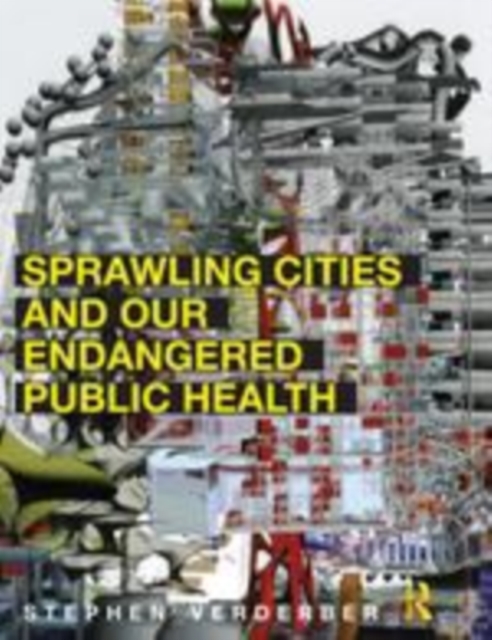
Sprawling Cities And Our Endangered Public Health
Sprawl is an unsustainable pattern of growth that threatens to undermine the health of communities globally. It has been a dominant mid-to-late twentieth century growth pattern in developed countries and in the twenty-first century has shown widespread signs of proliferation in India, China, and other growing countries. The World Health Organization cites sprawl for its serious adverse public health consequences for humans and ecological habitats. The many adverse impacts of sprawl on the health of individuals, communities, and biological ecosystems are well documented. Architects have been rightly criticized for failing to grasp the aesthetic and functional challenge to create buildings and places that mitigate sprawl while simultaneously promoting healthier, active lifestyles in neighbourhoods and communities.
Sprawling Cities and Our Endangered Public Health examines the past and present role of architecture in relation to the public health consequences of unmitigated sprawl and the ways in which it threatens our future. Topics examined include the role of twentieth century theories of architecture and urbanism and their public health ramifications, examples of current unsustainable practices, design considerations for the creation of health-promoting architecture and landscape urbanism, a critique of recent case studies of sustainable alternatives to unchecked sprawl, and prognostications for the future.
Architects, public health professionals, landscape architects, town planners, and a broad range of policy specialists will be able to apply the methods and tools presented here to counter unmitigated sprawl and to create architecture that promotes active, healthier lifestyles. Stephen Verderber is an internationally respected evidence-based researcher/practitioner/educator in the emerging, interdisciplinary field of architecture, health, and society. This, his latest book on the interactions between our build
eBook