
Catalogue Search | MBRL


Are you sure you want to remove the book from the shelf?

{{itemTitle}}
7,018
result(s) for
"Central Intelligence Agency"
Sort by:

The CIA and the politics of US intelligence reform
\"Examining the political foundations of American intelligence policy, this book develops a new theory of intelligence adaptation to explain the success or failure of major reform efforts since World War II. Durbin draws on careful case histories of the early Cold War, the Nixon and Ford administrations, the first decade after the Cold War, and the post-9/11 period, looking closely at the interactions among Congress, executive branch seniors, and intelligence officials. These cases demonstrate the significance of two factors in the success or failure of reform efforts: the level of foreign policy consensus in the system, and the ability of reformers to overcome the information advantages held by intelligence agencies. As these factors ebb and flow, windows of opportunity for reform open and close, and different actors and interests come to influence reform outcomes. Durbin concludes that the politics of US intelligence frequently inhibit effective adaptation, affecting America's security and the civil liberties of its citizens\"-- Provided by publisher.
BOOK

In Secrecy's Shadow
Drawing on extensive archival research, In Secrecy's Shadow explores the revolution in the relationship between Hollywood and the secret state, from unwavering trust and cooperation to extreme scepticism and paranoia.
eBook


More Stories from Langley
Who knew the CIA needed librarians? emMore Stories from Langley/em reveals the lesser-known operations of one of the most mysterious government agencies in the United States. Edward Mickolus is back with more stories to answer the question, \"What does a career in the CIA look like?\" Advice and anecdotes from both current and former CIA officers provide a look at the side of intelligence operations that is often left out of the movies. What was it like working for the CIA during 9/11? Do only spies get to travel? emMore Stories from Langley/em has physicists getting recruited to \"the agency\" during the Cold War, foreign-language majors getting lucky chances, and quests to \"learn by living\" turning into sweaty-palmed calls to the U.S. embassy after being detained by Russian intelligence officers. The world only needs so many suave super spies. emMore Stories from Langley/em shows how important academics, retired soldiers, and bilingual nannies can be in preserving the security of our nation.
eBook

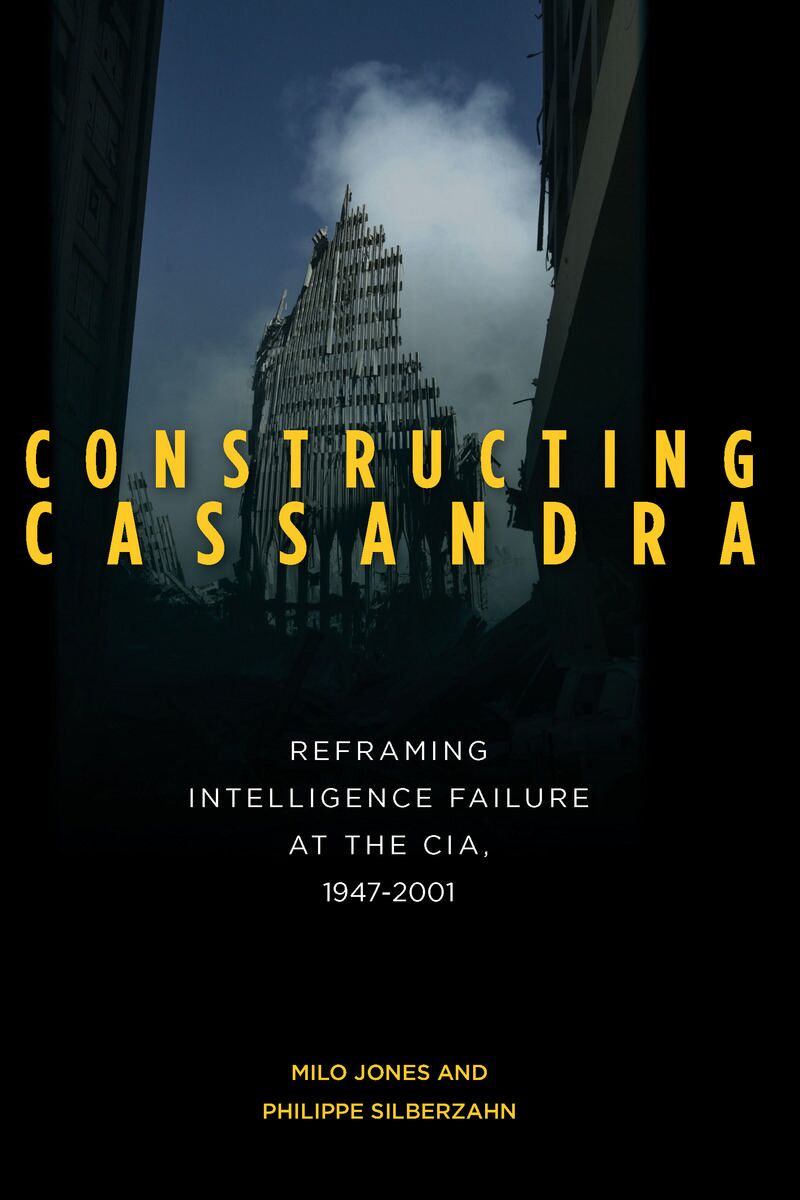
Constructing Cassandra
Constructing Cassandra analyzes the intelligence failures at the CIA that resulted in four key strategic surprises experienced by the US: the Cuban Missile Crisis in 1962, the Iranian revolution of 1978, the collapse of the USSR in 1991, and the 9/11 terrorist attacks-surprises still play out today in U.S. policy. Although there has been no shortage of studies exploring how intelligence failures can happen, none of them have been able to provide a unified understanding of the phenomenon.
To correct that omission, this book brings culture and identity to the foreground to present a unified model of strategic surprise; one that focuses on the internal make-up the CIA, and takes seriously those Cassandras who offered warnings, but were ignored. This systematic exploration of the sources of the CIA's intelligence failures points to ways to prevent future strategic surprises.
eBook

The CIA
\"This photo-illustrated book describes the life of a CIA officer, including their work recruiting agents and spies, how they gather intelligence, and work to keep the United States safe from terrorism. Describes real-life missions and what it takes to get a job in the Central Intellegence Agency\"-- Provided by publisher.
Book

Murder, Inc
Late in his life, former president Lyndon B. Johnson told a reporter that he didn't believe the Warren Commission's finding that Lee Harvey Oswald acted alone in killing President John F. Kennedy. Johnson thought Cuban president Fidel Castro was behind it. After all, Johnson said, Kennedy was running \"a damned Murder, Inc., in the Caribbean,\" giving Castro reason to retaliate. Murder, Inc., tells the story of the CIA's assassination operations under Kennedy up to his own assassination and beyond. James H. Johnston was a lawyer for the Senate Intelligence Committee in 1975, which investigated and first reported on the Castro assassination plots and their relation to Kennedy's murder. Johnston examines how the CIA steered the Warren Commission and later investigations away from connecting its own assassination operations to Kennedy's murder. He also looks at the effect this strategy had on the Warren Commission's conclusions that assassin Lee Harvey Oswald acted alone and that there was no foreign conspiracy. Sourced from in-depth research into the \"secret files\" declassified by the JFK Records Act and now stored in the National Archives and Records Administration,Murder, Inc. is the first book to narrate in detail the CIA's plots against Castro and to delve into the question of why retaliation by Castro against Kennedy was not investigated.
eBook


The family jewels : the CIA, secrecy, and presidential power
In December 1974, a front-page story in the New York Times revealed the explosive details of illegal domestic spying by the Central Intelligence Agency.This included political surveillance, eavesdropping, detention, and interrogation.
eBook