
Catalogue Search | MBRL


Are you sure you want to remove the book from the shelf?

{{itemTitle}}
54,683
result(s) for
"Central planning"
Sort by:


Shortcut or Piecemeal
Alternative strategies of economic development have received little attention in the literature. Academics rarely compare certain strategic features or assess the performance of different strategies in terms of outcomes. This book seeks to address that gap and to provide a theoretical background to the shift from industry to human capital-intensive services as the engine of economic growth. Pioneering studies reveal interesting trends and patterns that point to the growing importance of intangible capital for the level of GDP. They also indicate a much greater role of economic freedom in bringing about this second great structural change than was the case with industrialization. With this perspective on structural change and the role of freedom, Shortcut or Piecemeal also provides an extensive assessment of four key developing countries: Brazil, Russia, India, and China. Subjects: 1. Central planning--History. 2. Economic development--History
eBook

Confronting suburbanization : urban decentralization in postsocialist Central and Eastern Europe
\"This fascinating book explains the processes of suburbanization in the context of post-socialist societies transitioning from one system of socio-spatial order to another. Case studies of seven Central and Eastern Europe city regions illuminate growth patterns and key conditions for the emergence of sprawl. Breaks new ground, offering a systematic approach to the analysis of the global phenomenon of suburbanization in a post-socialist context Tracks the boom of the post-socialist suburbs in seven CEE capital city regions - Budapest, Ljubljana, Moscow, Prague, Sofia, Tallinn, and Warsaw Situates the experience of the CEE countries in the broader context of global urban change Case studies examine the phenomenon of suburbanization along four main vectors of analysis related to development patterns, driving forces, consequences and impacts, and management of suburbanization Highlights the critical importance of public policies and planning on the spread of suburbanization \"-- Provided by publisher.
Book

Seeing Like a State
\"One of the most profound and illuminating studies of this century to have been published in recent decades.\"-John Gray,New York Times Book Review
Hailed as \"a magisterial critique of top-down social planning\" by the New York Times, this essential work analyzes disasters from Russia to Tanzania to uncover why states so often fail-sometimes catastrophically-in grand efforts to engineer their society or their environment, and uncovers the conditions common to all such planning disasters. \"Beautifully written, this book calls into sharp relief the nature of the world we now inhabit.\"-New Yorker \"A tour de force.\"- Charles Tilly, Columbia University
eBook


Shortcut or Piecemeal
Alternative strategies of economic development have received little attention in the literature. Academics rarely compare certain strategic features or assess the performance of different strategies in terms of outcomes. This book seeks to address that gap and to provide a theoretical background to the shift from industry to human capital-intensive services as the engine of economic growth. Pioneering studies reveal interesting trends and patterns that point to the growing importance of intangible capital for the level of GDP. They also indicate a much greater role of economic freedom in bringing about this second great structural change than was the case with industrialization. With this perspective on structural change and the role of freedom, Shortcut or Piecemeal also provides an extensive assessment of four key developing countries: Brazil, Russia, India, and China. Subjects: 1. Central planning—History. 2. Economic development—History
Book

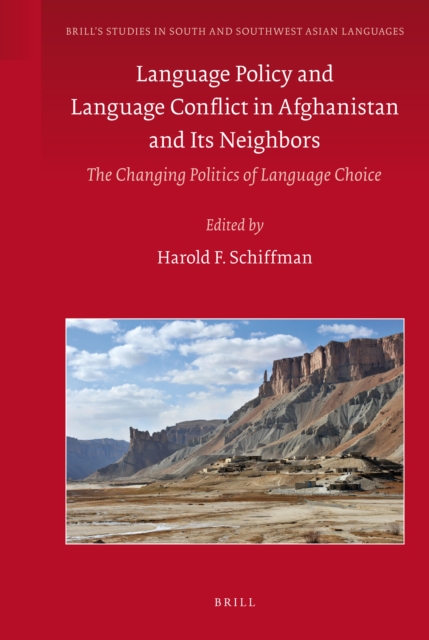
Language policy and language conflict in Afghanistan and its neighbors : the changing politics of language choice
The contribution of this collection of articles is to construct an updated picture of languages and language policy in and around Afghanistan, and give potential language learners a clearer picture of what kinds of resources exist, and what is still needed. The book was co-edited by Brian Spooner, Professor of Anthropology at the University of Pennsylvania.
eBook

A historical archaeology of early Spanish colonial urbanism in Central America
\"In this milestone work, William Fowler uses archaeology, history, and social theory to show that the establishment of cities was essential to Spanish colonialism. Fowler draws upon decades of research at Ciudad Vieja, a sixteenth-century site located in present-day El Salvador and the best-preserved Spanish colonial city in Latin America\"-- Provided by publisher.
BOOK

Soviet Economic Management under Khrushchev
The Sovnarkhoz Reform of 1957 was designed by Khrushchev to improve efficiency in the Soviet economic system by decentralising economic decision making from all-Union branch ministries in Moscow to the governments of the individual republics and regional economic councils. Based on extensive original research, including unpublished archival material, this book examines the reform, discussing the motivations for it, which included Khrushchev's attempt to strengthen his own power base. The book explores how the process of reform was implemented, especially its impact on the republics, and analyses why the reform, which was reversed in 1959, failed. Overall, the book reveals a great deal about the workings, and the shortcomings, of the Soviet economic system at its height.
eBook