
Catalogue Search | MBRL


Are you sure you want to remove the book from the shelf?

{{itemTitle}}
5,316
result(s) for
"Ceremonial objects"
Sort by:

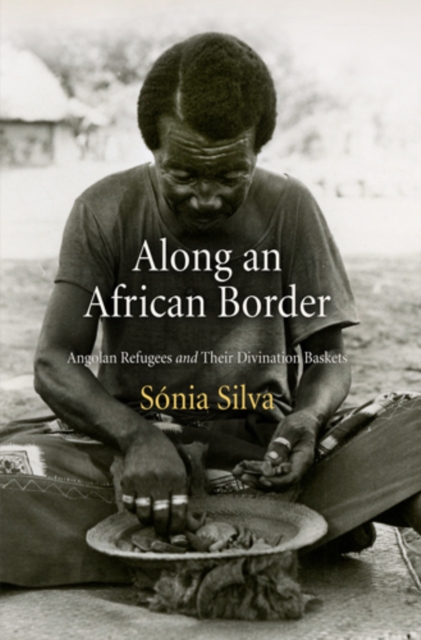
Along an African Border: Angolan Refugees and Their Divination Baskets
The divination baskets of south Central Africa are woven for a specific purpose. The baskets, known aslipele, contain sixty or so small articles, from seeds, claws, and minuscule horns to wooden carvings. Each article has its own name and symbolic meaning, and collectively they are known asjipelo. For the Luvale and related peoples, thelipeleis more than a container of souvenirs; it is a tool, a source of crucial information from the ancestral past and advice for the future. InAlong an African Border, anthropologist Sónia Silva examines how Angolan refugees living in Zambia use these divination baskets to cope with daily life in a new land. Silva documents the special processes involved in weaving the baskets and transforming them into oracles. She speaks with diviners who make their living interpretinglipelemessages and speaks also with their knowledge-seeking clients. To the Luvale, these baskets are capable of thinking, hearing, judging, and responding. They communicate by means ofjipeloarticles drawn in configurations, interact with persons and other objects, punish wrongdoers, assist people in need, and, much like humans, go through a life course that is marked with an initiation ceremony and a special burial. Thelipelefunctions in a state between object and person. Notably absent fromlipeledivination is any discussion or representation in the form of symbolic objects of the violence in Angola or the Luvale's relocation struggles-instead, the consultation focuses on age-old personal issues of illness, reproduction, and death. As Silva demonstrates in this sophisticated and richly illustrated ethnography,lipelehelp people maintain their links to kin and tradition in a world of transience and uncertainty.
eBook


The Lives of Chinese Objects
This is the biography of a set of rare Buddhist statues from China. Their extraordinary adventures take them from the Buddhist temples of fifteenth-century Putuo - China's most important pilgrimage island - to their seizure by a British soldier in the First Opium War in the early 1840s, and on to a starring role in the Great Exhibition of 1851. In the 1850s, they moved in and out of dealers' and antiquarian collections, arriving in 1867 at Liverpool Museum. Here they were re-conceptualized as specimens of the 'Mongolian race' and, later, as examples of Oriental art. The statues escaped the bombing of the Museum during the Second World War and lived out their existence for the next sixty years, dismembered, corroding and neglected in the stores, their histories lost and origins unknown.
As the curator of Asian collections at Liverpool Museum, the author became fascinated by these bronzes, and selected them for display in the Buddhism section of the World Cultures gallery. In 2005, quite by chance, the discovery of a lithograph of the figures on prominent display in the Great Exhibition enabled the remarkable lives of these statues to be reconstructed.
eBook


Physical contact influences how much people pay at celebrity auctions
Contagion is a form of magical thinking in which people believe that a person's immaterial qualities or essence can be transferred to an object through physical contact. Here we investigate how a belief in contagion influences the sale of celebrity memorabilia. Using data from three high-profile estate auctions, we find that people's expectations about the amount of physical contact between the object and the celebrity positively predicts the final bids for items that belonged to well-liked individuals (e.g., John F. Kennedy) and negatively predicts final bids for items that belonged to disliked individuals (e.g., Bernard Madoff). A follow-up experiment further suggests that these effects are driven by contagion beliefs: when asked to bid on a sweater owned by a well-liked celebrity, participants report that they would pay substantially less if it was sterilized before they received it. However, sterilization increases the amount they would pay for a sweater owned by a disliked celebrity. These studies suggest that magical thinking may still have effects in contemporary Western societies and they provide some unique demonstrations of contagion effects on real-world purchase decisions.
Journal Article

Making Magic: Fetishes in Contemporary Consumption
Fetishes—magical objects of extraordinary empowerment and influence—are often sought by consumers for their value as usable objects. Our interpretive research extends the current static perspective of fetishes by proposing a dynamic cyclical model of fetishization appropriate to an age of mass production. Consumers use contagious and imitative magic to imbue replica instruments with power. Semiotically signified magical thinking causes replicas to radiate aura and thus transforms them into fetishes. We suggest that although all replicas with aura become fetishes, the cyclical fetishization process is only perpetuated when empowerment is public, sustained, and authentic.
Journal Article

The Maya world of communicating objects : quadripartite crosses, trees, and stones
Although anthropologists have been observing and analyzing the religious practices of Mayan people for about a hundred years, this perceptive study suggests that anthropological interpretation of those practices and of Maya cosmology has never escaped the epistemological influence of Christianity. Whereas sacred objects used in Christian rituals are treated with deifying awe, objects such as Mayan crosses can be recycled, bartered with, communicated with, manipulated, disregarded, or destroyed—the apparent equivalent of extorting or defacing a holy image of Christ or the Virgin Mary. Astor-Aguilera holds that we cannot fully understand these indigenous practices by fitting them to our European Cartesian mindset but must instead recognize and try to understand native Mayan epistemology.
eBook

Unseen Art
In Unseen Art, Claudia Brittenham unravels one of the most puzzling phenomena in Mesoamerican art history: why many of the objects that we view in museums today were once so difficult to see. She examines the importance that ancient Mesoamerican people assigned to the process of making and enlivening the things we now call art, as well as Mesoamerican understandings of sight as an especially godlike and elite power, in order to trace a gradual evolution in the uses of secrecy and concealment, from a communal practice that fostered social memory to a tool of imperial power.Addressing some of the most charismatic of all Mesoamerican sculptures, such as Olmec buried offerings, Maya lintels, and carvings on the undersides of Aztec sculptures, Brittenham shows that the creation of unseen art has important implications both for understanding status in ancient Mesoamerica and for analyzing art in the present. Spanning nearly three thousand years of the Indigenous art of Mexico, Guatemala, Honduras, and Belize, Unseen Art connects the dots between vision, power, and inequality, providing a critical perspective on our own way of looking.
eBook

Once Upon a Time in Papunya
Astronomical auction prices in the late 1990s first drew many people's attention to the phenomenon of the early Papunya boards, the thousand small painted panels created at the remote Northern Territory Aboriginal settlement of Papunya in 1971-72.
eBook