
Catalogue Search | MBRL


Are you sure you want to remove the book from the shelf?

{{itemTitle}}
3,325
result(s) for
"Cermets"
Sort by:
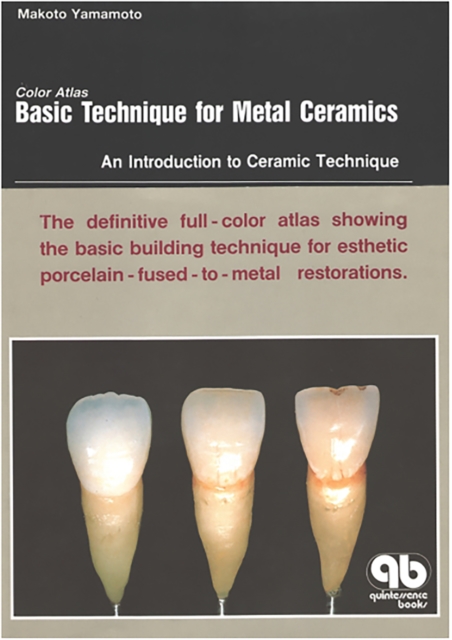
Color Atlas Basic Technique for Metal Ceramics
The basic porcelain building technique developed by Mr Makoto Yamamoto, an internationally-known ceramist from Japan, has published his technique in this practical textbook, the latest edition for ceramists to learn esthetic techniques.
eBook

Static measurement of magnetic hysteresis loop for spring steel and vacon 11 (metal-ceramic alloy NiFeCo) materials
The paper presents the results of magnetic hysteresis measurements for the materials spring steel and metal-ceramic alloy NiFeCo (Vacon 11). A static measurement was performed over a wide range of the external field H , from -10000 to 10000 A/m for the first material and from -12600 to 12600 A/m for the second. The B - H curve, also known as the hysteresis loop was created. Based on this curve, it was determined that both materials belong to the group of magnetically semi-hard materials, with coercivity ranging from 1000 to 50000 A/m. The measurement results were compared to the theoretical predictions of the analytical Fro hlich`s model, which indicated certain deviations from the measured values, with the largest deviation being 25.53%.
Journal Article

Advanced HVOF-Sprayed Carbide Cermet Coatings as Environmentally Friendly Solutions for Tribological Applications: Research Progress and Current Limitations
Thermally sprayed carbide cermet coatings, particularly those based on tungsten carbide (WC) and chromium carbide (Cr3C2) and produced with the high velocity oxygen fuel (HVOF) process, are used in tribological applications as environmentally friendly alternatives to electroplated hard chrome coatings. These functional coatings are especially prevalent in the automotive industry, offering excellent wear resistance. However, their mechanical and tribological performances are highly dependent on factors such as feedstock powders, spray parameters, and service conditions. This review aims to gain deeper insights into the above elements. It also outlines emerging advancements in HVOF technology—including in situ powder mixing, laser treatment, artificial intelligence integration, and the use of novel materials such as rare earth elements or transition metals—which can further enhance coating performance and broaden their applications to sectors such as the aerospace and hydro-machinery industries. Finally, this literature review focuses on process optimization and sustainability, including environmental and health impacts, critical material use, and operational limitations. It uses a life cycle assessment (LCA) as a tool for evaluating ecological performance and addresses current challenges such as exposure risks, process control constraints, and the push toward safer, more sustainable alternatives to traditional WC and Cr3C2 cermet coatings.
Journal Article
A study of ability to reform worn disc brake with the AICrSiTiN and TiAlSiN coated cutting tool
This research aims to study the ability of a cutting tool to reform the worn surface of a disc brake using a newly coated cermet insert. Coatings of AlCrSiTiN and TiAlSiN were employed for face turning the worn surface of grey cast iron (GCI) under dry machining conditions, and their performance was compared to an uncoated cermet insert. The feed rate and depth of cut were controlled to evaluate the surface roughness of the machined surface and the tool wear mechanisms of the coated layers. The results revealed that the surface roughness of the machined surface gradually or decreased with changes in the feed rate, while tool wear gradually increased with higher feed rates and greater depths of cut for all cutting tools. This was attributed to the increased heat generation and accelerated tool wear. From the experiment, it was found that the Cermet insert, at a spindle speed of 140 rpm and a depth of cut 0.20 mm, achieved a surface roughness value of 1.40 µm. The TiAlSiN insert, at a spindle speed of 140 rpm and a depth of cut 0.25 mm, achieved a surface roughness value of 1.305 µm. The AlCrSiTiN insert, at a spindle speed of 100 rpm and a depth of cut 0.50 mm, achieved a surface roughness value of 1.105 µm, which is close to 1.125 µm and is considered the most optimal value.
Journal Article

Abrasion and Erosion Resistance of Cermets: A Review
WC-based hardmetals are employed widely as wear-resistant ceramic–metal composites for tools and wear parts. Raw materials supply, environmental concerns and some limitations of hardmetals have directed efforts toward development of alternative wear-resistant composites–cermets. We present a current state of knowledge in the field of ceramic-rich (≥50 vol%) cermets behavior in abrasion and erosion conditions, which are the dominant types of wear in many industrial applications. Distinction is made between two-body and three-body abrasion, solid-particle erosion, and slurry erosion. Cermets, in particular TiC-, Ti(C,N)- and Cr3C2-based composites and hardmetals, are compared for their abrasive and erosive wear performance and mechanism. The review enabled formulation of tribological conditions in which cermets may be comparable or have potential to outperform WC-Co hardmetals. Hardmetals, in general, outperform cermets in abrasion and solid-particle erosion at room and moderate temperatures. However, cermets demonstrate their potential mainly in severe conditions—at elevated temperatures and corrosive (oxidation, electrochemical corrosion) environments.
Journal Article
Fabrication and Wear Behavior of TiCN-Based Cermets with Nano-Diamond Addition
TiCN-based cermets have been widely used as cutting tools and wear-resistant coatings due to their excellent performance. New kinds of TiCN-based cermets that are being developed to have high performance have attracted extensive attention. In this work, TiCN-based cermets with nano-diamonds (NDs) as an additive were prepared by spark plasma sintering (SPS). The phase composition, microstructure, mechanical properties and wear behavior of the samples with different ND contents were systematically studied. The results show that a large fraction of the added nano-diamonds was transformed into graphite, while part of the diamond phase remained. The aggregation of the graphite became serious with more than 7 wt.% added nano-diamond. The relative density of the samples was approximately 87% and the hardness decreased with an increase in the added amount of nano-diamond. The average coefficient of friction of the samples ranged from 0.4 to 0.5. The graphite generated from nano-diamond lead to a deterioration in the mechanical properties of the prepared cermets and a reduction in their wear resistance. How to reduce the graphitization of diamond during the preparation of cermets should be considered in the follow-up study.
Journal Article
Effect of Si3N4 Additive on Microstructure and Mechanical Properties of Ti(C,N)-Based Cermet Cutting Tools
Development of high-performance cutting tool materials is one of the critical parameters enhancing the surface finishing of high-speed machined products. Ti(C,N)-based cermets reinforced with and without different contents of silicon nitride were designed and evaluated to satisfy the requirements. In fact, the effect of silicon nitride addition to Ti(C,N)-based cermet remains unclear. The purpose of this study is to investigate the influence of Si3N4 additive on microstructure, mechanical properties, and thermal stability of Ti(C,N)-based cermet cutting tools. In the present work, α-Si3N4 “grade SN-E10” was utilized with various fractions up to 6 wt.% in the designed cermets. A two-step reactive sintering process under vacuum was carried out for the green compact of Ti(C,N)-based cermet samples. The samples with 4 wt.% Si3N4 have an apparent solid density of about 6.75 g/cm3 (relative density of about 98 %); however, the cermet samples with 2 wt.% Si3N4 exhibit a superior fracture toughness of 10.82 MPa.m1/2 and a traverse rupture strength of 1425.8 MPa. With an increase in the contents of Si3N4, the Vickers hardness and fracture toughness of Ti(C,N)-based cermets have an inverse behavior trend. The influence of Si3N4 addition on thermal stability is clarified to better understand the relationship between thermal stability and mechanical properties of Ti(C,N)-based cermets.
Journal Article
Effects of Mechanical Ball Milling Time on the Microstructure and Mechanical Properties of Mo2NiB2-Ni Cermets
Mo2NiB2-Ni cermets have been extensively investigated due to their outstanding properties. However, studies have not systematically examined the effect of the powder milling process on the cermets. In this study, Mo, Ni, and B raw powders were subjected to mechanical ball milling from 1 h to 15 h. XRD patterns of the milled powders confirmed that a new phase was not observed at milling times of 1 h to 15 h. With the increase in the mechanical ball milling time from 1 h to 11 h, raw powders were crushed to small fragments, in addition to a more uniform distribution, and with the increase in the mechanical ball milling time to greater than 11 h, milled powders changed slightly. Mo2NiB2-Ni cermets were fabricated by reaction boronizing sintering using the milled powders at different ball milling times. The milling time significantly affected the microstructure and mechanical properties of Mo2NiB2-Ni cermets. Moreover, the Mo2NiB2 cermet powder subjected to a milling time of 11 h exhibited the finest crystal size and the maximum volume fraction of the Mo2NiB2 hard phase. Furthermore, the cermets with a milling time of 11 h exhibited a maximum hardness and bending strength of 87.6 HRA and 1367.3 MPa, respectively.
Journal Article
Effect of Mo2C Addition on the Tribological Behavior of Ti(C,N)-Based Cermets
Due to the excellent properties of Ti (C,N)-based ceramics, such as high hardness, excellent wear resistance, exceptional thermal deformation resistance, and sound chemical stability, they have been widely used in cutting tools or molds. Thus, revealing their tribological behavior against hard materials is of great significance. Some studies have reported the tribological behavior of Ti(C,N)-based cermets and hard cermets, but so far, the effects of Mo2C additions on the frictional properties of Ti(C,N)-based cermets are still unclear. In this study, Ti(C,N)-10WC-1Cr3C2-5Co-10Ni-x Mo2C cermets (x = 4, 6, 8, 10 and 12 wt.%) were sintered using a vacuum hot-pressing furnace. Furthermore, the core–rim morphologies of the sintered samples were observed in SEM images. Then, the wear resistance of the cermets was studied against a Si3N4 ball at a 50 N load using the fretting wear test. Finally, the wear mechanism was characterized using a combination of SEM, EDS and XPS. The experimental results indicated that the wear mechanisms of the cermets were mainly abrasive wear, adhesive wear, and the formation of an oxide film. As the content of Mo2C increased from 4 wt.% to 12 wt.%, the friction coefficient and wear volume had a variation law of first decreasing and then decreasing, and reached minimum values at 6 wt.% and 12 wt.%, and the lowest friction coefficient and wear rate were 0.49 and 0.9 × 10⁻⁶ mm3/Nm, respectively. The 6 wt.% Mo2C greatly improved the hardness and fracture toughness of the cermet, while the 12 wt.% Mo2C promoted the formation of an oxide film and protected the friction surface. The cermet with 6 wt.% Mo2C is recommended because it has comprehensive advantages in terms of its mechanical properties, tribological properties, and cost.
Journal Article

Cermet Systems: Synthesis, Properties, and Applications
Cermet is an advanced class of material consisting of a hard ceramic phase along with a metallic binding phase with the combined advantages of both the ceramic and the metal phase. The superior properties of this class of materials are particularly useful in high-temperature, tribological, and machining applications. This review paper seeks to provide a comprehensive overview of the various cermet systems. More specifically, the most commonly used cermet systems based on tungsten carbide (WC), titanium carbide (TiC), titanium carbonitride (TiCN), and aluminum oxide (Al2O3) are discussed based on their development, properties, and applications. The effect of different metallic binders and their composition on the tribological and mechanical properties of these cermet systems is elaborated. The most common processing techniques for cermet systems, such as powder metallurgy (PM), reaction synthesis (RS), thermal spray (TS), cold spray (CS), and laser-based additive manufacturing techniques are discussed. The influence of the processing parameters in each case is evaluated. Finally, the applications and challenges of cermet systems are summarized.
Journal Article