
Catalogue Search | MBRL


Are you sure you want to remove the book from the shelf?

{{itemTitle}}
1,858
result(s) for
"Champignons."
Sort by:

The lives of fungi : a natural history of our planet's decomposers
\"A fascinating and richly illustrated exploration of the natural history of fungi. We know fungi are important, for us as well as the environment. But how they live, and what they can do, remains mysterious and surprising. Filled with stunning photographs, The Lives of Fungi presents an inside look into their hidden and extraordinary world. The wonders of fungi are myriad: a mushroom poking up through leaf litter literally overnight, or the sensational hit of umami from truffle shavings. Alexander Fleming cured infections with mold and spiritual guides have long used psychedelic mushrooms to enhance understanding. Then there are the tiny threads of fungi, called hyphae, that create a communications network for the natural world while decomposing organic matter. Combining engaging and accessible text with beautiful images, The Lives of Fungi lays out all the essential facts about fungi for the mycologically curious.\"-- Provided by publisher.
Book

Larone's Medically Important Fungi
The definitive guide for identifying fungi from clinical specimens Medically Important Fungi will expand your knowledge and support your work by: * Providing detailed descriptions of the major mycoses as viewed in patients' specimens by direct microscopic examination of stained slides * Offering a logical step-by-step process for identification of cultured organisms, utilizing detailed descriptions, images, pointers on organisms' similarities and distinctions, and selected references for further information * Covering nearly 150 of the fungi most commonly encountered in the clinical mycology laboratory * Presenting details on each organism's pathogenicity, growth characteristics, relevant biochemical reactions, and microscopic morphology, illustrated with photomicrographs, Dr. Larone's unique and elegant drawings, and color photos of colony morphology and various test results * Explaining the current changes in fungal taxonomy and nomenclature that are due to information acquired through molecular taxonomic studies of evolutionary fungal relationships * Providing basic information on molecular diagnostic methods, e.g., PCR amplification, nucleic acid sequencing, MALDI-TOF mass spectrometry, and other commercial platforms * Including an extensive section of easy-to-follow lab protocols, a comprehensive list of media and stain procedures, guidance on collection and preparation of patient specimens, and an illustrated glossary With Larone's Medically Important Fungi: A Guide to Identification, both novices and experienced professionals in clinical microbiology laboratories can continue to confidently identify commonly encountered fungi. If you are looking for online access to the latest clinical microbiology content, please visit www.wiley.com/learn/clinmicronow.
eBook

Mushrooms know : wisdom from our friends the fungi
\"This vibrant and informative book shares the fascinating lessons that fungi can teach us: that small can be mighty, being unique is a reason to celebrate--and staying connected is key. Sara Gillingham's lively art and Kallie George's charming text captures the wondrous world of mushrooms, and everything we can learn from it.\"-- Provided by publisher.
CHILDBOOK

Biodiversite et evolution du monde fongique
No detailed description available for Biodiversite et evolution du monde fongique .
eBook

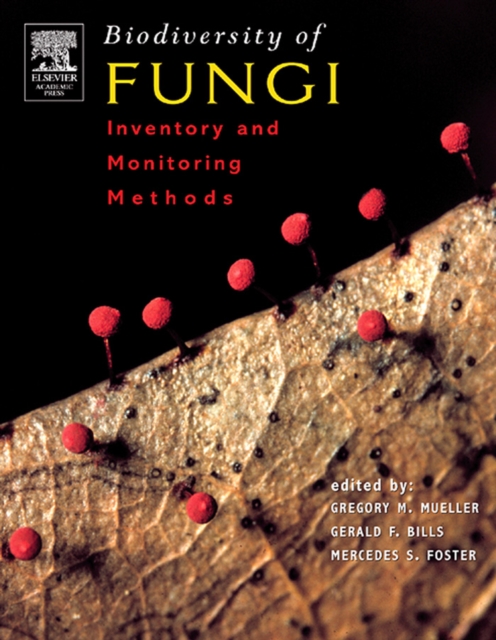
Biodiversity of fungi : inventory and monitoring methods
Biodiversity of Fungi is essential for anyone collecting and/or monitoring any fungi.Fascinating and beautiful, fungi are vital components of nearly all ecosystems and impact human health and our economy in a myriad of ways.Standardized methods for documenting diversity and distribution have been lacking.
eBook

Little Tree and the wood wide web
\"Little Tree is very small on the dark forest floor. She is terribly lonely and she can't reach any light or water. Her worried feeling sinks down to the tips of her roots. But little does she know her roots are connected to a network of fungus that connects every single tree in the forest. The network sends her message all over the forest! \"Little Tree needs help!\" But who will listen?\"-- Provided by publisher.
CHILDBOOK


The genome of Nectria haematococca: contribution of supernumerary chromosomes to gene expansion
The ascomycetous fungus Nectria haematococca, (asexual name Fusarium solani), is a member of a group of >50 species known as the \"Fusarium solani species complex\". Members of this complex have diverse biological properties including the ability to cause disease on >100 genera of plants and opportunistic infections in humans. The current research analyzed the most extensively studied member of this complex, N. haematococca mating population VI (MPVI). Several genes controlling the ability of individual isolates of this species to colonize specific habitats are located on supernumerary chromosomes. Optical mapping revealed that the sequenced isolate has 17 chromosomes ranging from 530 kb to 6.52 Mb and that the physical size of the genome, 54.43 Mb, and the number of predicted genes, 15,707, are among the largest reported for ascomycetes. Two classes of genes have contributed to gene expansion: specific genes that are not found in other fungi including its closest sequenced relative, Fusarium graminearum; and genes that commonly occur as single copies in other fungi but are present as multiple copies in N. haematococca MPVI. Some of these additional genes appear to have resulted from gene duplication events, while others may have been acquired through horizontal gene transfer. The supernumerary nature of three chromosomes, 14, 15, and 17, was confirmed by their absence in pulsed field gel electrophoresis experiments of some isolates and by demonstrating that these isolates lacked chromosome-specific sequences found on the ends of these chromosomes. These supernumerary chromosomes contain more repeat sequences, are enriched in unique and duplicated genes, and have a lower G+C content in comparison to the other chromosomes. Although the origin(s) of the extra genes and the supernumerary chromosomes is not known, the gene expansion and its large genome size are consistent with this species' diverse range of habitats. Furthermore, the presence of unique genes on supernumerary chromosomes might account for individual isolates having different environmental niches
Journal Article

Efficiency of microbially assisted phytoremediation of heavy-metal contaminated soils
Phytoremediation is the bioremediation of contaminated soils and waters by using plants and their associated microorganisms. Phytoremediation of heavy metal (HM)-contaminated soils is based on immobilization of metals in rhizosphere soil and roots (phytostabilization) and on mobilization, uptake, and transfer of metals into the aboveground plant organs (phytoextraction). In this review, we aimed to (i) discuss the fundamentals, potential, and limitations of plant-associated microorganisms (bacteria and fungi) to increase the efficiency of phytostabilization and phytoextraction of HM-contaminated soils and (ii) describe promising developments and future challenges to expanding their use. Controlled inoculations of plants with growth-promoting microorganisms can significantly increase their root growth, biomass production, and stress tolerance in HM-contaminated soils. A serious weakness of phytoremediation in general is the usually high and difficult to measure expenditure of time for successful completion. The bioconcentration factors (BCFs) and the translocation factors (TFs) are among the most important measures of the efficiency of phytoremediation. However, an overview of BCFs and TFs for a variety of combinations of plants with defined associated microorganisms is lacking. Moreover, the joint evaluation of model systems would allow an improved cost–benefit calculation of microbial inoculations in phytoremediation systems. For this purpose, the use of in vitro model systems is considered to be preferable to field experiments due to the savings in time and costs and the control of environmental conditions. However, the transferability of in vitro data to field conditions is limited. Currently, attention is focused on the use of artificial neural networks, mainly to avoid formulating any complex relationships between soil inputs (e.g., soil amendments, pH, carbon, nitrogen and hydrogen contents, electrical conductivity, and dissolved organic carbon) and design outputs (e.g., BCFs and TFs) beforehand and because of the high accuracy of the obtained models. The controlled use of associated microorganisms to increase the efficiency of phytoremediation of HM, mainly using combinations of Brassica and Salix spp. and rhizobacteria at contaminated soils, is a promising possibility. A crucial future challenge for the expansion of their use will be to develop well-defined cost- and time-efficient tools for a credible prediction of their effectiveness on contaminated field sites.
La phytoremédiation est la bioremédiation de sols contaminés et d’eaux contaminées en utilisant des plantes et leurs micro-organismes associés. La phytoremédiation des sols contaminés par des métaux lourds (ML) est fondée sur l’immobilisation de métaux dans le sol et les racines de la rhizosphère (phytostabilisation) et sur la mobilisation, l’assimilation et le transfert de métaux jusqu’aux organes de plantes à la surface (phytoextraction). Dans cette revue, notre but était (i) de discuter des principes de base, des possibilités et des limitations de l’utilisaton des micro-organismes associés aux plantes (bactéries et champignons) afin d’augmenter l’efficacité de la phytostabilisation et de la phytoextraction de sols contaminés par les ML et (ii) de décrire les développements prometteurs et les défis futurs quant à l’augmentation de leur utilisation. Les inoculations contrôlées de plantes au moyen de micro-organismes favorisant la croissance peuvent significativement augmenter la croissance de racines des plantes, leur production de biomasse et leur résistance au stress causé par des sols contaminés de ML. Une grave lacune de la phytoremédiation est en général qu’habituellement les dépenses en temps nécessaire pour son achèvement réussi sont élevées et difficiles à mesurer. Les facteurs de bioconcentration (FBC) et les facteurs de translocation (FT) sont parmi les mesures les plus importantes de l’efficacité de la phytoremédiation. Cependant, il manque une synthèse des FBC et des FT pour une variété de combinaisons de plantes avec les micro-organismes associés définis. De plus, l’évaluation commune de systèmes modèles permettrait d’améliorer le calcul des coûts et des avantages d’inoculations microbiennes dans le cadre de systèmes de phytoremédiation. À cette fin, l’utilisation de systèmes modèles in vitro est jugée préférable aux expériences de terrain en raison de l’économie de temps et de frais et du contrôle des conditions du milieu. Cependant, la transférabilité de données in vitro aux conditions de terrain est limitée. Actuellement, l’attention se concentre sur l’utilisation de réseaux de neurones artificiels, principalement afin d’éviter de formuler n’importe quelles relations complexes entre les apports du sol (par exemple les amendements de sol, le pH, le carbone, le contenu en azote et en hydrogène, la conductivité électrique, le carbone organique dissous) et les extrants de conception (p. ex., FBC et FT) à l’avance et à cause de la haute exactitude des modèles obtenus. L’utilisation contrôlée de micro-organismes associés afin d’augmenter l’efficacité de la phytoremédiation des ML, utilisant principalement des combinaisons de Brassica et de Salix spp. et de rhizobactéries aux sols contaminés, est une possibilité prometteuse. Un défi d’avenir crucial pour l’augmentation de leur utilisation sera de développer des outils efficaces au point de vue des coûts et du temps et bien définis pour une prédiction crédible de leur efficacité sur des sites de terrains contaminés.
Journal Article