
Catalogue Search | MBRL


Are you sure you want to remove the book from the shelf?

{{itemTitle}}
4,103
result(s) for
"Chaplain"
Sort by:


The Clergy in Khaki
British army chaplains have not fared well in the mythology of the First World War. Like its commanders they have often been characterized as embodiments of ineptitude and hypocrisy. Yet, just as historians have reassessed the motives and performance of British generals, this collection offers fresh insights into the war record of British chaplains. Drawing on the expertise of a dozen academic researchers, the collection offers an unprecedented analysis of the subject that embraces military, political, religious and imperial history. The volume also benefits from the professional insights of chaplains themselves, several of its contributors being serving or former members of the Royal Army Chaplains' Department. Providing the fullest and most objective study yet published, it demonstrates that much of the post-war hostility towards chaplains was driven by political, social or even denominational agendas and that their critics often overlooked the positive contribution that chaplains made to the day-to-day struggles of soldiers trying to cope with the appalling realities of industrial warfare and its aftermath. As the most complete study of the subject to date, this collection marks a major advance in the historiography of the British army, of the British churches and of British society during the First World War, and will appeal to researchers in a broad range of academic disciplines.
eBook


Chaplain's Conflict
As chaplain for the US Army's 102nd Evacuation Hospital in the European Theater, Renwick C. Kennedy--\"Ren\" to those who knew him--witnessed great courage, extreme talent, and many lives snatched from the precipice of death, all under the most trying conditions. He also observed drug and alcohol abuse, prejudice, narrow-mindedness, and chronic depression. What he saw, he chronicled in his journal, and what he wrote, he processed with an intellectual and ethical rigor born of his remarkably sophisticated worldview and his deeply held Christian faith. With Kennedy's war diaries and postwar articles published in Christian Century and Time magazines in front of him, historian Tennant McWilliams spent a year retracing every step, every turn, every location of the 102nd in wartime France, Belgium, Luxembourg, and Germany, compiling rich detail on this episode in Kennedy's life. McWilliams's interviews with citizens of France and Luxembourg who recall the 102nd further revealed local people's reactions to the army hospital that illuminated both Kennedy's severe criticism and his enduring praise for evac life. The result is a candid view of what went on in the World War II evac hospitals. With a nuanced and gritty style, The Chaplain's Conflict shatters the self-interested and sometimes sentimental images of evacs held by some among the medical community. This complex and compelling observation of doctors practicing war-zone medicine in World War II will hold great appeal for readers of military and medical history, as well as those interested in the socio-cultural, ethical, and religious implications of war and military service.
eBook

Change and Conflict in the U.S. Army Chaplain Corps since 1945
Army chaplains have long played an integral part in America’s armed forces. In addition to conducting chapel activities on military installations and providing moral and spiritual support on the battlefield, they conduct memorial services for fallen soldiers, minister to survivors, offer counsel on everything from troubled marriages to military bureaucracy, and serve as families’ points of contact for wounded or deceased soldiers—all while risking the dangers of combat alongside their troops. In this thoughtful study, Anne C. Loveland examines the role of the army chaplain since World War II, revealing how the corps has evolved in the wake of cultural and religious upheaval in American society and momentous changes in U.S. strategic relations, warfare, and weaponry. From 1945 to the present, Loveland shows, army chaplains faced several crises that reshaped their roles over time. She chronicles the chaplains’ initiation of the Character Guidance program as a remedy for the soaring rate of venereal disease among soldiers in occupied Europe and Japan after World War II, as well as chaplains’ response to the challenge of increasing secularism and religious pluralism during the “culture wars” of the Vietnam Era. “Religious accommodation,” evangelism and proselytizing, public prayer, and “spiritual fitness”provoked heated controversy among chaplains as well as civilians in the ensuing decades. Then, early in the twenty-first century, chaplains themselves experienced two crisis situations: one the result of the Vietnam-era antichaplain critique, the other a consequence of increasing religious pluralism, secularization, and sectarianism within the Chaplain Corps, as well as in the army and the civilian religious community. By focusing on army chaplains’ evolving, sometimes conflict-ridden relations with military leaders and soldiers on the one hand and the civilian religious community on the other, Loveland reveals how religious trends over the past six decades have impacted the corps and, in turn, helped shape American military culture.
eBook
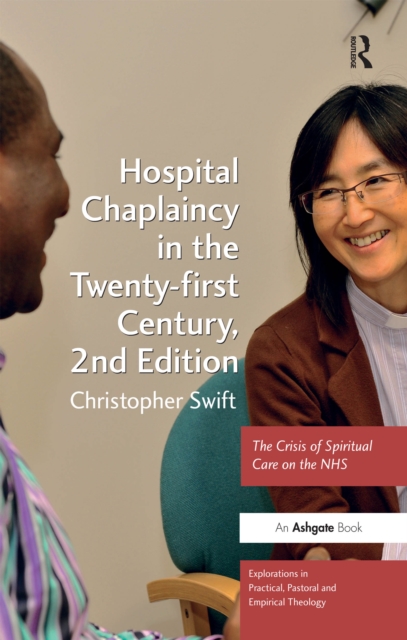
Hospital Chaplaincy in the Twenty-first Century
The place of religion in public life continues to be a much-debated topic in Western nations. This book charts the changing role of hospital chaplains and examines through detailed case studies the realities of practice and the political debates which either threaten or sustain the service. This second edition includes a new introduction and updated material throughout to present fresh insights and research about chaplaincy, including in relation to New Atheism and the developing debate about secularism and religion in public life. Swift concludes that chaplains must do more to communicate the value of what they bring to the bedside.
Contents: Foreword to the first edition; Foreword to the second edition; Preface; Introduction; A history of the chaplain; The chaplains’ professionalization; The political context; The battle of Worcester; The chaplain today: an auto-ethnography; Religion, secularization and spirituality; Theological voices and ventures; Conclusion; Bibliography; Index.
The Revd Dr Christopher Swift is from the Leeds Teaching Hospitals NHS Trust, UK. He has been a Health Care Chaplain since 1994 and Head of Chaplaincy at Leeds Teaching Hospitals since 2001. He is a Visiting Fellow at the Institute for Spirituality, Religion and Public Life at Leeds Metropolitan University and a past President of the College of Health Care Chaplains (2004-7).
eBook

Observations about Holistic Care from the Experience of a Medical Student Shadowing a Chaplain
The project was initiated when a medical student expressed interest in shadowing a chaplain during their third-year clinical rotations. The Hospital Library Service supported this inquiry by providing readings about intentional programs and a medical practitioner spiritual screening for both the chaplain and student to review. By coordinating with the student’s medical supervision, different times were found throughout the day such that a variety of pastoral care instances could be observed. As part of the welcome extended to each patient, the chaplain introduced the medical student and obtained consent for them to be present during the care conversations that followed. These visits occurred over two months in the spring of 2024. This experience provided an opportunity for both the chaplain and student to reflect on the process of acknowledging, confirming, affirming, and encouraging patients and their families. Additionally, through these visits and subsequent conversations, a holistic health and wellness model was used to emphasize compassionate and spiritual patient care.
Journal Article
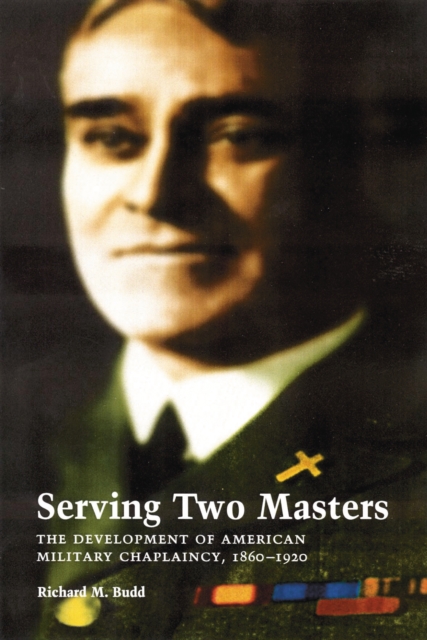
Serving Two Masters: The Development of American Military Chaplaincy, 1860-1920
Chaplain Richard M. Budd has made a welcome, concise, well written and researched contribution to an overlooked chapter in chaplain history. Anyone interested in gaining a better understanding of how the professional and fully institutionalized chaplaincy of today's military came about would do well by consulting Budd's book.\" --Bradley L. Carter, On Point. Military chaplains have a long and distinguished tradition in the United States, but historians have typically ignored their vital role in ministering to the needs of soldiers and sailors. Richard M. Budd corrects this omission with a thoughtful history of the chaplains who sought to create a viable institutional structure for themselves within the U.S. Army and Navy that would best enable them to minister to the fighting men.Despite the chaplaincy's long history of accompanying American armies into battle, there has never been consensus on its role within the military, among the churches, or even among chaplains themselves. Each of these constituencies has had its own vision for chaplains, and these ideas have evolved with changing social conditions and military growth. Moreover, chaplains, acting as members of one profession operating within the specific environment of another, raised questions of whether they could or should integrate themselves into the military. In effect they had to learn to serve two institutional masters, the church and the government, simultaneously. Budd provides a history of the struggle of chaplains to professionalize their ranks and to obtain a significant measure of autonomy within the military's bureaucratic structure--always with the ultimate goal of more efficiently bringing their spiritual message to the troops.
eBook
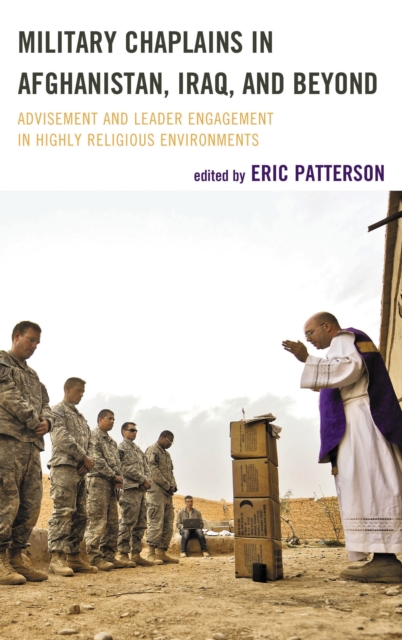
Military Chaplains in Afghanistan, Iraq, and Beyond
The role of military chaplains has changed over the past decade as Western militaries have deployed to highly religious environments such as East Africa, Afghanistan, and Iraq. U.S. military chaplains, who are by definition non-combatants, have been called upon by their war-fighting commanders to take on new roles beyond providing religious services to the troops. Chaplains are now also required to engage the local citizenry and provide their commanders with assessments of the religious and cultural landscape outside the base and reach out to local civilian clerics in hostile territory in pursuit of peace and understanding. In this edited volume, practitioners and scholars chronicle the changes that have happened in the field in the twenty-first century. Using concrete examples, this volume takes a critical look at the rapidly changing role of the military chaplain, and raises issues critical to U.S. foreign and national security policy and diplomacy.
eBook

Healthcare chaplains’ perspectives on working with culturally diverse patients and families
Considering the ethnic, racial, and cultural diversity in the U.S., we aim to explore the experiences of healthcare chaplains as they provide culturally sensitive care to diverse patients and their families.
This is a qualitative study. Individual interviews were conducted with 14 healthcare chaplains recruited from 3 U.S. chaplaincy organizations.
Thematic analysis with constant comparison yielded 6 themes in the chaplains' experiences: (1) the diverse roles of chaplains; (2) their high levels of comfort in working with diverse populations, attributed to cultural sensitivity and humility training; (3) cues for trust-building; (4) common topics of diversity, equity, and inclusion discussed; (5) gaps in chaplaincy training; and (6) the importance of collaboration and negotiation with healthcare professionals to accommodate cultural needs.
This research highlights the valuable role of chaplains in providing culturally sensitive care and suggests areas for improving chaplaincy training and education to better serve diverse patient populations.
Journal Article