
Catalogue Search | MBRL


Are you sure you want to remove the book from the shelf?

{{itemTitle}}
2,833
result(s) for
"Character development"
Sort by:

Handbook of Personality and Self-Regulation
The Handbook of Personality and Self-Regulation integrates scholarly research on self-regulation in the personality, developmental, and social psychology traditions for a broad audience of social and behavioral scientists interested in the processes by which people control, or fail to control, their own behavior. * Examines self-regulation as it influences and is influenced by basic personality processes in normal adults * Offers 21 original contributions from an internationally respected group of scholars in the fields of personality and self-regulation * Explores the causes and consequences of inadequate self-regulation and the means by which self-regulation might be improved * Integrates empirical findings on basic personality traits with findings inspired by emerging models of self-regulation * Provides a comprehensive, up-to-date, and stimulating view of the field for students and researchers in a wide range of disciplines
eBook

Inside out and outside in : psychodynamic clinical theory and psychopathology in contemporary multicultural contexts
Inside Out and Outside In has established itself as a foundational book for mental health practitioners in a variety of disciplines who work with clients in complex social environments. It is unique in its focus on the forces that shape people from within and also from their social worlds, with sensitivity to race, gender, sexuality, and class. The fourth edition features new material and revisions throughout while maintaining the respectful and accessible style for which the book is known. A new chapter on DSM-5 explains its history, social construction, and the most significant changes, such as the configurations of personality disorders and schizophrenia. A new chapter on Cognitive Behavioral Theory and Practice explains the rise in CBT practice, strengths and weaknesses in the approach, and how practitioners can weave it with other theories successfully. In addition to the new chapters, this edition contains new content on gay, lesbian, and transgender people; new case studies representing differences in age, class, culture, race, sexual orientation, and gender; examples on treating clients individually and in groups; new material on infant development; new research on neurobiology and mindfulness, such as mindfulness and survivor guilt; and more. The fourth edition of Inside Out and Outside In is an up-to-date and essential resource for mental health professionals and students practicing in today’s increasingly complex environment.
eBook
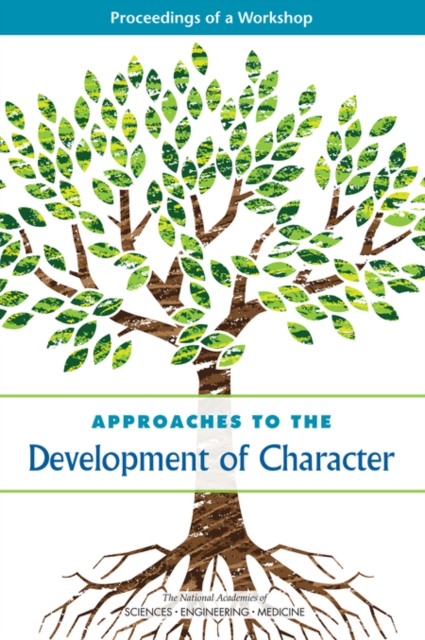
Approaches to the Development of Character
The development of character is a valued objective for many kinds of educational programs that take place both in and outside of school. Educators and administrators who develop and run programs that seek to develop character recognize that the established approaches for doing so have much in common, and they are eager to learn about promising practices used in other settings, evidence of effectiveness, and ways to measure the effectiveness of their own approaches.
In July 2016, the National Academies of Sciences, Engineering, and Medicine held a workshop to review research and practice relevant to the development of character, with a particular focus on ideas that can support the adults who develop and run out-of-school programs. This publication summarizes the presentations and discussions from the workshop.
eBook
5 Steps to Mend a Strained Relationship
5 Steps to Mend a Strained Relationship is a video that will help anyone develop essential conflict resolution skills. When work relationships are strong, they can be a source of energy, learning and support. But when they are strained or fractured, even just temporarily, they become a source of tension and frustration that harms individuals, teams and organizations. You need to understand what has gone wrong, how it went wrong, and what the recovery options are. Rebuilding a strained relationship means rebuilding trust. It takes time and effort but there are strategies you can use that will help you resolve conflict in a constructive way and cement the relationship. In this video psychologists Eve Ash and Peter Quarry discuss five steps to mending a strained work relationship.
Streaming Video

Purpose and Character Development in Early Adolescence
Character development in adolescence is of growing interest among psychology researchers and educators, yet there is little consensus about how character should be defined and studied among developmental scientists. In particular, there is no fully developed framework for investigating the developmental relationships among different character strengths. This study examines the developmental relations between purpose and three other key character strengths that emerge during early adolescence: gratitude, compassion, and grit. We analyzed survey (
n
= 1005, 50.1% female, 24.1% Caucasian, 43.6% African American, 18.9% Hispanic, 11.9% Asian American) and interview (
n
= 98) data from a longitudinal study of character development among middle school students from the United States. Data were collected over the course of 2 years, with surveys conducted four times at 6-month intervals and interviews conducted twice at 12-month intervals. Data analyses showed small but significant correlations between purpose and each of the other three character strengths under investigation. Interview data revealed patterns in ways that adolescents acted on their purposeful aspirations; and interview analyses identified qualitative differences in expressions of gratitude and compassion between adolescents who were fully purposeful and those who were not. The findings suggest that character development can be better understood by investigating the multidirectional developmental relationships among different character strengths.
Journal Article
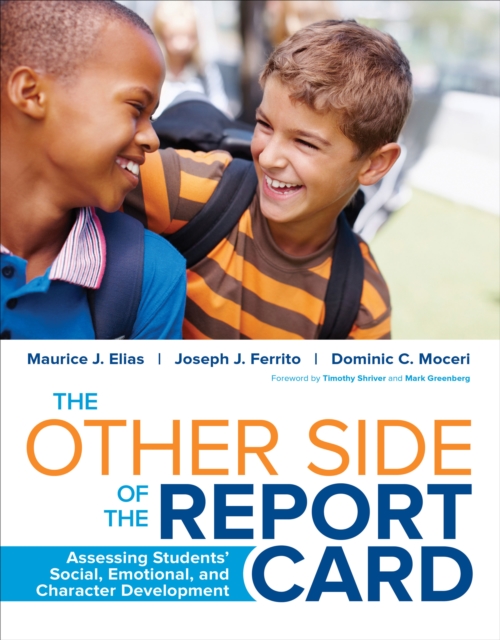
The Other Side of the Report Card
Integrate social-emotional learning and character development into your grading system with guided exercises for analyzing existing report cards, suggested new designs, case studies, and testimonials.
eBook

Development of Religious Character to Improve the Effectiveness of Teacher and Student Communication
Objective: This research focuses on the development of the religious character of Ihsanul Fikri Integrated Islamic Vocational High School Magelang. The formulation of the problem in this study is, 1. How student characteristics are related to religious character. 2. How is the development of religious character? 3. How does the development of religious character affect student behaviour? Theoretical framework: The theoretical framework of this study is to identify student characteristics related to religious character, find patterns of religious character development, and analyze and describe the impact of religious character development on student behaviour. Creating open communication patterns, building cooperation to realize effective communication in developing religious character and developing religious character through extracurricular activities at SMK IT Ihsanul Fikri Magelang. Method: The methodology of this study uses a qualitative approach. This research is a research approach that produces descriptive data, written or oral data, and the observable behaviour of people. The data collection of this study was carried out by observation, interviews, and documentation. Results and Discussion: The results of this study found that students of SMK IT Ihsanul Fikri have different religious character characteristics. Students of SMK IT Ihsanul Fikri do come from different family backgrounds, but along with the development of time and the concept of thought that has been built at SMK IT Ihsanul Fikri, students have understood the importance of religious character so it needs to be emphasized in everyday life. Conclusion: The pattern of teacher communication in developing religious character is a) building open communication patterns, b) Building cooperation to realize effective communication in developing religious character, and c) developing religious character with extracurriculars integrated with superior programs. The impact of the development of religious culture is religious behaviour, positive thinking, and the growth of good civilization. Religious development in schools cannot be separated from school leadership and teachers as the main actors who determine and colour school life and the daily lives of students and school residents.
Journal Article
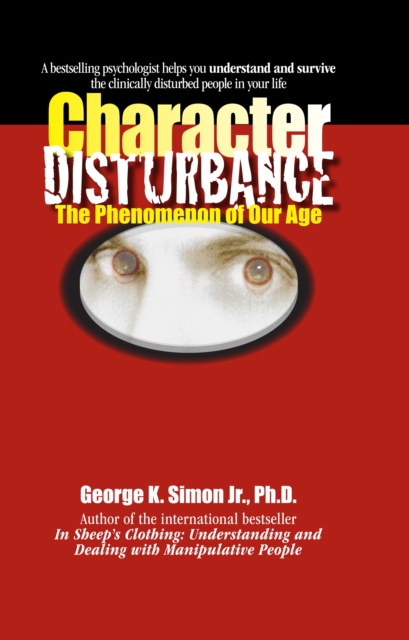
Character Disturbance
Modern permissiveness and the new culture of entitlement allows disturbed people to reach adulthood without proper socialization.In a book meant both for the general public and for professionals, bestselling author and psychologist George Simon explains in plain English: *How most disturbed characters think.
eBook

Disability and Poverty: the need for a more nuanced understanding of implications for development policy and practice
The international development community is beginning to recognise that people with disabilities constitute among the poorest and most vulnerable of all groups, and thus must be a core issue in development policies and programmes. Yet the relationship between disability and poverty remains ill-defined and under-researched, with few studies providing robust and verifiable data that examine the intricacies of this relationship. A second, linked issue is the need for-and current lack of-criteria to assess whether and how disability-specific and disability 'mainstreamed' or 'inclusive' programmes work in combating the exclusion, marginalisation and poverty of people with disabilities. This article reviews existing knowledge and theory regarding the disability-poverty nexus. Using both established theoretical constructs and field-based data, it attempts to identify what knowledge gaps exist and need to be addressed with future research.
Journal Article