
Catalogue Search | MBRL


Are you sure you want to remove the book from the shelf?

{{itemTitle}}
21,875
result(s) for
"Charles Darwin"
Sort by:


Reading Human Nature
As the founder and leading practitioner of \"literary Darwinism,\" Joseph Carroll remains at the forefront of a major movement in literary studies. Signaling key new developments in this approach, Reading Human Nature contains trenchant theoretical essays, innovative empirical research, sweeping surveys of intellectual history, and sophisticated interpretations of specific literary works, including The Picture of Dorian Gray, Wuthering Heights, The Mayor of Casterbridge, and Hamlet. Evolutionists in the social sciences have succeeded in delineating basic motives but have given far too little attention to the imagination. Carroll makes a compelling case that literary Darwinism is not just another \"school\" or movement in literary theory. It is the moving force in a fundamental paradigm change in the humanities—a revolution. Psychologists and anthropologists have provided massive evidence that human motives and emotions are rooted in human biology. Since motives and emotions enter into all the products of a human imagination, humanists now urgently need to assimilate a modern scientific understanding of \"human nature.\" Integrating evolutionary social science with literary humanism, Carroll offers a more complete and adequate understanding of human nature.
eBook

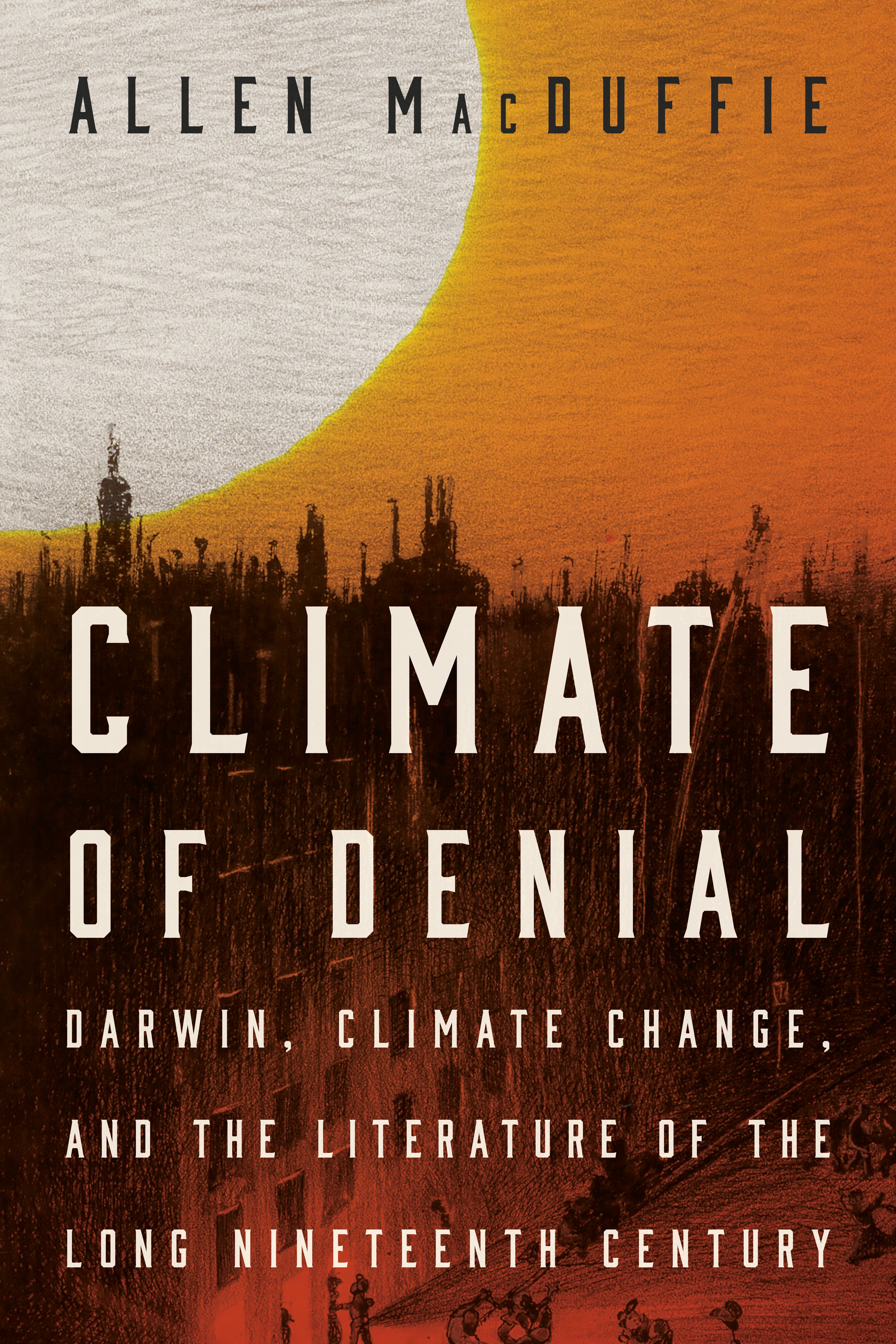
Climate of Denial
Many people today experience the climate crisis with a divided state of mind: aware of the extreme effects, but living everyday life as if the crisis is not actually happening. This book argues that this structure of feeling has roots that can be traced back to the nineteenth century, when Western culture encountered the profound shock of Charles Darwin's theory of evolution. Darwin's theory made it increasingly difficult for secular humanists to flatly deny that humans are animals, fully enmeshed in natural systems and processes. But like those of us confronting climate change today, many writers and scientists struggled to integrate its depersonalizing vision into their understanding of the place of humans in the natural order. The result was that the radical environmental implications of The Origin of Species were evaded as soon as they were articulated, abetted by a culture of denial structured by the illusions of capital and empire. In light of the climate emergency, Climate of Denial recontextualizes nineteenth-century texts to offer rich insight into the defensive strategies used—then and now—to avoid confronting the unsettling realities of our situation on this planet.
eBook


Lincoln & Darwin : shared visions of race, science, and religion
This study of certain mutual interests of Abraham Lincoln and Charles Darwin shows that they had surprisingly similar values, purposes, and approaches. Although not a “dual biography,” this work traces the oddly parallel development of Lincoln’s and Darwin’s views on man and God, highlighting Darwin’s passion for the antislavery movement and Lincoln’s fascination with science and technology.
eBook


Dealing with Darwin : place, politics, and rhetoric in religious engagements with evolution
Using place, politics, and rhetoric as analytical tools, historical geographer David N. Livingstone investigates how religious communities sharing a Scots Presbyterian heritage engaged with Darwin and Darwinism at the turn of the twentieth century. His findings, presented as the prestigious Gifford Lectures, transform our understandings of the relationship between science and religion.
The particulars of place—whether in Edinburgh, Belfast, Toronto, Columbia, or Princeton—shaped the response to Darwin’s theories. Were they tolerated, repudiated, or welcomed? Livingstone shows how Darwin was read in different ways, with meaning distilled from his texts depending on readers' own histories—their literary genealogies and cultural preoccupations. That the theory of evolution fared differently in different places, Livingstone writes, is exactly what Darwin might have predicted. As the theory diffused, it diverged.
Dealing with Darwin shows the profound extent to which theological debates about evolution were rooted in such matters as anxieties over control of education, the politics of race relations, the nature of local scientific traditions, and challenges to traditional cultural identity. In some settings, conciliation with the new theory, even endorsement, was possible—demonstrating that attending to the specific nature of individual communities subverts an inclination to assume a single relationship between science and religion in general, evolution and Christianity in particular.
Livingstone concludes with contemporary examples to remind us that what scientists can say and what others can hear in different venues differs today just as much as they did then.
eBook

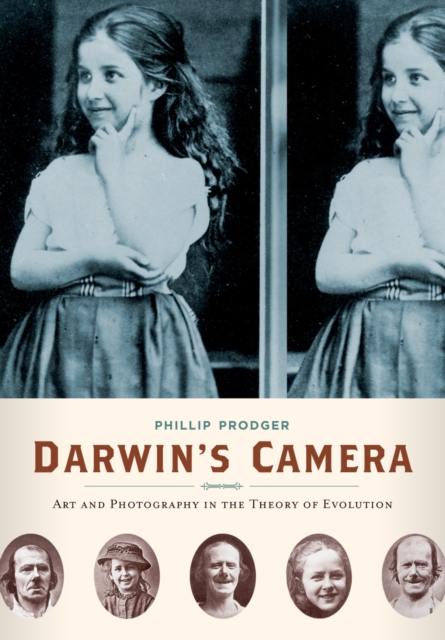
Darwin's camera : art and photography in the theory of evolution
Darwin's Camera tells the extraordinary story of how Charles Darwin helped revolutionize the way that photographs are used in books. In his Expression of the Emotions in Man and Animals (1871), Darwin introduced the idea of using photographs to illustrate a scientific theory--his was the first photographically-illustrated science book ever published. Prodger also shows how Darwin corresponded with celebrated animal painters, sculptors, and such legendary photographers as Lewis Caroll and Julia Margaret Cameron. This is the first book to examine these relationships.
eBook