
Catalogue Search | MBRL


Are you sure you want to remove the book from the shelf?

{{itemTitle}}
76
result(s) for
"Charles V, Holy Roman Emperor, 1500-1558"
Sort by:

The golden empire : Spain, Charles V, and the creation of America
A narrative chronicle of Spain's dominant years traces Latin America's exploration, conquest, and economic development between 1522 and 1556, offering insight into how period accomplishments remain influential in today's world.
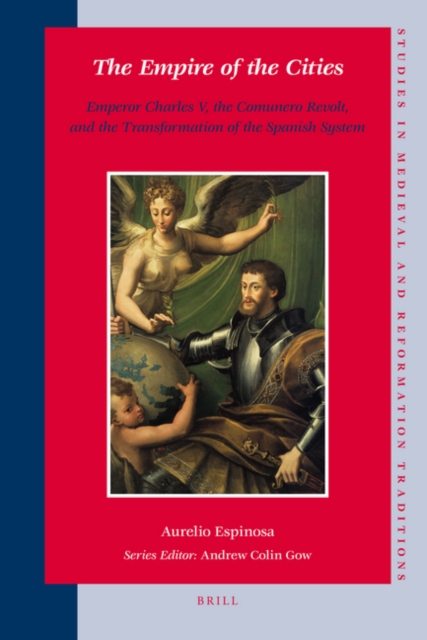
The Empire of the Cities: Emperor Charles V, the Comunero Revolt, and the Transformation of the Spanish System
This study of the Spanish monarchy, bureaucracy and representative government under Charles V before and after the comunero revolt (1520-1521) demonstrates how the emperor and Castilian republics institutionalized management procedures that promoted accountability, advanced a meritocracy, and facilitated expansionism and domestic stability.
eBook
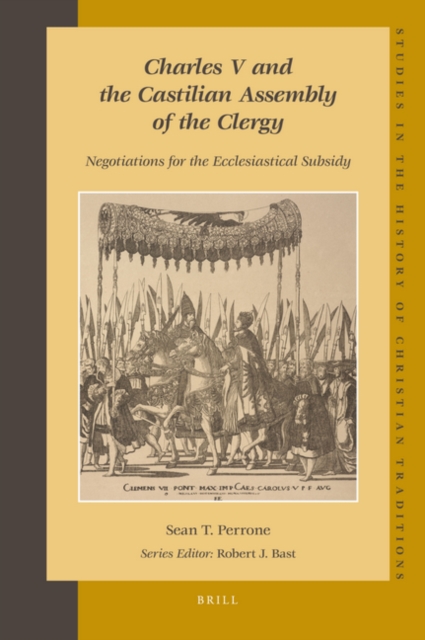
Charles V and the Castilian Assembly of the Clergy
Through a detailed examination of the negotiations for the ecclesiastical subsidy between the crown and the Assembly of the Clergy, this book provides a new perspective on church-state relations and politics in early modern Europe.
eBook

Die Kirchen- und Die Antireformatorische Religionspolitik Kaiser Karls V. in Den Siebzehn Provinzen der Niederlande 1515-1555
This publication provides new information about the rule of Charles V in the Netherlands, the role of the regents, the submission of the church to secular power, as well as the struggle of the government against Reformation thinking and the introduction of an inquisitorial system.
eBook

Afzetters at Work
During the restoration of two highly accredited tapestries (2013-21) from the Rijksmuseum collection, Niobe’s Pride (BK-1954-69-A) and Alexander and Jaddua (BK-1961-52), we discovered an interesting phenomenon that warranted further investigation. It concerns retouches that are not the result of restorations but, because of the colour and placement, are reminiscent of the work of afzetters. The tapestries were woven in the early seventeenth century in the workshops of François Spiering and Karel van Mander II in Delft, and are part of the Tapisserye van Diana set and the series showing the life of Alexander the Great respectively.
In collaboration with the Cultural Agency of the Netherlands (RCE) (chemical) research was conducted into the nature of the materials used for afzetten and the dyes were analysed. Three tapestries, from the National Trust Collections (UK) and Museum Prinsenhof Delft, which form part of the series, were also involved in the research.
In this article we examine the history of the development of afzetten, and the resulting regulations that Charles v established in 1544 in his Ordinances. This is followed by the presentation of the first research results regarding the positions and nature of the retouches, and the extent to which Charles v’s rules were followed.
Journal Article

Cultural Narratives of Charles V and Spanish Imaginaries in West Germany during the Franco Dictatorship
This article aims to contribute to research on the international relations between the Federal Republic of Germany and Spain after World War II, when the Franco dictatorship experienced a process of rehabilitation. In order to gain a better understanding of this phenomenon, we need to complement existing studies on the history of diplomatic relations with approaches to the sphere of cultural imaginaries. This article, intended as a particular case study, analyzes the resignification of Francoism in the Federal Republic of Germany (FRG) via the heritage and tourist narratives associated with one historical figure shared by both nations: Charles V.
Journal Article

City views in the Habsburg and Medici courts : depictions of rhetoric and rule in the sixteenth century
Ryan E. Gregg relates how the Holy Roman Emperor Charles V and Duke Cosimo I of Tuscany both employed city view artists such as Anton van den Wyngaerde and Giovanni Stradano to aid in constructing authority.
eBook

Charles V's universal empire in the Compendio of Antonio Doria
Habsburg intellectuals claimed that Charles V (1500–1558) was chosen by God to coordinate the defence of Christendom against the Ottoman Empire and to take care of the spiritual wellbeing of all Christians by fighting heresy. The Genoese captain Antonio Doria (c.1495–1577) was among the writers describing Charles as a pious and benevolent universal monarch and endorsing his military and political project. In the work entitled ‘Compendio’ (1571), Doria gives an account of the events taking place in the world during Charles's reign. This document is significant not only because Doria (with his more famous cousin Andrea) took part in several of the military episodes here recounted, but also because Genoa had joined the empire without losing its independence. Therefore, Antonio Doria's ‘Compendio’ represents an important source if we want to understand the reception of (and contribution to) sixteenth‐century imperial propaganda in the Italian context. After briefly presenting Doria's career and Genoa's republican culture, this article shows the global perspective of the text and argues that we can find in it an endorsement of Habsburg governance and an attempt to (re)order recent events within a universal, supranational framework. The final section briefly compares the ‘Compendio’ with two contemporary histories.
Journal Article

Mapping Culture in the Habsburg Empire
This article introduces two manuscript editions of a richly illustrated costume album dated ca. 1548–49. Commissioned by Christoph von Sternsee (d. 1560), the captain of Charles V’s German guard, and composed using visual material sourced from Dutch master Jan Cornelisz Vermeyen (ca. 1500–59), the costume album records the diversity of subjects, customs, and costumes that the guard witnessed across imperial Habsburg Europe. Shaped by Sternsee’s personal experiences of travel, war, and empire, his costume album paints a vivid picture of imperial propaganda and personal ambition, demonstrating the significant role that Habsburg networks and relationships had upon the period’s visual culture.
Journal Article
Hispanic Conciliarism and the Imperial Politics of Reform on the Eve of the Council of Trent
This article examines the treatise on the general council (the “Tractado”) published in 1536 by a Spanish jurist serving in the imperial administration in the Kingdom of Naples. It analyzes the content and the context in which it was conceived and argues that the treatise legitimated Charles V’s call for a general council in the political context of 1535–36, which meant supporting the political aims of the Ghibelline faction of Charles V’s court in Naples. The analysis of conciliarist doctrine in this treatise sheds new light on the relations between church and Crown in the context of the imperial policy of Charles V.
Journal Article