
Catalogue Search | MBRL


Are you sure you want to remove the book from the shelf?

{{itemTitle}}
6,826
result(s) for
"Chemical engineering Mathematics."
Sort by:
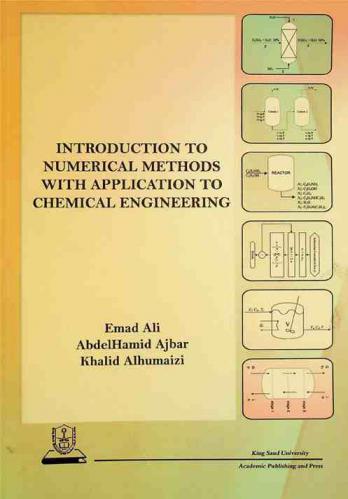
Introduction to numerical methods with application to chemical engineering
Many chemical engineering departments in diverse universities around the world, including the one in King Saud University include in the curriculum a course designed to teach numerical methods applied to chemical engineering. This book is essentially a compilation of the notes the three authors have used to teach this course over the years. We have covered in the textbook the numerical techniques that are most useful to the chemical engineer and that have wide applications. As an introduction to the book we included a chapter dealing with some practical considerations in numerical methods. The concepts of errors, conditioning of a problem and stability of algorithms were introduced to show the student to what extent he should trust any numerical values obtained by solving a problem in a digital computer. tt from Preface (p. v).
Book

Stochastic global optimization
Optimization has played a key role in the design, planning and operation of chemical and related processes, for several decades. Global optimization has been receiving considerable attention in the past two decades. Of the two types of techniques for global optimization, stochastic global optimization is applicable to any type of problems having non-differentiable functions, discrete variables and/or continuous variables. It, thus, shows significant promise and potential for process optimization.
eBook

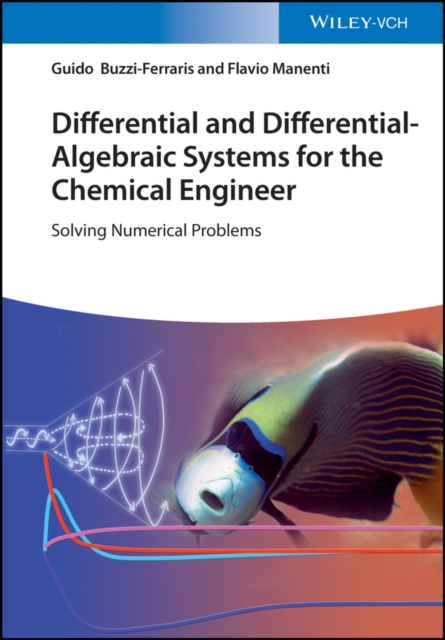
Differential and Differential-Algebraic Systems for the Chemical Engineer
Engineers and other applied scientists are frequently faced with models of complex systems for which no rigorous mathematical solution can be calculated. To predict and calculate the behaviour of such systems, numerical approximations are frequently used, either based on measurements of real life systems or on the behaviour of simpler models. This is essential work for example for the process engineer implementing simulation, control and optimization of chemical processes for design and operational purposes. This fourth in a suite of five practical guides is an engineer's companion to using numerical methods for the solution of complex mathematical problems. It explains the theory behind current numerical methods and shows in a step-by-step fashion how to use them. The volume focuses on differential and differential-algebraic systems, providing numerous real-life industrial case studies to illustrate this complex topic. It describes the methods, innovative techniques and strategies that are all implemented in a freely available toolbox called BzzMath, which is developed and maintained by the authors and provides up-to-date software tools for all the methods described in the book. Numerous examples, sample codes, programs and applications are taken from a wide range of scientific and engineering fields, such as chemical engineering, electrical engineering, physics, medicine, and environmental science. As a result, engineers and scientists learn how to optimize processes even before entering the laboratory. With additional online material including the latest version of BzzMath Library, installation tutorial, all examples and sample codes used in the book and a host of further examples.
eBook
Introducción Al Modelamiento y Simulación en Ingeniería Química
Esta obra introduce al lector en las bases de la teoría matemática y en los distintos métodos computacionales de modelamiento y simulación en Ingeniería, los cuales incluyen ejemplos para ayudar a entender la implementación de los diversos métodos de solución. El libro aborda el manejo de matlab®, software de preferencia por su practicidad y facilidad para la resolución de problemas; allí se presentan los principales conceptos, así como la apariencia de la consola, la creación de variables, la realización de operaciones básicas y el diseño de scripts y funciones. Luego, se hace una aproximación a la resolución de problemas matemáticos de carácter no lineal, lineal, diferencial, de diferencias parciales y ecuaciones algebrodiferenciales, así como también se aborda el método mesh para modelamiento matemático de torres de destilación. Es importante resaltar que para la comprensión del texto se debe contar con conocimientos en cálculo, ecuaciones diferenciales, equilibrio de fases, mecánica hidráulica, ingeniería de reacciones, fenómenos de transporte y separación de fases. La obra es fundamental para quienes se estén formando en Ingeniería Química, tanto para la adquisición de conocimientos en el área del modelamiento y simulación, como para aumentar el nivel de habilidades blandas.
eBook

Quadrature method of moments for population-balance equations
Although use of computational fluid dynamics (CFD) for simulating precipitation (and particulate systems in general) is becoming a standard approach, a number of issues still need to be addressed. One major problem is the computational expense of coupling a standard discretized population balance (DPB) with a CFD code, as this approach requires the solution of an intractably large number of transport equations. In this work the quadrature method of moments (QMOM) is tested for size‐dependent growth and aggregation. The QMOM is validated by comparison with both Monte Carlo simulations and analytical solutions using several functional forms for the aggregation kernel. Moreover, model predictions are compared with a DPB to compare accuracy, computational time, and the number of scalars involved. Analysis of the relative performance of various methods for treating aggregation provides readers with useful information about the range of application and possible limitations.
Journal Article
Disturbance models for offset-free model-predictive control
Model predictive control algorithms achieve offset‐free control objectives by adding integrating disturbances to the process model. The purpose of these additional disturbances is to lump the plant‐model mismatch and/or unmodeled disturbances. Its effectiveness has been proven for particular square cases only. For systems with a number of measured variables (p) greater than the number of manipulated variables (m), it is clear that any controller can track without offset at most m controlled variables. One may think that m integrating disturbances are sufficient to guarantee offset‐free control in the m controlled variables. We show this idea is incorrect and present general conditions that allow zero steady‐state offset. In particular, a number of integrating disturbances equal to the number of measured variables are shown to be sufficient to guarantee zero offset in the controlled variables. These results apply to square and nonsquare, open‐loop stable, integrating and unstable systems.
Journal Article
Monitoring independent components for fault detection
A chemical process has a large number of measured variables, but it is usually driven by fewer essential variables, which may or may not be measured. Extracting such essential variables and monitoring them will improve the process‐monitoring performance. Independent component analysis (ICA) is an emerging technique for finding several independent variables as linear combinations of measured variables. In this work, a new statistical process control method based on ICA is proposed. For investigating the feasibility of its method, its fault‐detection performance is evaluated and compared with that of the conventional multivariate statistical process control (cMSPC) method using principal‐component analysis by applying those methods to monitoring problems of a simple four‐variable system and a continuous‐stirred‐tank‐reactor process. The simulated results show the superiority of ICA‐based SPC over cMSPC.
Journal Article
Robust nonlinear model predictive control of batch processes
NMPC explicitly addresses constraints and nonlinearities during the feedback control of batch processes. This NMPC algorithm also explicitly takes parameter uncertainty into account in the state estimation and state feedback controller designs. An extended Kalman filter estimates the process noise covariance matrix from the parameter uncertainty description and employs a sequential integration and correction strategy to reduce biases in the state estimates due to parameter uncertainty. The shrinking horizon NMPC algorithm minimizes a weighted sum of the nominal performance objective, an estimate of the variance of the performance objective, and an integral of the deviation of the control trajectory from the nominal optimal control trajectory. The robust performance is quantified by estimates of the distribution of the performance index along the batch run obtained by a series expansion about the control trajectory. The control and analysis approaches are applied to a simulated batch crystallization process with a realistic uncertainty description. The proposed robust NMPC algorithm improves the robust performance by a factor of six compared to open loop optimal control, and a factor of two compared to nominal NMPC. Monte Carlo simulations support the results obtained by the distributional robustness analysis technique.
Journal Article
Multiscale PCA with application to multivariate statistical process monitoring
Multiscale principal‐component analysis (MSPCA) combines the ability of PCA to decorrelate the variables by extracting a linear relationship with that of wavelet analysis to extract deterministic features and approximately decorrelate autocorrelated measurements. MSPCA computes the PCA of wavelet coefficients at each scale and then combines the results at relevant scales. Due to its multiscale nature, MSPCA is appropriate for the modeling of data containing contributions from events whose behavior changes over time and frequency. Process monitoring by MSPCA involves combining only those scales where significant events are detected, and is equivalent to adaptively filtering the scores and residuals, and adjusting the detection limits for easiest detection of deterministic changes in the measurements. Approximate decorrelation of wavelet coefficients also makes MSPCA effective for monitoring autocorrelated measurements without matrix augmentation or time‐series modeling. In addition to improving the ability to detect deterministic changes, monitoring by MSPCA also simultaneously extracts those features that represent abnormal operation. The superior performance of MSPCA for process monitoring is illustrated by several examples.
Journal Article